Tag Archives: Tango Feast

My Second Tango Feast – Dancing Into a Life Ahead (March 2026)

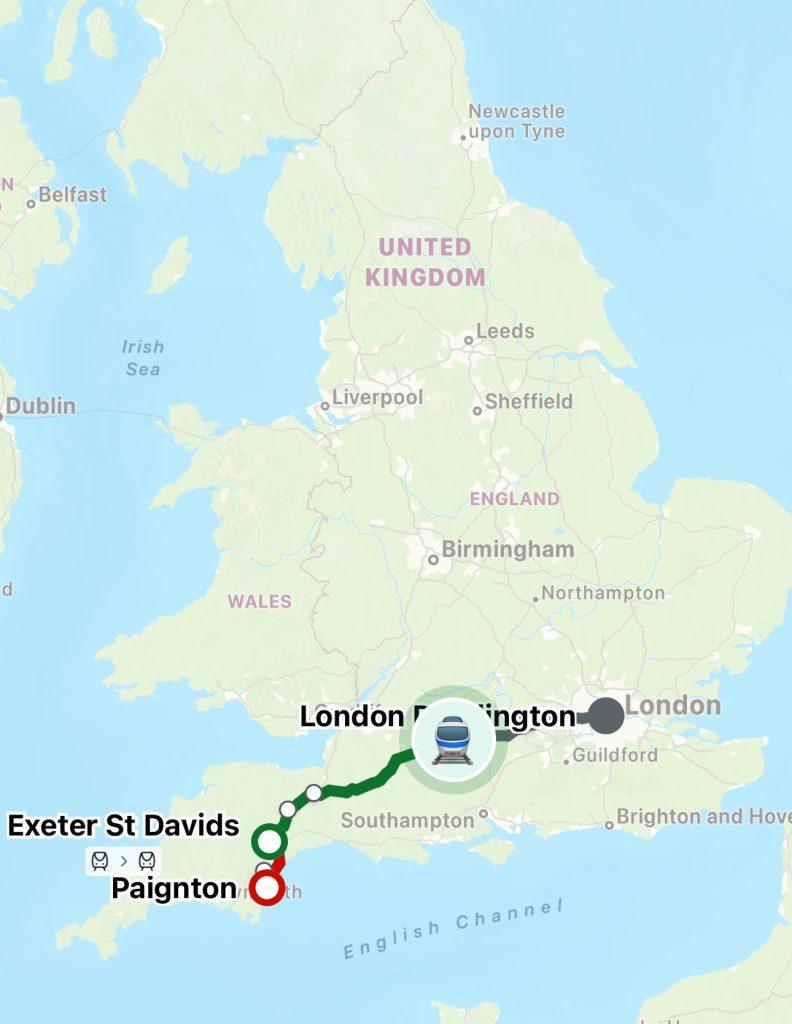
It felt as if the train carriage was gliding along the edge of the water and I was somehow on the beach with the people running or walking their dogs. My brain tried to make sense of two realities: the exposed wildness of the coast and the sealed comfort of a fast-moving train. I have been on trains in well over twenty countries, and while I am no Michael Portillo, I had seen nothing like this before. For the first time in my life, I was on the famous Riviera Line from London to Paignton in Devon.

I had no idea then how important the sea would become by the end of the weekend.
A Highly Nutritious Feast – The Virtuous Cycle of Confidence

The December Feast had given me something invaluable with several days of tango inside an unusually supportive and contained environment. I had also finally cracked milonga tandas after seven years, which had previously felt like the missing flavour in the trinity of tango, vals and milonga. The milonga floodgates opened after that and I have never stopped dancing milonga tandas since.

The Feast had also shown me that I could arrive in a room knowing very few people and gradually find my place there. That confidence carried into the Christmasathon in Eton, where I went for four out of five days. In previous years I only went to one milonga or one day’s worth of two milongas as I was taking a more cautious approach. I bumped into several followers from the Feast at Eton and realised that the Feast was an important hub for UK tango dancers.

I was now a familiar face and other faces were familiar to me. Perhaps for the first time in my tango life I entered a virtuous social cycle. The more often I appeared at UK-wide milongas and festivals, the more familiar I became. The more familiar I became, the easier it was to find dances.

It Wasn’t, It Was, It Wasn’t — and Then It Was

2025 had been the most turbulent year of my life. The good part was that I was on the way to my first ever property purchase in London. The bad part was that, by March, it had already dragged on for nearly six months. As of mid-June 2026 it is still dragging on but that’s another story.

After the December Feast, I thought I would be in Buenos Aires by March 2026 and did not plan on going to Devon. Buenos Aires is where I really learn tango intensely having spent months there in 2024 and 2025 at the same time of year. Many of my tango and non-tango friends in the city were expecting me back.
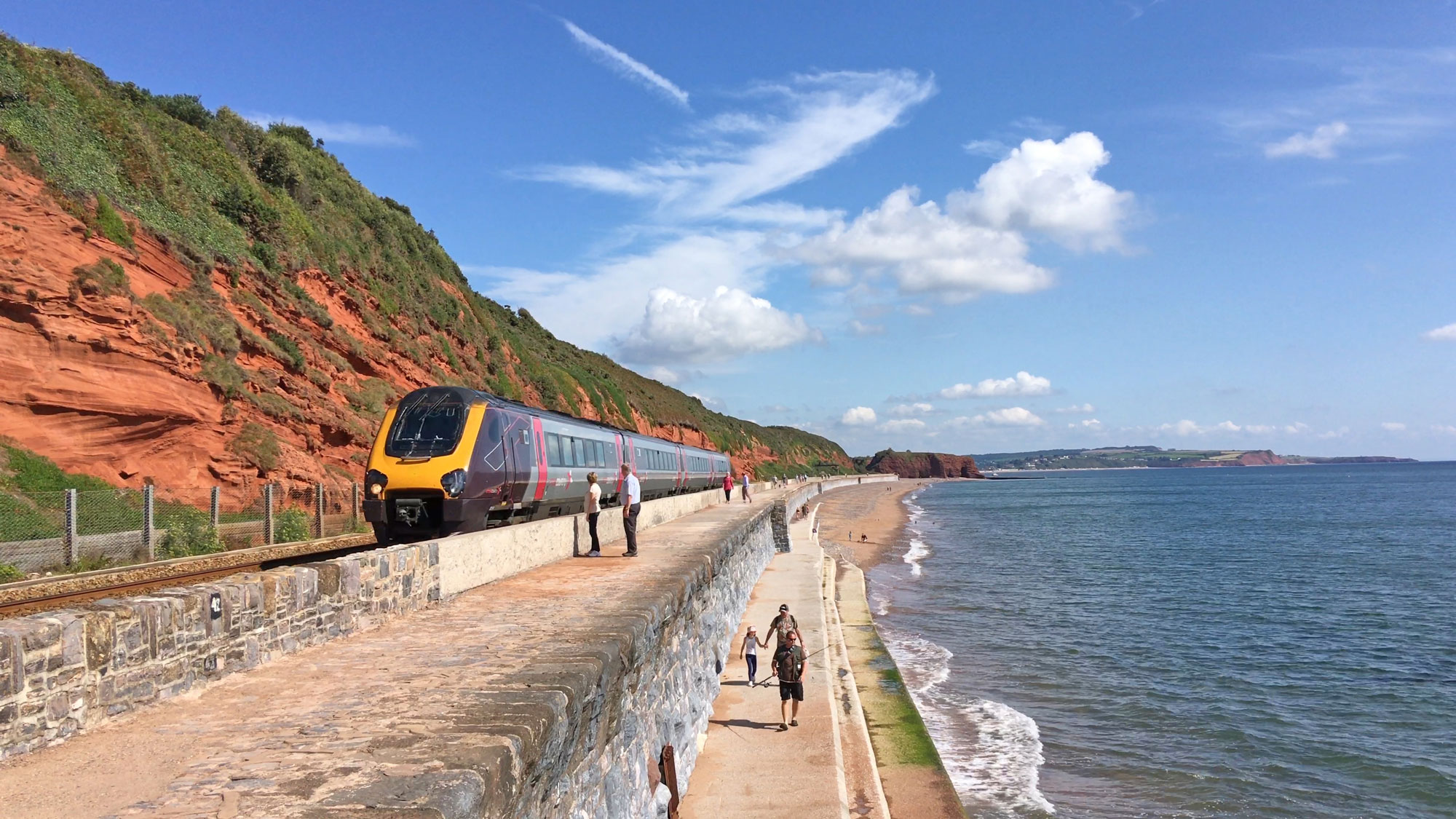
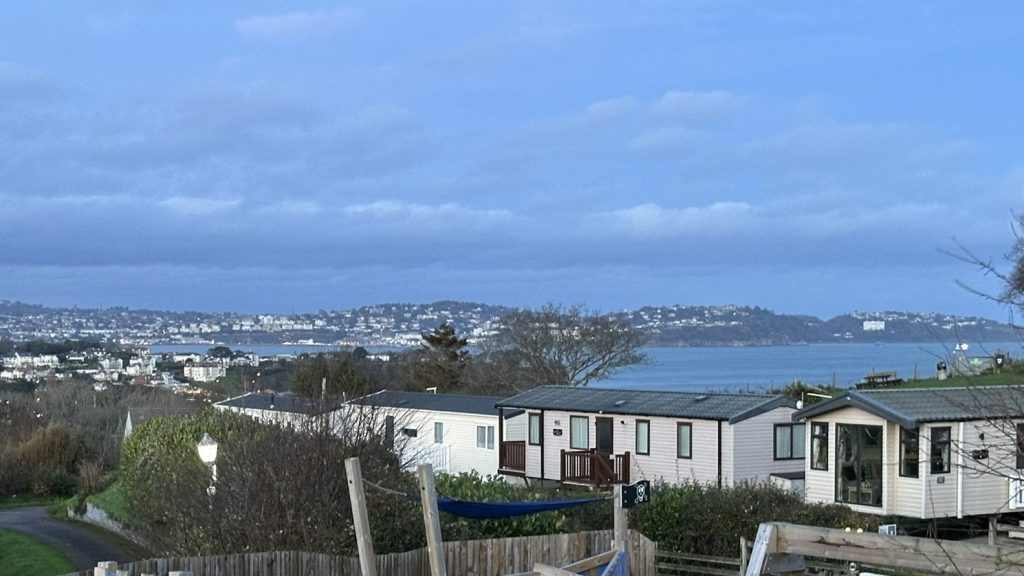
The famous English Riviera line stretching on the coast of Devon.

But the Buenos Aires plan disappeared into thin air as my dream of completing the property purchase in late January was derailed. I would be in the UK during March after all, so Buenos Aires’s loss would be Devon’s gain. I was now keen to book myself for the March Feast.

At the same time, there was another journey I was not prepared to compromise on: a late-March trip through Delhi and Japan, culiminating in the Sakura Tango Festival in Fukuoka. Japan was not something I was willing to miss as besides tango, I intended to spend a total of 3 weeks there relaxing and exploring the country. I was tired of waiting for the property purchase to complete and had decided that, if necessary, I would complete from overseas.

Once I began fitting the pieces together, the original Feast dates of 19–22 March no longer worked. I could technically have squeezed Devon, Delhi, Tokyo and Fukuoka into the itinerary, but I would have arrived in Japan tired, rushed and jet-lagged. Intercontinental tango travel, it turns out, is not without its own challenges.

The voice of reason prevailed, and I abandoned the idea of returning to the Feast in March. But the Feast, it appears, was not willing to abandon me. Unexpectedly, a booking problem at Beverley Park meant that Fernando had to move the entire event forward by one week. This had never happened before in the history of the Feast, but for me the new dates, 12–15 March, were perfect. I could go to Devon, return to London for a few days, fly to Delhi, recover properly, and continue to Japan feeling fresh. I could have it all.

There was one little complication left. The follower I had registered with for the December Feast could not attend in March. I posted on the Feast Facebook page asking whether any follower would like to pair up with me. To my relief, I received a few replies and registered with the first follower who responded.

And so, as fate would have it, I was going back to Devon after all.
Arriving With Time to Breathe

I made two practical changes after the December Feast.

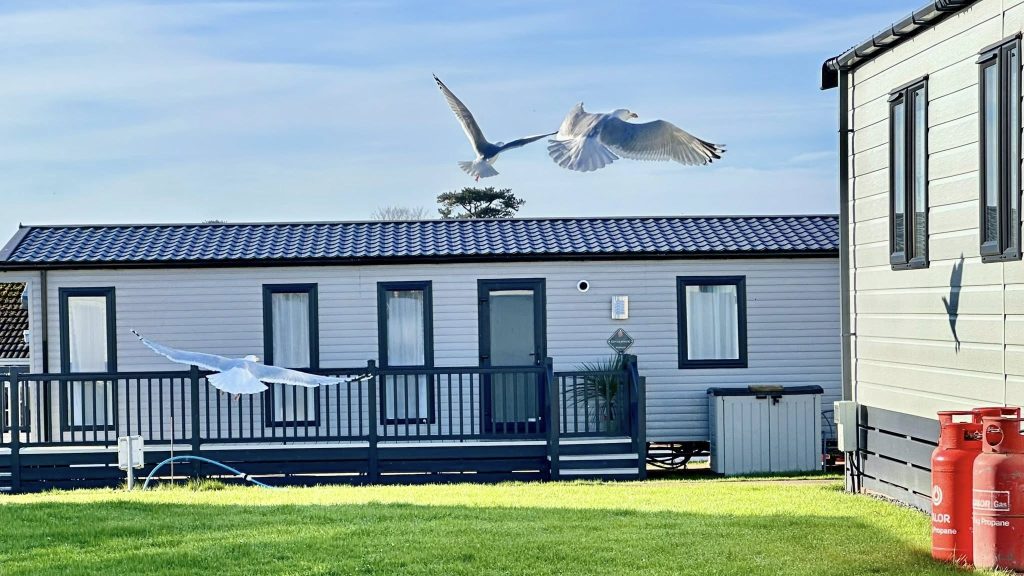
The first was to travel by train rather than by car. I do not drive, and on my previous visit I had been lucky enough to get a lift. But traffic delays meant I arrived frantically late for my online tutoring sessions. I began that weekend flustered and never fully recovered from the start. This time, the journey was different. After the relaxing train ride to Paignton, I took a taxi to the large Sainsbury’s and asked the driver to wait while I bought supplies. I then arrived at Beverley Park with plenty of time before my remote tutoring was due to begin. By pure luck, I was given exactly the same caravan as last time, so there was no frantic dash through the maze of pitches trying to find the right place.

The second change was to book an entire caravan for myself rather than share. Over the next few days, especially while remote working from there, I would come to appreciate having that space to myself. And although it is more expensive, booking a caravan to myself is the way to go for future Beverley Park feasts.

I had also bought waterproof boots. The walk between the caravan and the dance hall takes barely a minute, but Devon had already taught me that a minute is more than enough time to become drenched in a storm. I finished tutoring at 7.30 pm, ate, showered, ironed my clothes and made my way to the hall. I arrived at the opening milonga at around 9.15 pm, more than an hour late. But this time, I was completely relaxed about it.
Thursday Night: Returning to Familiar Ground

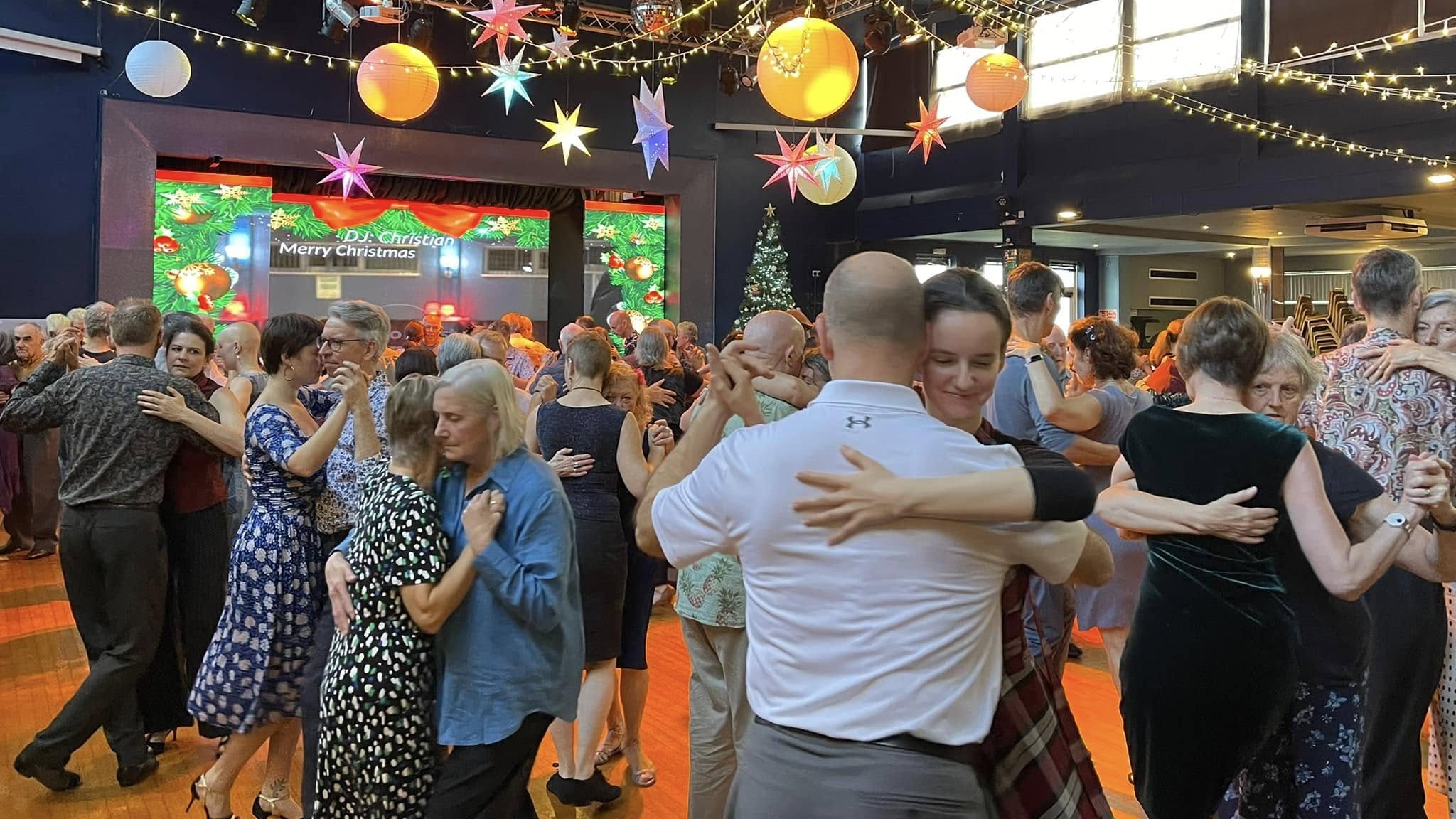
The March Feast felt different from the moment I walked into the room. The Christmas Feast is apparently the busiest of the four held each year. March is usually the quietest, and the late change of dates had reduced the numbers further. The same hall now felt more spacious with lots of room to dance, sit out tandas, and room to talk without feeling that the event was pressing in around you.

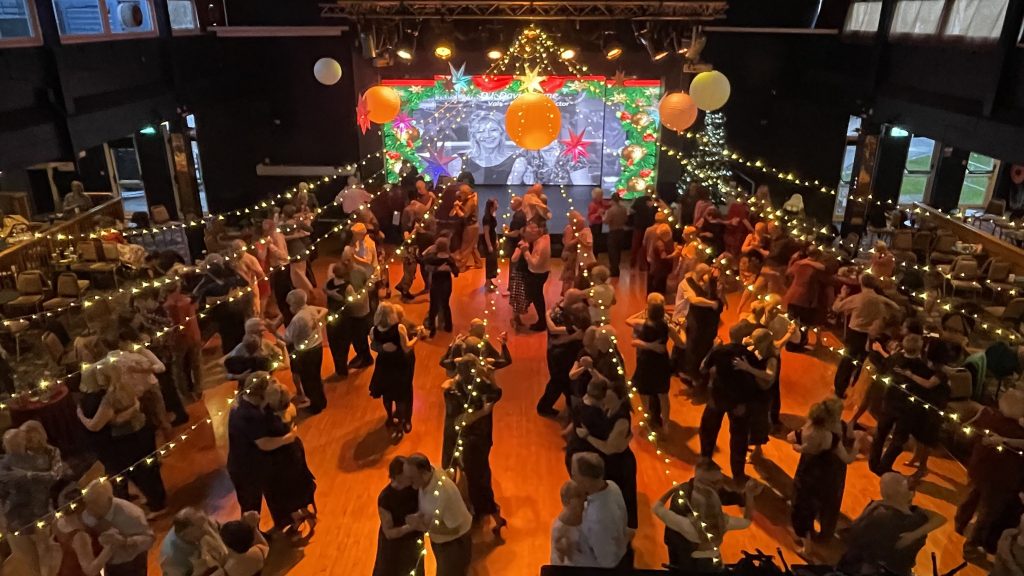
The space was already familiar from December: the main wooden dance floor, the seating and dining tables around its edges, the smaller raised dance floor beyond it, and the breakout area at the back for tea, coffee and conversation. It was a well-designed room, with socialising woven deeply into the tango itself.
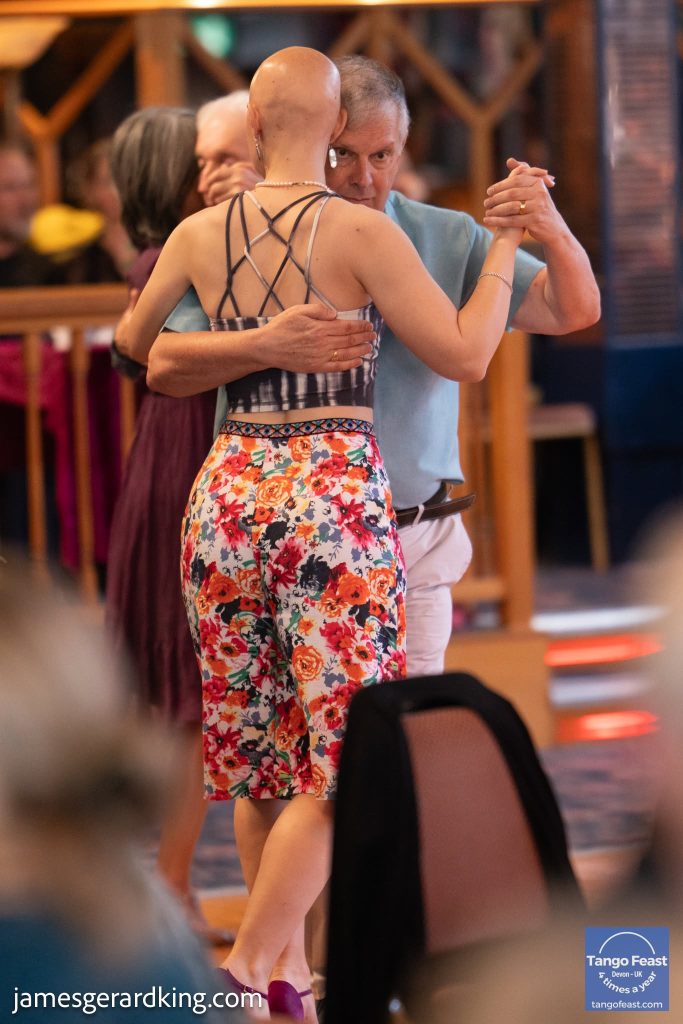
The floorcraft was noticeably better too. The ronda moved more freely, though except for the very beginning and end of the milongas, the outermost lane still moved too slowly for my liking. I found that my dancing space at the Feast was mostly in the centre area of the ronda.

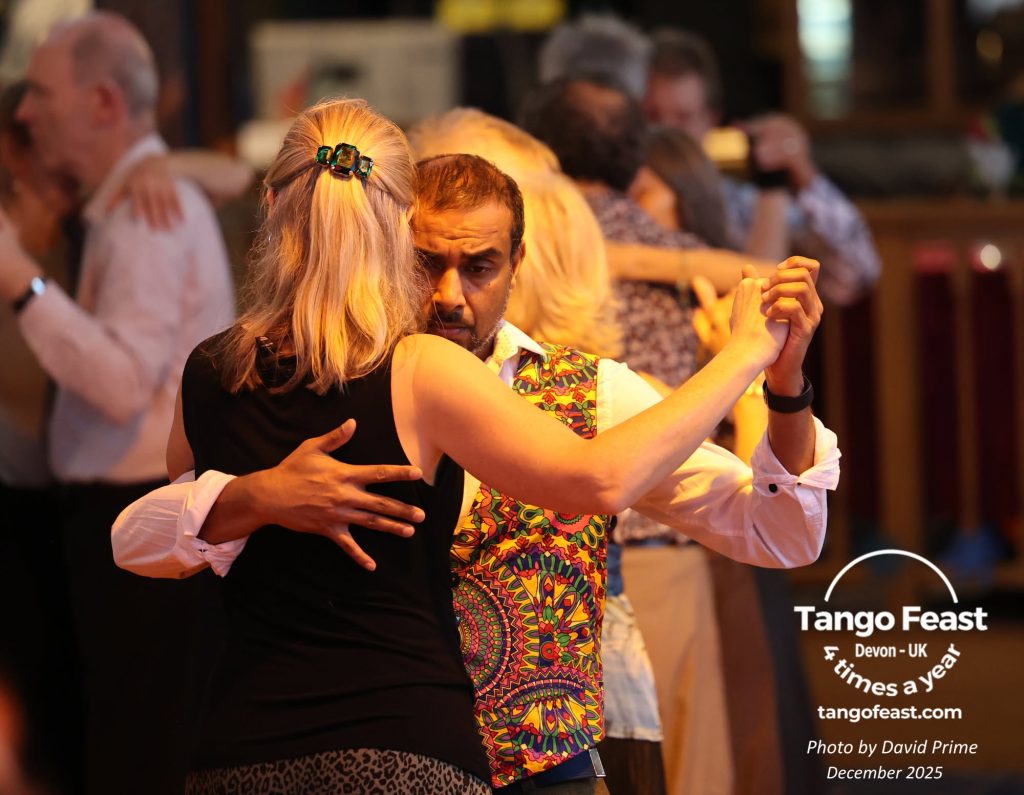
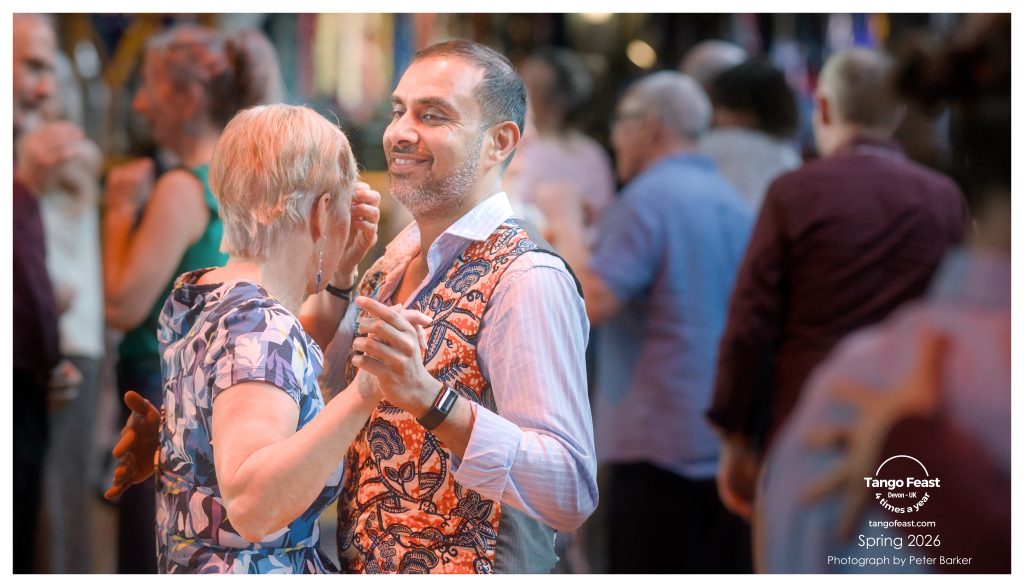
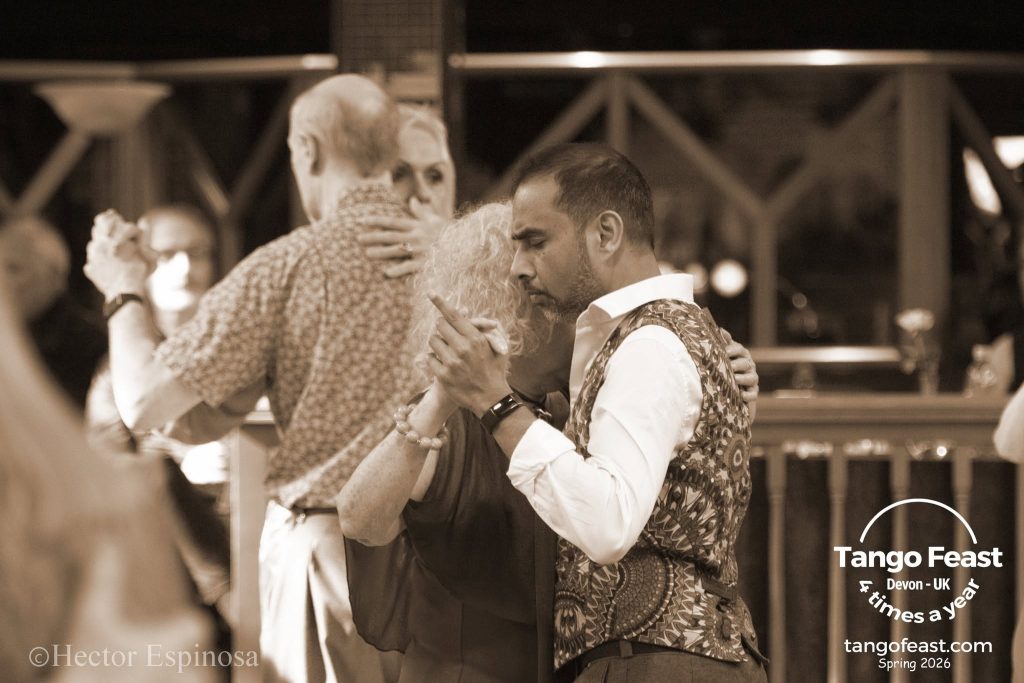
I danced, rested and chatted plenty. My walk felt slightly jittery at first, but I sensed that it would settle. Women I had danced with in December recognised me. Some thought I had been to the Feast several times before, though I had only been once. Others commented on my colourful waistcoat, which has now become my trademark tango look and is difficult to miss. There was also an unexpected consequence of writing about the previous Feast: many of the people I danced and chatted with seemed to have read the article.

At the end of the evening, I spoke with Fernando, the energy bomb behind the entire event. He had read the review too. My comments about the smaller upstairs floor being sticky had prompted him to improve it. That floor is laid by hand over carpet by Fernando and his team. This time, it was smoother, more comfortable and a genuine pleasure to dance on.

I danced far more on the opening night than I had in December. It was the perfect start. I felt settled, recognised and accepted into the Feast community.
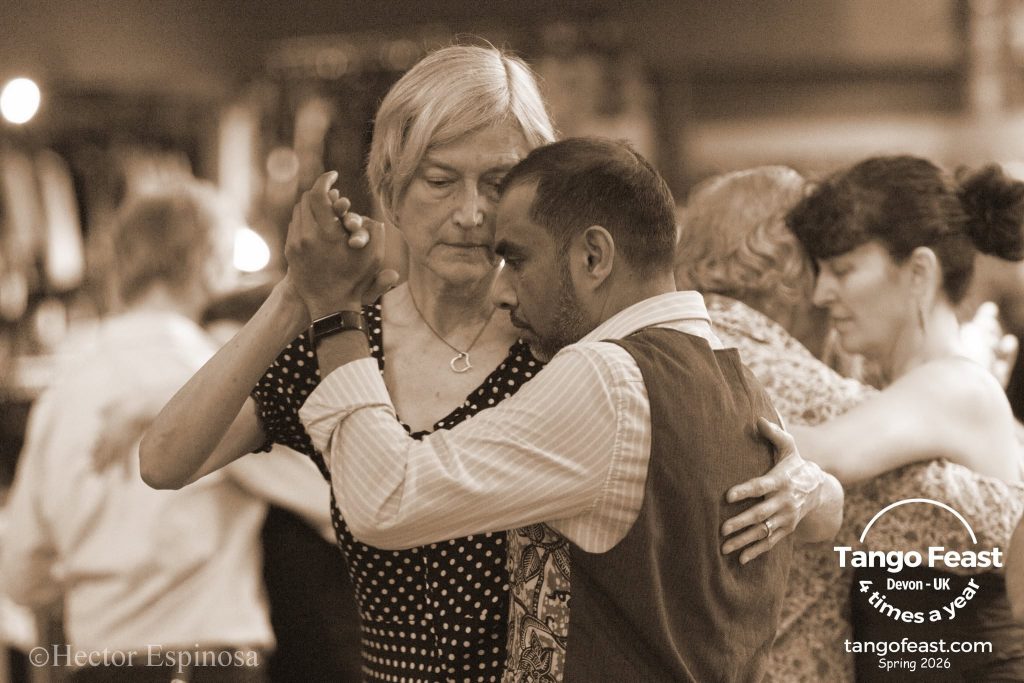
The Walk, the Ronda and the Music

The qualities I am complimented on most often are my walk, my embrace and my musicality. But those things never exist in isolation. So much depends on the mood, the orchestra, the room, the floorcraft, the follower and, of course, my own technique.
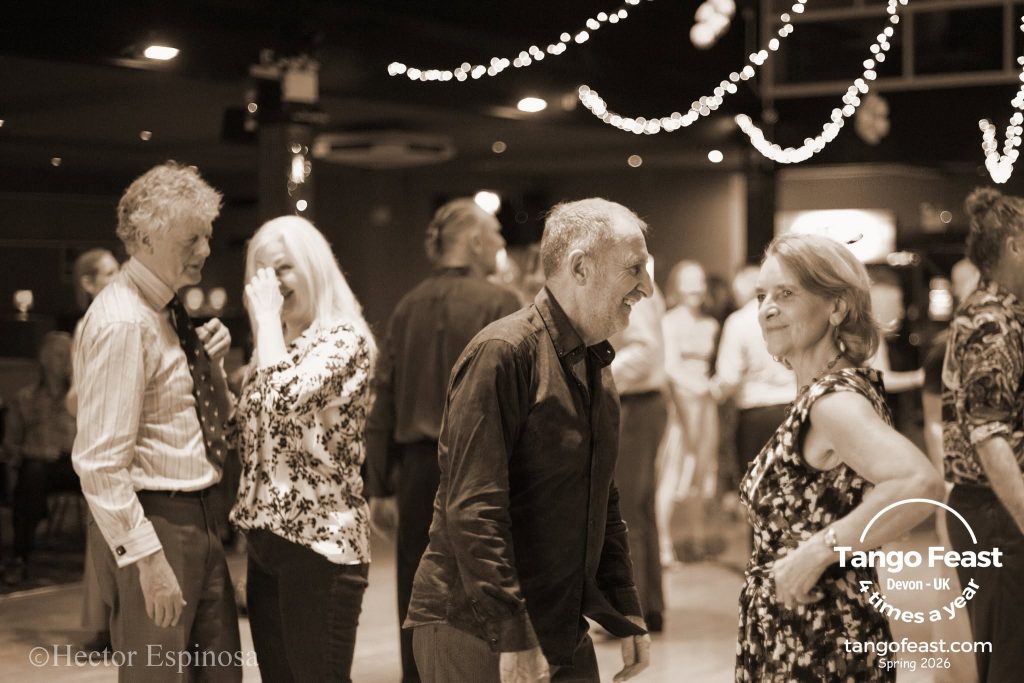
Some tandas are extraordinary. Some are warm and pleasant. Some remain technically awkward. Some followers want the cocoon of a soft embrace. Others want rhythm, playfulness, movement and space. Gradually I am discovering that I cannot impose my deepest dance register on every follower. I need to sense what the dance wants to become.

The December Feast had reminded me that I needed to recover the ability to dance with very small steps, especially after the crowded milongas of Buenos Aires. So between Feasts, I worked on making my walk smaller, slower and more compact. A long, projected walk can feel glorious when there is space, but a milonga is not my personal driving range, as much as I would like it to be.

During the Feast, with certain followers and when all the conditions of the universe aligned, the walking tandas felt almost weightless. We seemed to skim rather than step, like that train moving smoothly alongside the wild sea on the English Riviera. During one tanda, we were not even on land anymore; the walk felt like gliding through an invisible cloud of music. These are the moments I live for in tango and they seem to happen more often at the Feast.
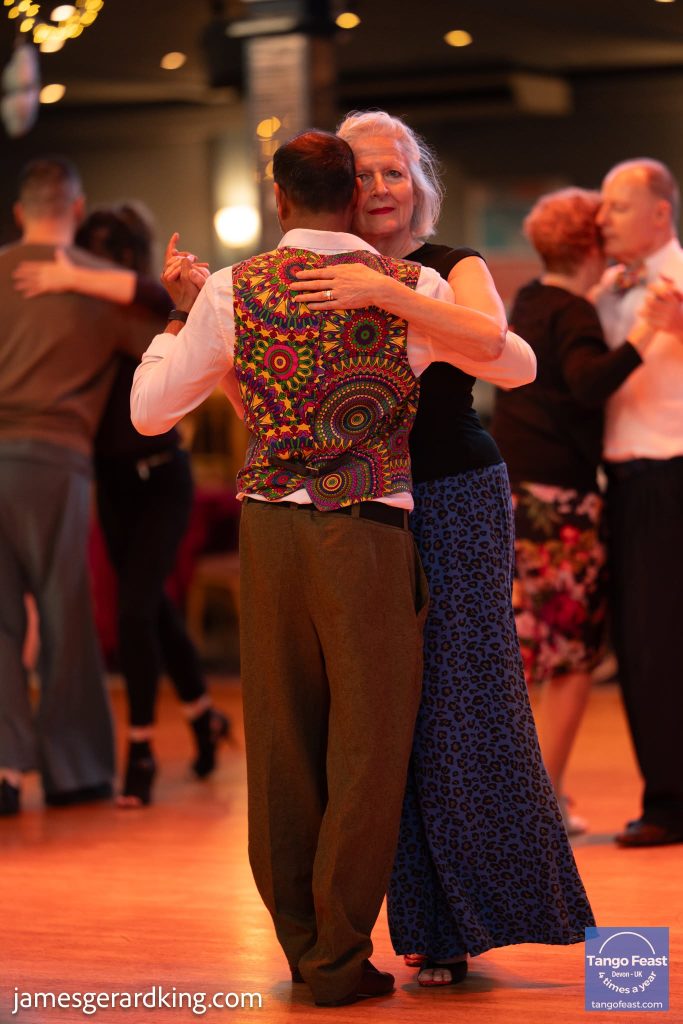
It was not always about the walk, of course. Despite my minimalist base, my vocabulary had actually expanded. The Feast gave me time and opportunity to test the waters in real milonga conditions. I experimented more with calesitas and variants of the sandwich routine when the music, the space and the follower invited them.

During one conversation, an experienced dancer described the process beautifully. When we respond to the orchestra, she said, we can choose different parts of the music and form “our own little band together” as dancers. I loved this and totally got that metaphor. Having played in bands for much of my life, I had always thought of dancing to live orchestras as jamming with the musicians. Instead of making music with them, we would be dancing to them. Both orchestra and dancers are in it together, creating something unique in the moment.

Some Pugliese Perfection

Of all the orchestras, Pugliese holds a special place in my heart. Di Sarli gives me the walk: elegance, flow, long lines, elaborate curves and the feeling of stretching and compressing through music. Pugliese does something different. The music is grand and cinematic, but also intimate. It carries longing, tenderness, drama, suspension and release. At times, it feels orchestral in scale; at others, it seems to narrow the entire room into the tiny singularity inside an embrace.
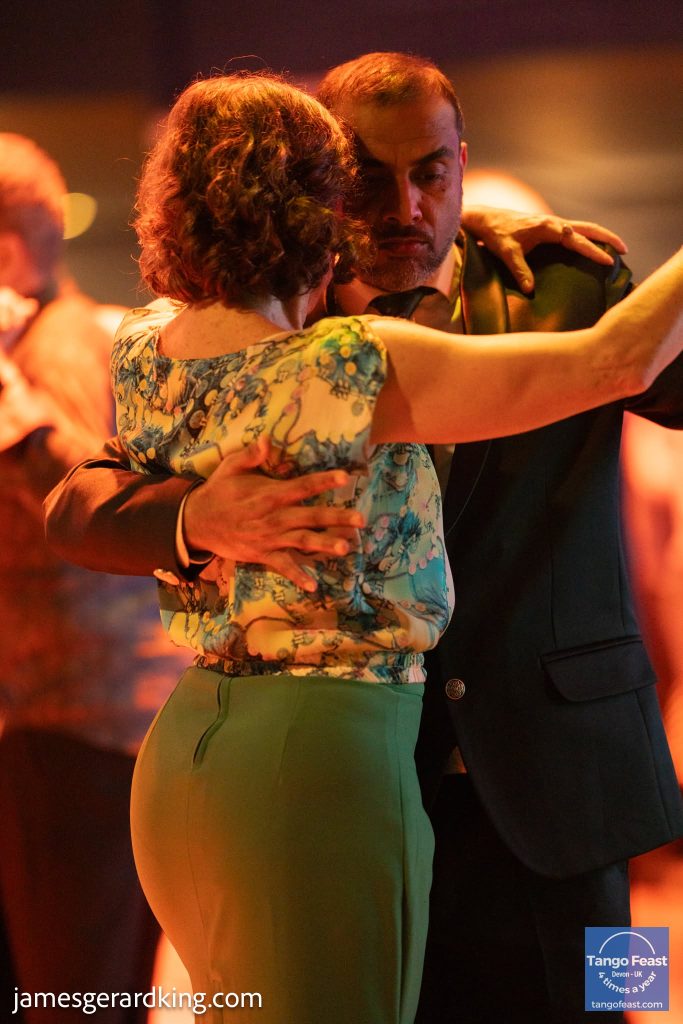
My best tandas often happen to Pugliese. Not every time, of course. I don’t think a profound tanda can ever be manufactured, but over a long weekend of dancing, the conditions that make them happen align a few times. On Friday evening, during the final hour, I was tired but also more fluid. The music reflected that state and became more lyrical. A Pugliese tanda began, and I cabeceod someone I had never danced with before.

It was one of those rare tandas where the embrace remained unbroken throughout. There was almost nothing left beyond the music, the breath and the stillness. I was grateful to find a follower with whom I could dance as myself in the truest sense: simple, peaceful and unhurried. There were other beautiful Pugliese tandas across the weekend. Some were more passionate and expansive. Others returned to that dreamlike stillness.

But on Sunday night, Pugliese opened another door entirely. That belongs to a deeper thread running through the weekend: tango, the sea and grief.

Friendships, Cabeceo Comedies and Emergency Floor Repair

There is so much to tango beyond the tango itself: the conversations, friendships, cups of tea, biscuits, and more. With fewer dancers than in December, the March Feast had more breathing space. A chat begun after one tanda could continue the next afternoon, and by then it already felt less like small talk.
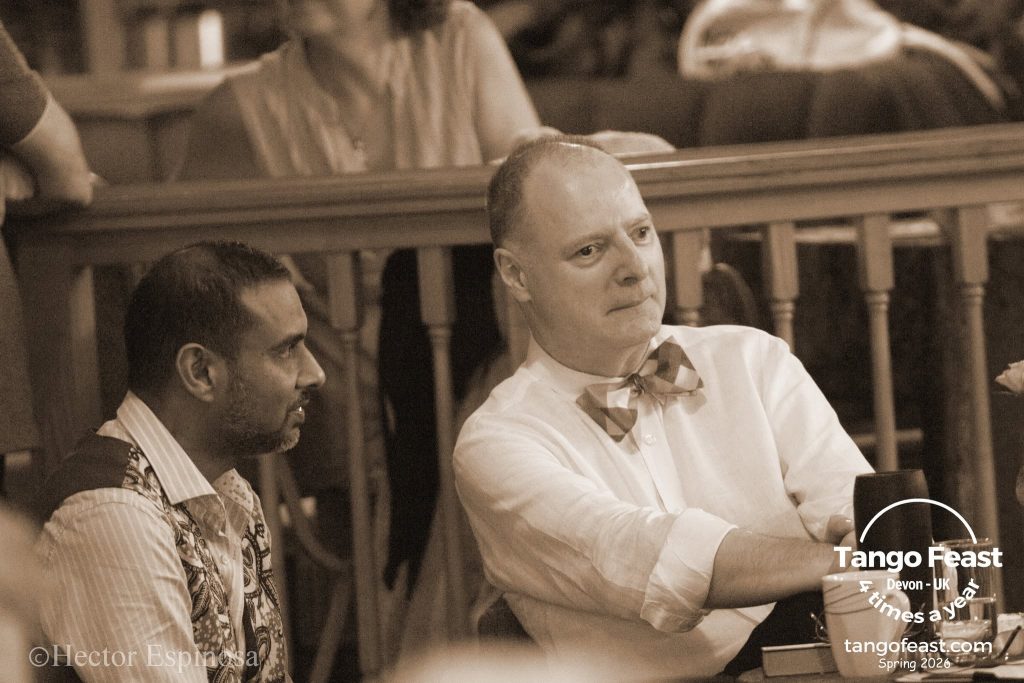
With my good friend Ben Lovejoy who has written about and made some curated videos for the Feast 2026.

My registration partner was someone I had never met before. Over the weekend, we danced several lovely tandas and got to know each other with an easy familiarity. I met some of her follower friends, and I introduced them to some of my own leader friends. These small social connections meant that everyone danced more and settled into a wider community.

Not everything worked perfectly. The cabeceo, beautiful as it is, remains an imperfect art. At least twice I cabeceod a follower and as I walked to the table, the wrong one stood up. I need to remember to keep eye contact as much as possible all the way until I get to the table. I had my own cabeceo bluders too, sometimes I thought someone has accepted my invitation and when I walked across the room I realised she had actually accepted someone else.
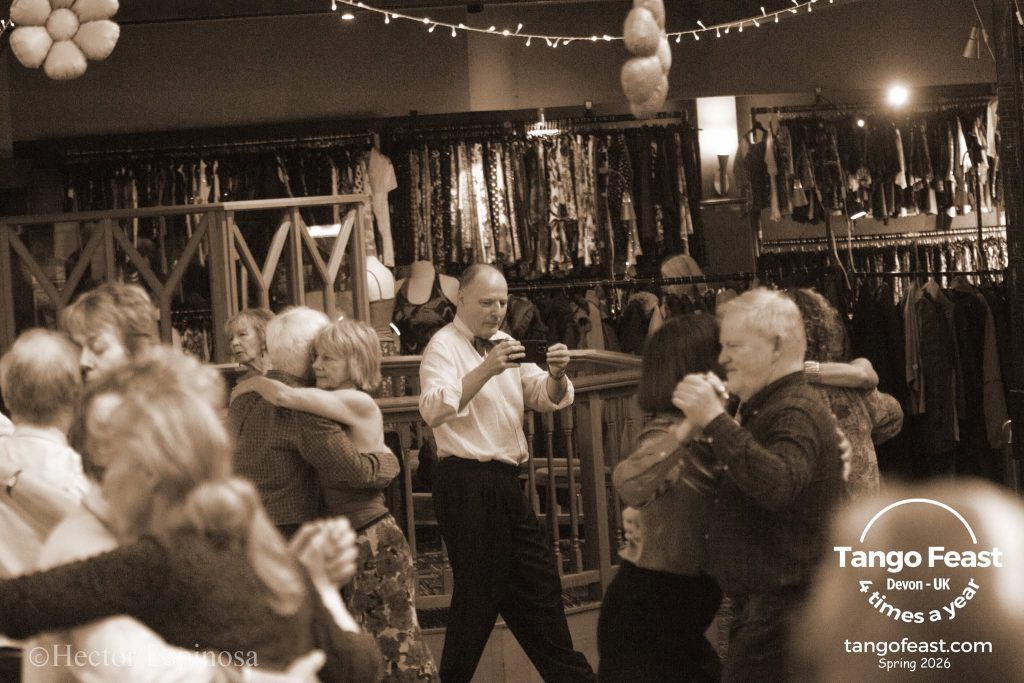
That kind of awkwardness might have unsettled me before. This time, it mostly amused me and I accepted it as all fun and games of the tango experience. I returned to invite the follower who had been accidentally caught in the confusion, ensuring that I danced with both followers. As for my own misinterpreted invitations, I recovered almost immediately by inviting someone else as I was already on my feet and had the ‘I am just about to dance momentum’.

The room had its own mishaps too. On Saturday night, with around two hours of the milonga still to go, the outer lane of the main floor suddenly became sticky and difficult to glide across. A damaged shoe had left a rubbery residue along the line of dance as it disintegrated across the outer ronda. Fernando’s emergency floor repair services sprang into action immediately. He isolated the worst section, redirected the ronda around it, and briefly paused the milonga to attempt an emergency clean. It was enough to keep the evening moving. After the final tanda, while most of us were ready for bed, he and his helpers went straight back onto the floor with scrubbers, cloths and machines, examining the surface almost forensically. The floor was perfect next morning, thanks to the team’s dedication and care.
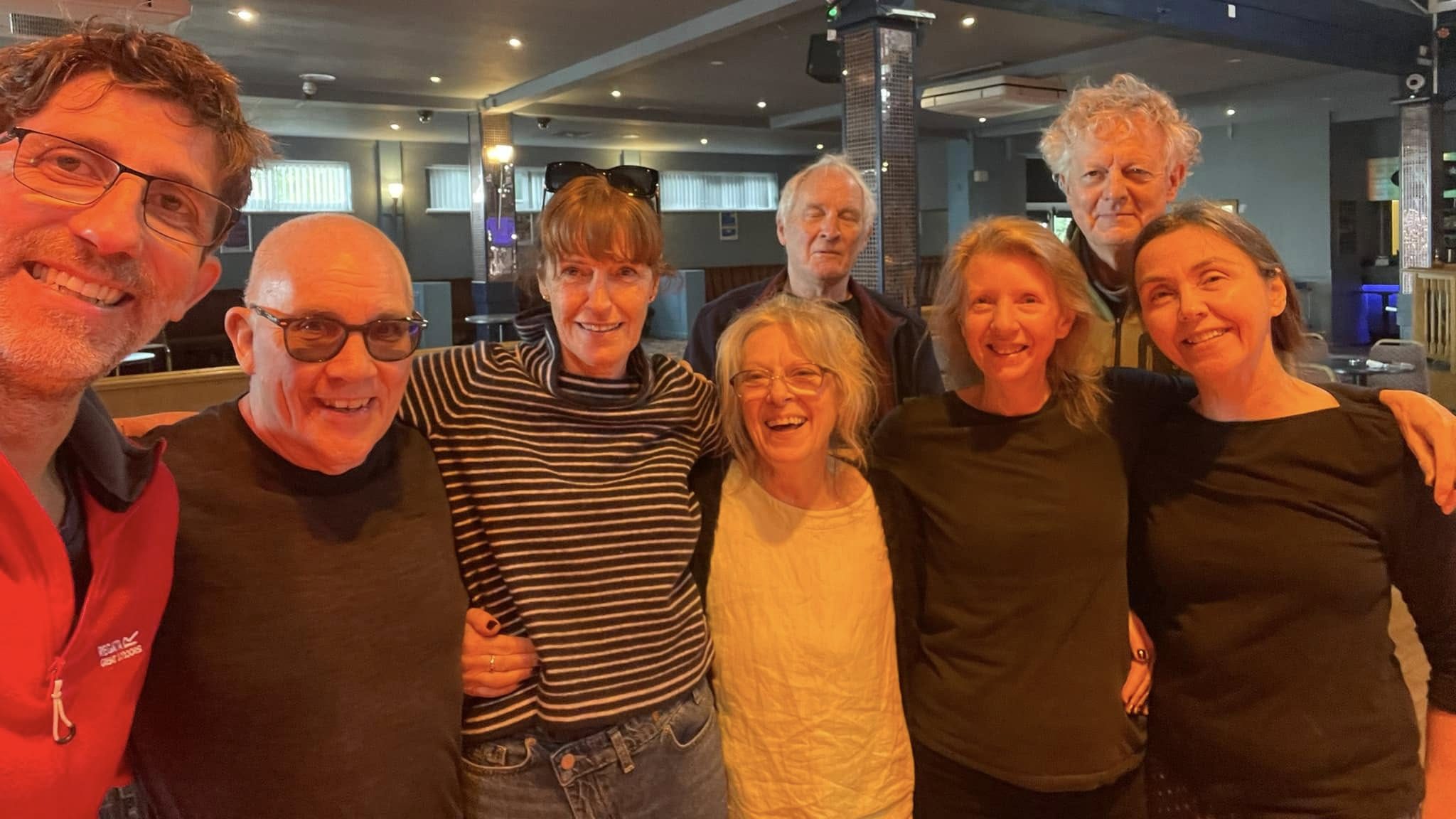
Team Tango Feast : Ever grateful for their hard work to make the magic happen.

Wild Weather and Wild Waistcoats

The open landscape and Devon weather were constantly changing. Most of the time it felt as if nothing had changed since early December: the same cold, the same grey. Yet at other times, vivid sunshine burst through the caravan park and into the tango hall itself.

The same hall took on a different character from one milonga to the next. At times, sunlight gave the daytime milongas a lighter, airier quality. At others, the Devon sky turned grey and rainy, making the space feel more enclosed and intimate. The changing weather I felt changed the way the music was experienced on the dance floor.

The clothes added another layer. For some milongas, I wore colourful waistcoats in bold designs that stood out immediately and became easy conversation starters. At other times, I chose plainer waistcoats and a more understated look. By Saturday night, as the atmosphere became more polished, I wore a full suit and tie.

The followers brought their own variety and elegance to the room. Some wore bold colours and flowing dresses; others chose simpler, more understated outfits. As the light, weather and mood changed, the same dance floor kept presenting a different picture. A milonga is not only made by the music and the dancing. It is also shaped by the care people take over the occasion, and by the small visual details that make an ordinary hall feel briefly like another world.

Learning With Mabel
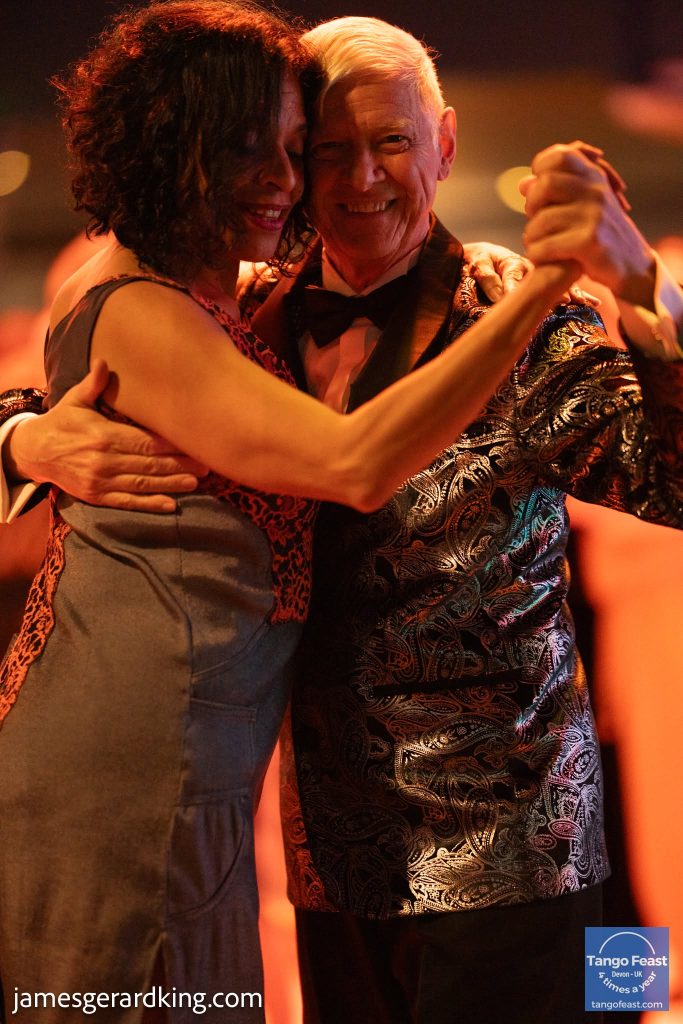
After missing out on a private lesson with Mabel at the December Feast, this time I finally got my turn. She began not by asking what I wanted to learn, but how she could accompany me on my tango journey. That word, accompany, carried humility, care and presence. It has stayed with me ever since.

In one hour, she seemed to understand that minimalism, musical feeling and presence are central to my dancing. She did not try to pull my tango in a different direction. Instead, she added small technical fixes, embellishments and playful combinations to expand my range.

On Sunday afternoon, I joined Mabel’s group class, “The tango begins in your own body first.” I had taken a class with the same title at the December Feast and expected something similar. Nothing of that sort this time, she read the room differently and customised the lesson around the people there. That is mark of true mastery based teaching.

The focus was on the intelligence of the body before movement: walking, arriving, settling, and only then turning. We worked on pivots, keeping the hips level, finding the axis, and allowing the body to be ready before asking more from it. We also worked on one of my all-time favourite movements, the travelling back ocho. Because I was the only leader there, Mabel used me several times for demonstrations. That gave me an unusual chance to experience the class from inside the exercises rather than simply observe them.

It also had an unexpected social benefit. By Sunday afternoon, I realised there were followers in the room I had not yet met. Practising together in class meant I already knew them and to some extent their dance. Later that night, I ended up dancing with several of them at the final milonga.

A beautifully curated video of the Sunday afternoon at The Feast in March 2026.

Sunday Night: When Everything Came Together

At the December Feast, I had left on Sunday afternoon. Back then, I had planned cautiously and given myself an early exit in case I felt tired, overwhelmed or under-danced. I already regretted that when I was leaving last time. Later on I had been told that Sunday evening at the Feast has its own special character. People have relaxed into the weekend and the room is very well socially knit together by then.

Fernando was DJing and played a lot of music I love. The room was quieter but full enough to give it a buzz, and best of all, the ronda was freer than it had been at any point in the weekend. There was space to walk, pause, breathe and play. My body felt different by then too and my walk in particular was very smooth by now. The followers seemed to be in a similar state: tired, yes, but also more relaxed and musically sensitive after several days of dancing.
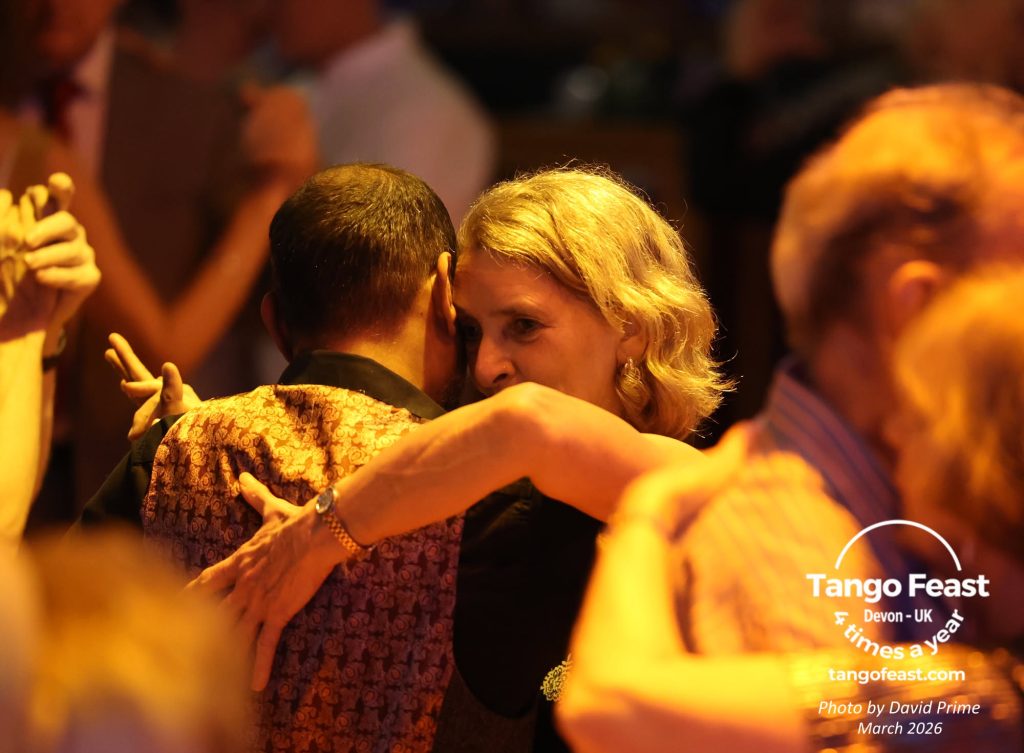
My original plan was simple: dance less, dance well, chat more, and let the final milonga be a place to unwind and say goodbyes. The Feast, as always had other plans. Sunday evening turned out to be the busiest milonga of my weekend. I was receiving more cabeceos and miradas than at any other point in the weekend. Conversations kept opening and were longer and deeper than before as everyone reflected on the whole weekend. New dancers appeared whom I had somehow not danced with yet. Some I had met in Mabel’s class, others had been sitting too far away during previous milongas, so this time I became more mobile and went closer to where they were seated.

A few followers apologised in advance for being beginners. I told them not to worry as my dancing is structurally simple anyway. I truly believe that some of the loveliest tandas can happen with newer dancers, precisely because there is no temptation to overcomplicate things. The dance becomes about connection, music, walking and the internal feeling of the body.

I had planned to dance very little. Instead, I danced almost every tanda. Some of the highlights belonged to the walking I had been developing throughout the weekend. In one tanda, with more space opening late in the evening, I found myself moving in a self-generated innermost third lane of dance, walking for most of the tanda. The music, the follower, the space and the hour of the night had all aligned.

By the end, I was tired but full. During the goodbyes, a couple of women told me they had wanted to dance with me during the Feast but that we had somehow missed each other. I was surprised, because I had felt so open to dancing with almost anyone. But it also told me something important in that I had landed well into the room, far better than I thought I had.

I made several new Facebook friends then and over the coming days. Messages arrived afterwards from followers I had danced with earlier in the weekend but missed during the final milonga. I realised I now had a new problem: too many invitations, and the need to manage them with care. It was a very nice problem to have.
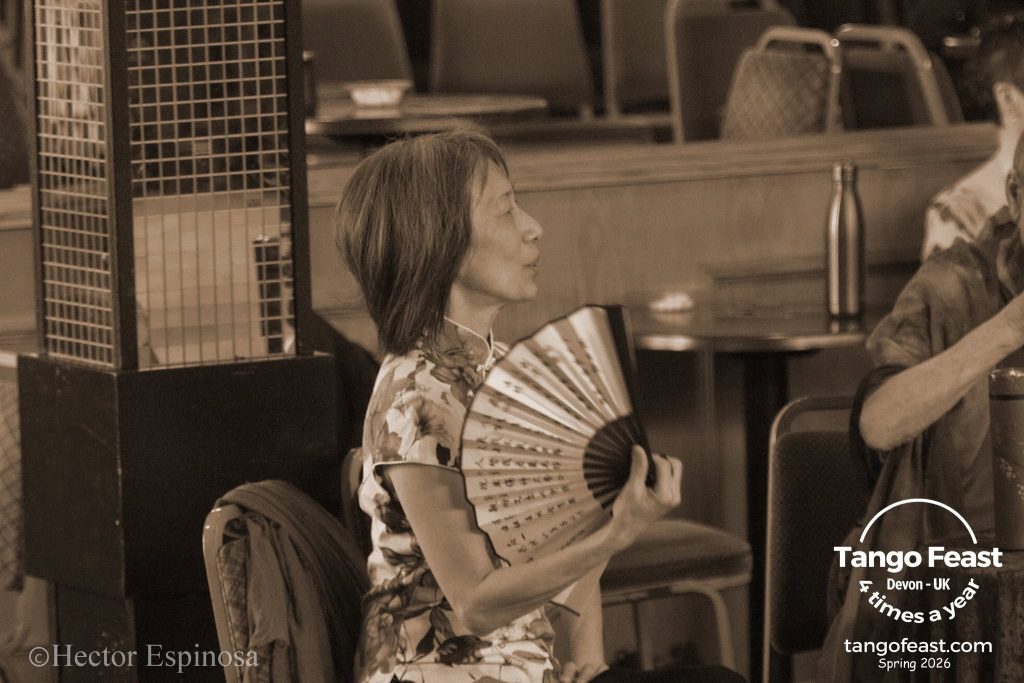
More importantly, Sunday night gave me confidence I would soon need. In Japan, I was a completely new face, yet I would dance far more than I had expected or imagined. Looking back, it felt as though the Feast did not really end in Devon and it simply continued across the world and picked up tempo.

But one tanda from Sunday night belongs to a deeper thread. That was the Pugliese tanda in which “Adiós corazón” began to play.

The Heart-Shaped Sea

In Scandinavian myth and imagination, the sea is never just scenery. It is threshold, depth, danger, memory and passage. Over the previous few months, Roxette’s “Heart Shaped Sea” had become one of the songs I came to in my grief after my mother’s death.
In Buenos Aires, my mother had died while I was at a milonga. That fact will probably always bind tango, music and grief together for me. Tango contains nostalgia, longing, tenderness, loss and memory. It also contains cheeky milongas, dreamy valses and so many other moods. The amazing thing about tango is that it can meet you wherever you are, and in those days it met me where I needed it most.

I do not know exactly what opened the grief so much for me in Devon. If anything, I had come away from London to escape grief altogether and lose myself to tango oblivion. Perhaps it was being alone in the caravan, away from the London home where I had lived with my mother for nearly two decades. Perhaps it was the density of the music, and tango itself.

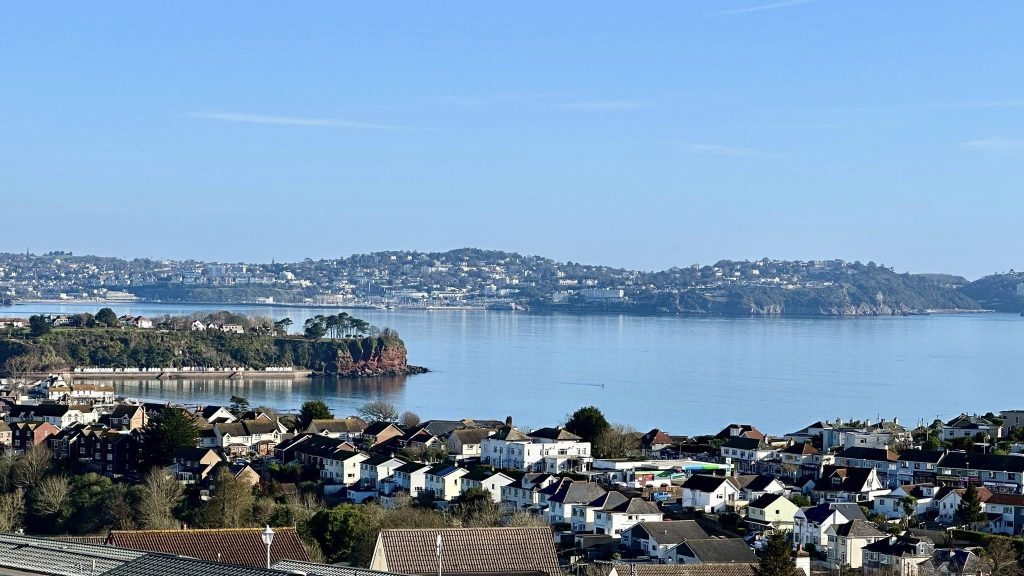
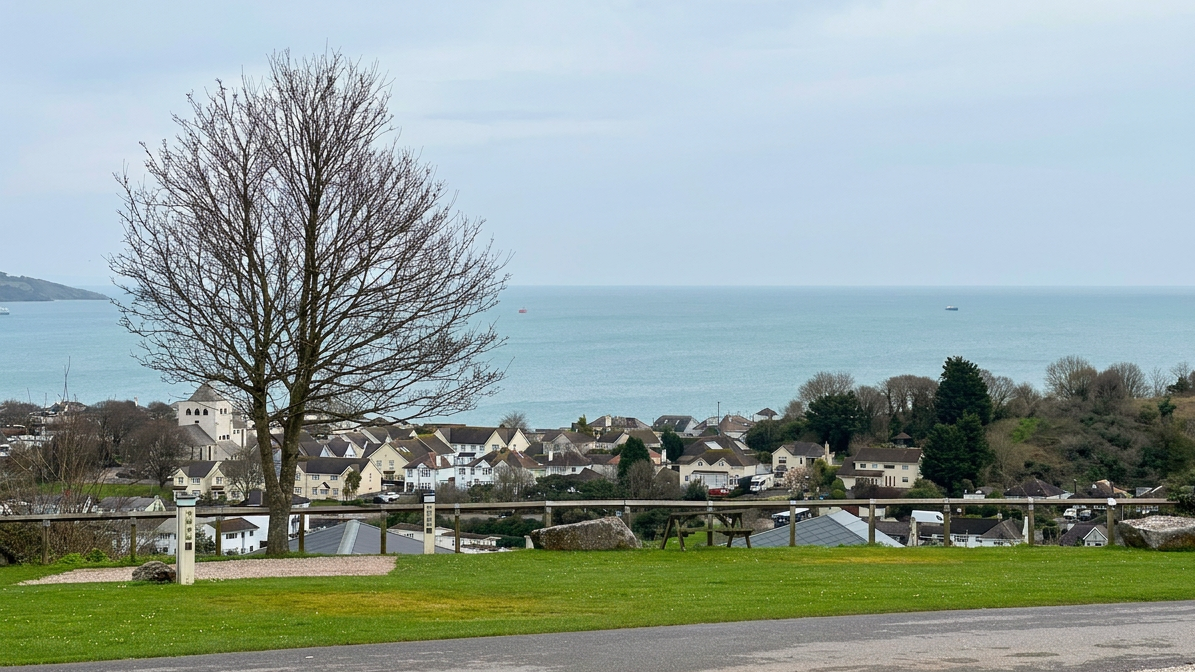
Whatever it was, I cried in the caravan remembering her on some days. Being so close to the sea, I walked to the seafront from my caravan every morning and looked out and a period of reflection looking at the coast helped me. The seafront changed flavour day by day, sometimes the cold and grey wind beat down on the skin and some days it was blissful sunshine and colours.
During the final milonga on Sunday night, a Pugliese tanda began, and “Adiós corazón” started to play. That song was already tied to my mother’s death as I had danced to it the night I heard the news, held safely in Noelia’s embrace. Since then, I have mostly avoided dancing to it. But on this occasion I was in a beautiful embrace and in a dreamlike state after the long weekend. As we danced, a couple of tears came. I let them come, gathered myself, and continued dancing.

That may have been the real gift of the Feast. Not that it removed grief. Not that it gave me closure in any neat or final sense. But for a few days, in that strange mixture of sea air, solitude, music, embraces, conversations and dance, grief changed shape and perhaps moved into another phase.

The Train Ride Home

On Monday morning, with all the dancing over, I walked to the seafront one last time. The sea had helped me process more than I expected. I said another goodbye to my mother there, but this time it came with hope rather than only ache. Five days later I would fly to India. After that came Japan and eventually the long-awaited property purchase in London. Life was calling me forward, and that too at quite a pace.

I returned to the caravan and packed. The small world I had inhabited for four days of cooking, resting, tutoring, dancing, grieving, disappeared as quickly as it had formed.

At Paignton station, I boarded the direct train back to London and bumped into an experienced tanguera who had also been at the Feast. Our conversation continued for the entire three-and-a-half-hour journey. We talked about life, tango, travel, festivals, the tango scene in Holland, flying with dance shoes and clothes, and the art of packing lightly without leaving behind the things that matter. The timing could not have been better. I needed all the tips and advice of being a properly flying tanguero. I also learnt so much from her about the UK tango scene and how difficult it can be for single followers to register at tango events. It was the perfect way to end the entire Feast experience.

From the Coast of Devon to the Coast of Fukuoka

I peered out of the train window and this time there were no grey English cliffs, no stormy sea spray, no little coastal towns washed in rain and salt. I was a long way from Devon. Japan passed by in flashes: cities, mountains, rivers, bridges, fields, stations, rooftops, and the strange calm, almost clinical efficiency of a country that always seemed to be moving without being in a rush.

Momochi seaside park and beack in Fukuoaka, Japan.

Five days after leaving Devon, I had flown to Delhi. From there I had continued to Tokyo, and finally I was on the five-hour shinkansen (bullet) train from Tokyo to Fukuoka for the Sakura Tango Festival. The whole journey had seemed almost too ambitious when I first planned it. Yet the Feast had given me momentum, acceptance, and a renewed drive to go ahead and enjoy what life had to offer.

During a break in the Sakura weekend, I knew I had to go back to the seafront. I sat on the pristine white sand of Momochi Seaside Park, eating grilled lamb and salad in a T-shirt on a warm spring afternoon. In front of me was Hakata Bay. Behind me stood the futuristic architecture of a Japanese waterfront city built on reclaimed land. The scene could hardly have felt further from Devon. Fukuoka felt light, clean and almost unreal. It is an experience that I will write in detail about next.

But the thread between the two places was clear. In Devon, I had looked at the sea and allowed myself to grieve. In Fukuoka, I looked at the sea and returned to the dance floor. From the coast of Devon to the coast of Fukuoka, tango had travelled with me. So had grief. But so had life.

I was dancing into a life ahead.

My First Tango Feast – Devon Dancing (December 2025)

Tango begins in your own body first. After years of pushing, learning and searching, something clicked into place in Devon and stayed that way when I came home.

Before Devon — Risk, Loss, and Reset

Tango Feast is held in Devon four times a year, drawing dancers from across the UK and beyond. This was my first Feast and only my second tango festival. The first, in Kraków in 2024, had been deeply unwelcoming, and I left convinced that festivals were not for me. A new milonga is always a roll of the dice but a festival far from home feels like a far bigger gamble.

By early 2025, my relationship with tango had already shifted dramatically. I had spent over a year taking weekly private lessons, split between Buenos Aires and London, pushing hard to improve. Then, in January 2025, my mother died suddenly while I was at a milonga in Buenos Aires. That moment altered far more than my dancing.

In the months that followed, I stopped lessons and allowed my tango to live almost entirely at milongas. Without constant correction or prescribed figures, my learning began to settle. The walk simplified. The embrace softened. I learned to navigate crowded rondas in Tokyo, Teddington, and everywhere in between. I also learned that the dance continues off the floor, in silence, in conversation, in choosing when not to dance.

Tango Feast had been recommended repeatedly by dancers whose judgement I trust. I was promised close embrace, good floorcraft, musical simplicity, and a genuinely welcoming atmosphere — all the things that I love about tango the most. With a little help, Fernando arranging a caravan share and Ben finding me a partner to register with, the practical details were all put into place. My expectations were modest, and I took the gamble.

Hitching a ride west and arrival

As I don’t drive, I rely on lifts and public transport for distant milongas. Fortunately, Einat (Balanceo Shoes) offered me a lift. She drives to every Feast and knows a lot about the UK tango scene. As we drove west and chatted tango, the light thinned and lifted, colours separating rather than smearing. Watching the landscape open toward the coast, I understood why painters are drawn there.

The journey stretched longer than planned, and I arrived with back-to-back tutoring sessions still ahead of me. My carefully imagined smooth arrival had evaporated.

Beverley Park was a cheerful seaside resort made slightly surreal by December weather. The hall itself was impressive with Christmassy chandeliers overhead and a specially built wooden floor that was temporarily put in just for the Feast. I met Fernando, the Argentinian organiser, and Alan, my caravan mate for the weekend.

There was barely time to settle before food shopping and tutoring. My caravan bedroom felt like a submarine — narrow beds, overhead cupboards, rain hammering outside. I ended up working from the lounge instead. By the time I finished tutoring, I was drained. And yet the most demanding task of the day was still to come.

Buying a flat in London from a caravan

Earlier that day, my mortgage broker sent another set of forms for my first ever property purchase. Months earlier, my mortgage had collapsed over a lease extension issue. Just as I left for Devon, the process restarted. Rather than risk further delay, I recalculated everything from the caravan and submitted the application.

When I hit send, I was exhausted. The milonga hall, fifty metres away, felt miles away. My clothes were creased, the caravan bare of basics like a knife, but I cooked something simple, showered, dressed my best, and stepped into the rain, an hour late.

Thursday night

The first milonga – A well designed social dance space

The hall had been transformed. There was a single main dance floor, with seating arranged asymmetrically along its edges. One of long sides had a single row of chairs and tables by the floor itself. Beyond that was a smaller practice dance floor, raised above the main one, which remained mostly empty throughout the night.

Altogether, the space encouraged people to move between dancing and conversation without friction. One of the biggest differences I’ve noticed between milongas in Buenos Aires and elsewhere is that Buenos Aires milongas are designed first and foremost as social spaces. Multiple layers of tables, food and drinks (often with table service) are woven into the evening. The dance floor sits inside that social fabric, rather than replacing it. The milongas are timeless places as hours go by with chatter, drinks and some dancing.

By contrast, many milongas outside Argentina place chairs tightly around all four edges of the room. The result is functional but sterile. The unspoken goal becomes transactional, pay an entry fee, get as many dances as possible, then leave.

The Feast echoed the Buenos Aires social space design. There was even a discreet breakout area at the back for tea, coffee, and biscuits, just far enough away to feel like a pause from the floor. Later in the evening, Fernando and the team brought out extra nibbles near the dance floor so people could refuel without leaving the room. Small but well thought out touches. The design of socialising spaces is no doubt a big factor in the enduring success of The Feast.

An older crowd at the first milonga

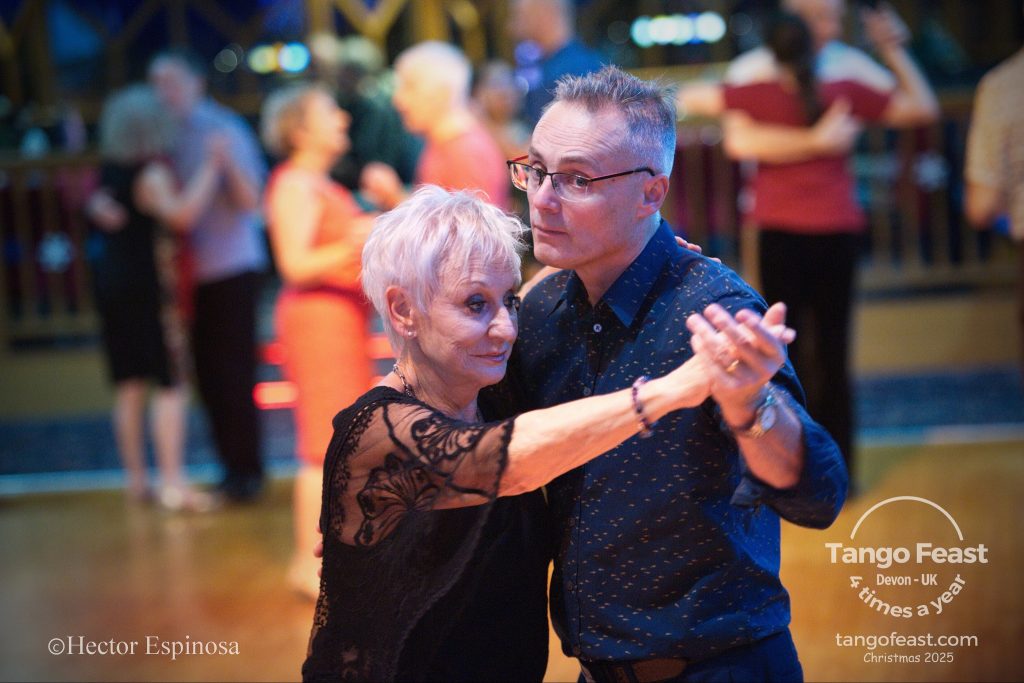
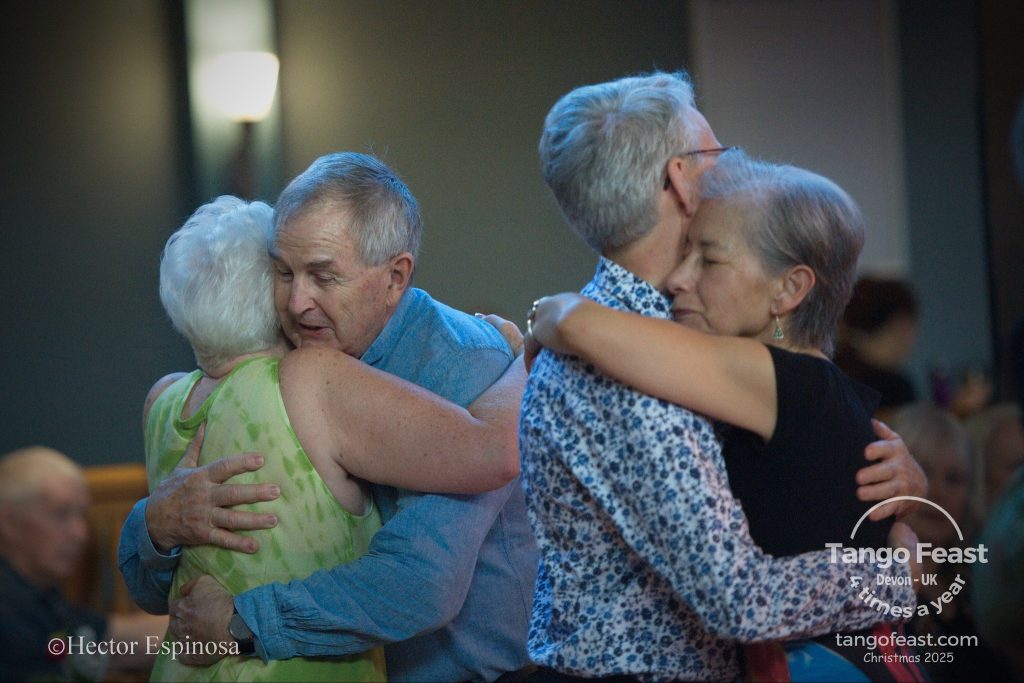
On the first night, I was a little surprised to see that the demographic skewed older, and briefly wondered whether this would be the case for the entire festival. I may well have been one of the youngest dancers there and I’m no spring chicken! Many of my dance partners on that first milonga were from my mother’s generation or older.

Photo by Ben Lovejoy

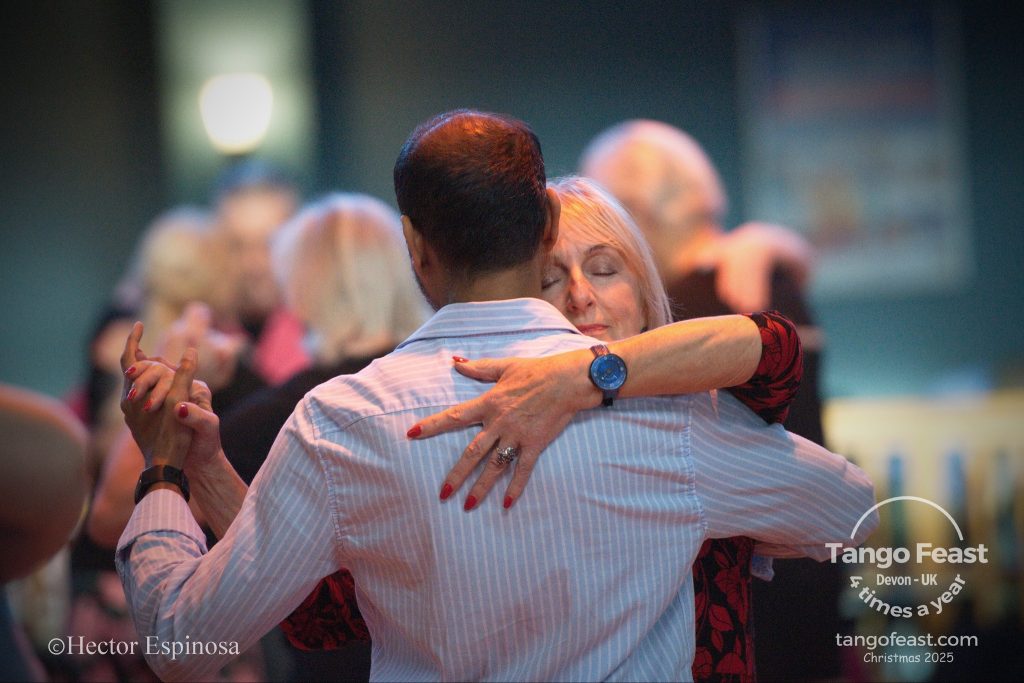
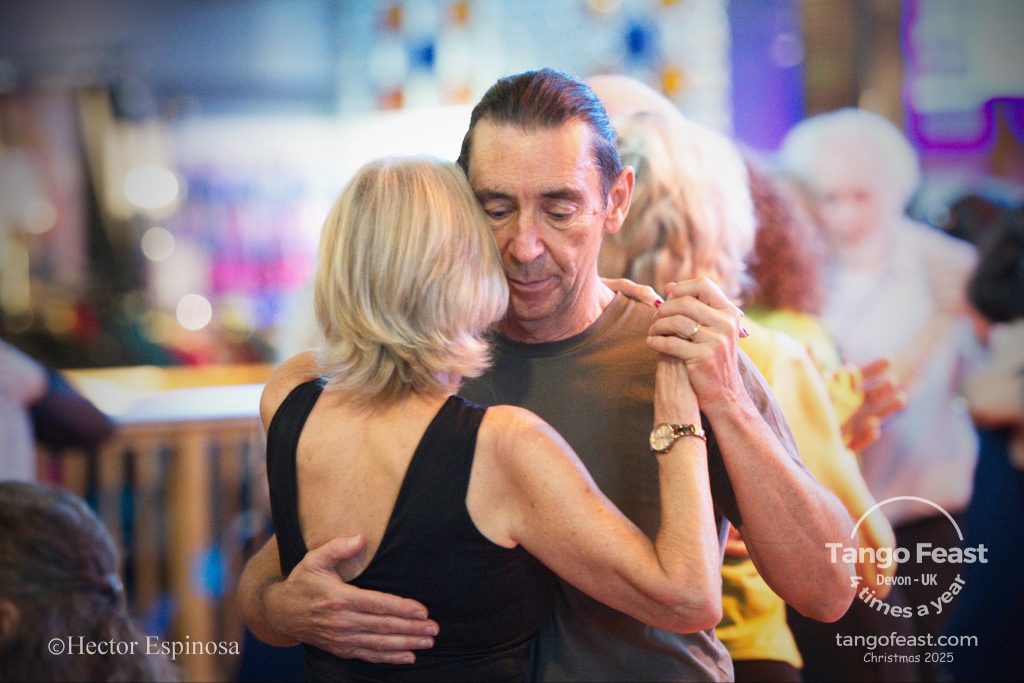
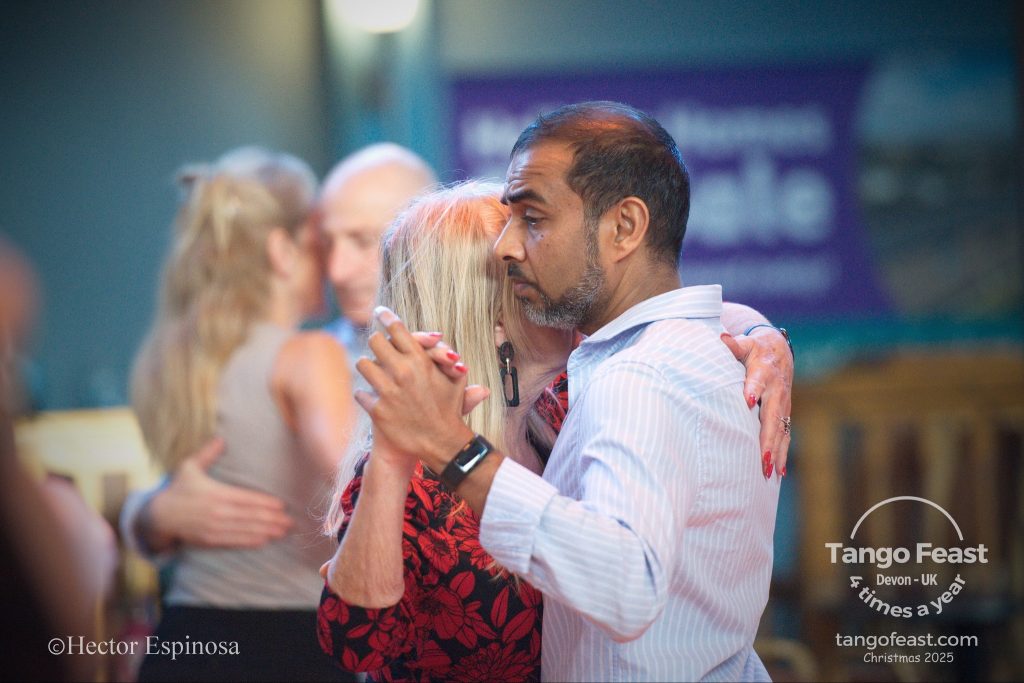
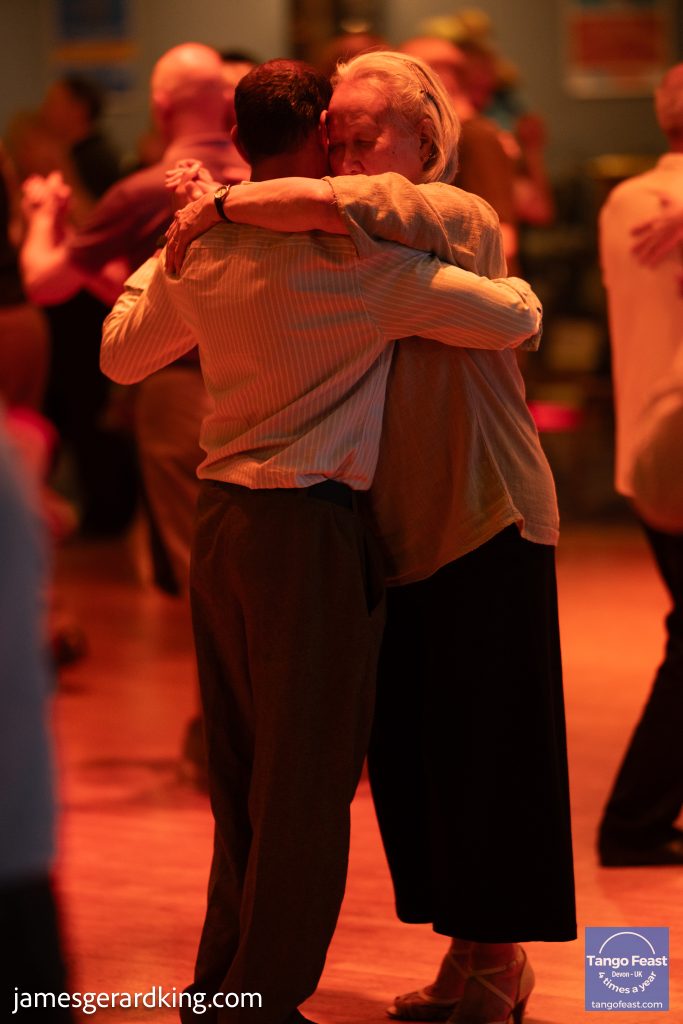
And yet, once we were in close embrace, none of that mattered. Age, status, and appearance dissolved, leaving only presence. You stop dancing from what you see and start dancing from what you feel. This is one of the reasons tango continues to move me so deeply: you never quite know who you will connect with.

I was told that Thursday nights tend to skew older simply because retired dancers can travel and stay out late mid-week, while younger dancers usually arrive from Friday evening onwards once work commitments ease. That made perfect sense. I was the exception only because I could work remotely.

From feast outsider to insider, one embrace at a time

As a first-time leader, I knew it was going to be tough getting dances at a festival where I recognised only one follower who I have danced regularly with — out of well over a hundred. And she wasn’t dancing that night due to injury. I arrived with low, realistic expectations about how much I would dance.

Fernando, the organiser, had anticipated this dynamic and addressed it directly in a thoughtful message to first-timers, acknowledging that many participants had known each other for years and that newcomers might initially feel like outsiders. It was reassuring and honest which I really liked. Ben has written about this same email in his own reflections on his very first Feast.

And true enough, there were many followers in couples or established groups, which made breaking through harder. I was clearly stepping into a well-formed social ecosystem. What worked in my favour early on, however, was the speed of the opening flow. Dances started quickly and the floor filled fast. I happened to be standing near the edge of the dance floor, and twice I was simply invited straight in. Both times it was by other first-timers, finding their feet just as I was. In one case quite literally, a dance with France where my shoelaces came undone without me realising at the time. She told me of that after the first dance and I smiled. All grounding reminders that none of this needed to be taken too seriously.

Those early dances were a small but crucial lifeline. I started recognising some other dancers I had seen on the odd occasion at Eton milongas which settled my nerves and restored confidence. I felt able to walk around, make eye contact, get into conversations and begin seeking dances more actively.

First Day — Floorcraft and First Connections

The floorcraft on the first night was, frankly, disappointing for a milonga outside London. The outer ronda was almost static, which made it hard to express myself fully or let the dance breathe. I was still easing myself in and deliberately kept my dancing simpler and more contained. There was an inner ronda that moved a little more freely, but I rarely dance there, so I stayed on the outer track and worked within its constraints. I’ll return to floorcraft later, as it became a recurring theme.

The Thursday night milonga ended at 12:00 (all the other nights ended at 01:00) and as the night wound down and I headed back toward my caravan, I fell into a long, easy conversation with Leon. I saw him as the tango poster child of the event, whose face I’d seen on flyers countless times before. His warmth and openness immediately softened the whole experience. I ended up talking with him at almost every milonga thereafter. People like Leon are a vital social glue of events like this by making newcomers feel welcome and that they belong.

Between Milongas — Rain, Sea Air, and Recovery

After Thursday night, the rest of The Feast began to blur. That first evening had been the hardest, physically and emotionally. Once into the flow of things life narrowed to a simple loop: milonga, food, sleep, recovery, back to dancing.

Staying in a caravan by the coast couldn’t have been more different from my usual life in London. White caravans, open skies, and sea air replaced concrete, traffic, and winter greyness. Even in December, the place felt bright and spacious in a way London rarely does. The fresh air and surprisingly good tap water seemed to put life back into my system.

It rained almost every day. After the stimulation of afternoon and evening dancing, the rainy mornings carried a strange surreal quiet. That contrast became part of the experience: intense connection on the dance floor, followed by long stretches of silence and stillness. I shared the caravan with Alan, which gave me an opportunity to discuss the event with another newcomer away from the dance floor.

Eat, sleep, watch rain, dance. Life as a tango blur at Beverly Park. Photo by Ben Lovejoy

Despite the temporary setup, I stayed disciplined with my routines of fully cooked meals (local venison steak included), outdoor meditation, and top-up naps. With so many hours of dancing, self-care wasn’t optional. I was glad I took it seriously, and for the most part I got it right. Having the caravan less than five minutes from the dance floor made an enormous difference. It allowed me to dip in and out of intensity without burning out, a stark contrast to the two-hour journeys I often make to milongas outside London.

Friday and Saturday

Peak Energy — The Weekend Floor

By Friday afternoon, and even more so on Saturday, the atmosphere at The Feast shifted. The core dancers had arrived, with others drifting in and out milonga by milonga. A small wave of younger dancers appeared, still very much a minority, but enough to change the tone of the floor. The milongas grew steadily busier, peaking on Saturday night when the outer ronda became even more static than before.

Getting dances became easier, though it was never a given. Many cabeceos were ignored or simply passed by, especially with new dancers arriving each evening who had no idea who I was. That’s to be expected. On the other hand, a few followers I had already danced with began seeking me out again, and Einat kindly recommended me to some of her friends. I was very grateful for her help.

Across those two nights, when the conditions and partner was right, I started to experience beautiful tandas of deep stillness with synchronised breath.

Again and again I noticed the same pattern: when I slowed down, softened my chest, and walked with clarity, the connection deepened on its own. Several followers commented on how grounded the walk felt, or how warm and secure they felt in the embrace. I wasn’t trying to create anything dramatic. I was simply staying present and letting the music travel through that structure.

It brought me back to something I learned in Buenos Aires from my tango maestra Noelia Coletti: tango lives in micro-movements, subtle changes of tone, weight, and intention that happen inside the body. When both dancers are truly present, those tiny adjustments become the dance itself.

That didn’t happen with every dance of course, those were just a few, the special ones are special only because authentic connection can never be universal. But when it happened, it became the emotional centre of the weekend. Even one tanda like that in a whole day made the Feast totally worth it for me.

Saturday night carried the peak energy of the festival. The floor was packed, the music more rhythmic, the rondas compressed almost to breaking point. By the end of Saturday, I had crossed a threshold in my dancing, including finally stepping fully into milonga tandas, which deserves its own section below.

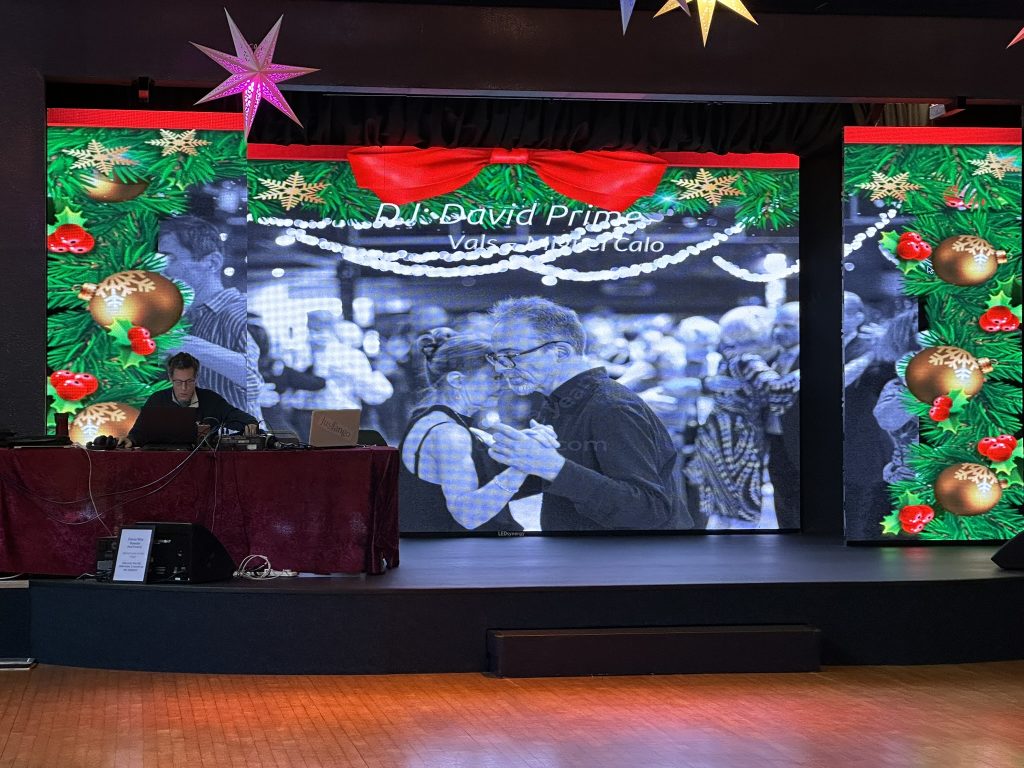
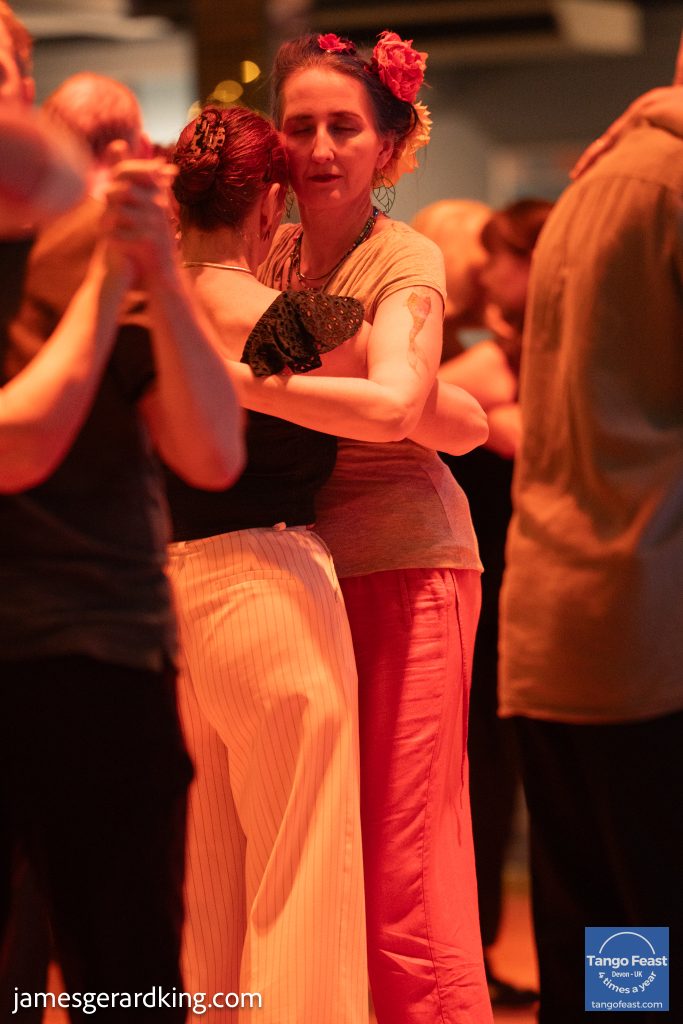
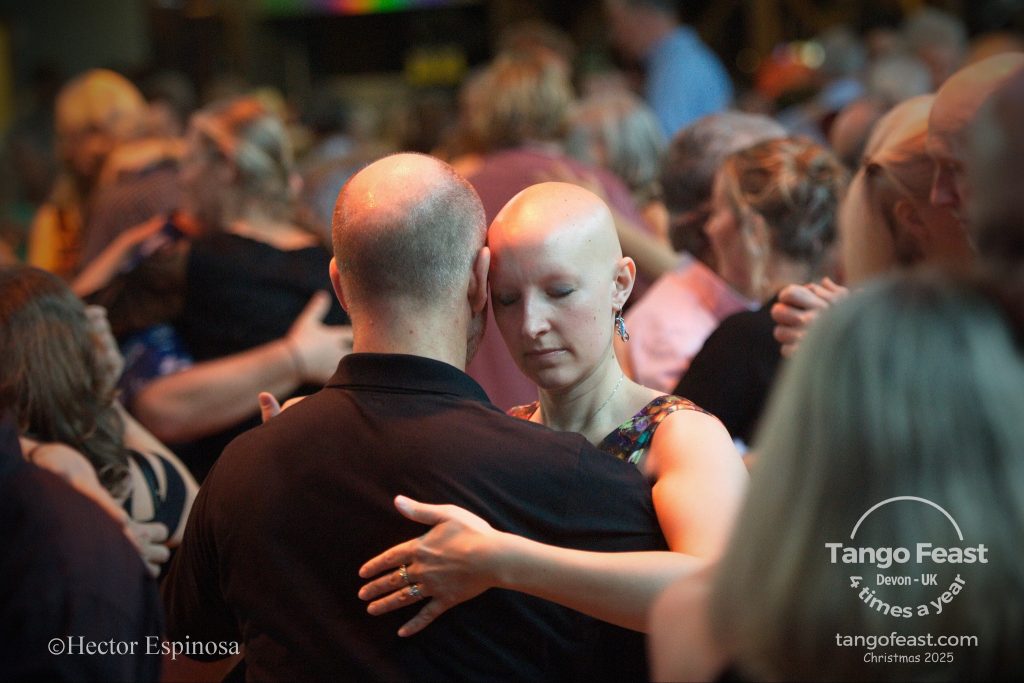
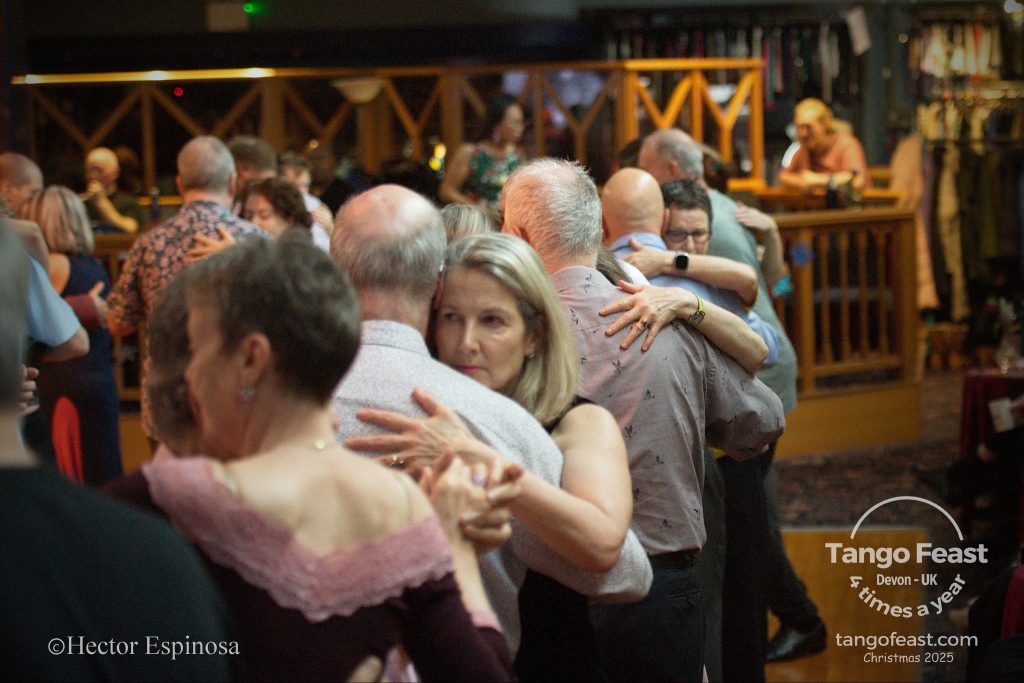
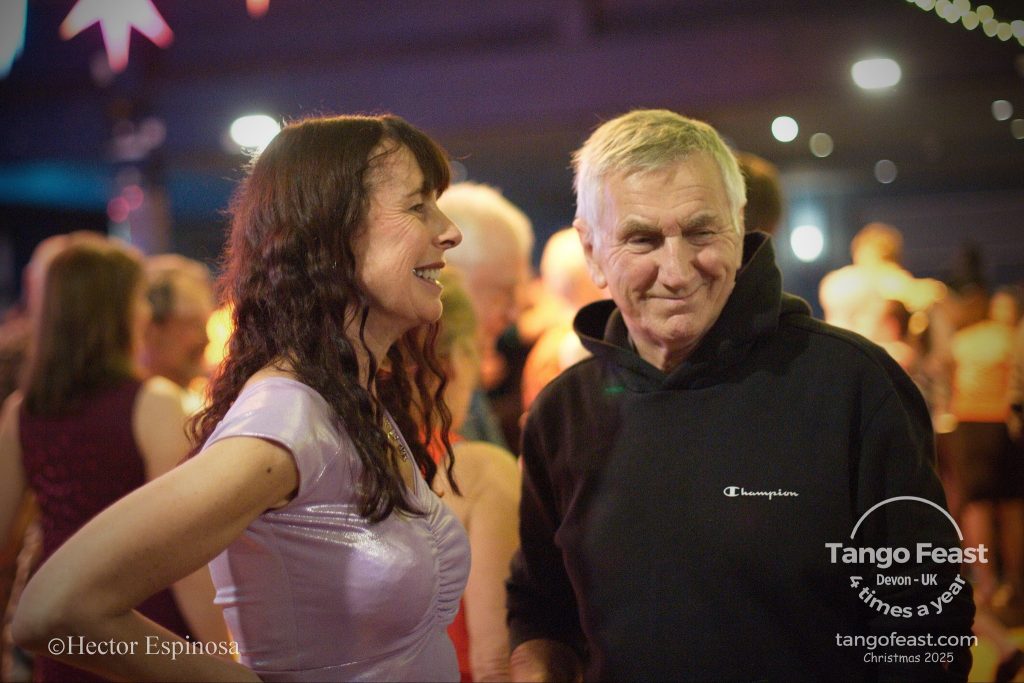
Beyond the dancing itself, the visual atmosphere of The Feast added enormously to the experience. A thoughtful touch at each milonga was the projection of photographs taken throughout the event — dancers in embrace, in laughter, in quiet conversation between songs. Tango photos usually blur together for me, all blissful faces and dramatic poses, but these were different. They were carefully observed and deeply human: hands resting on backs, small pauses between couples, smiles exchanged in the spaces between music. Each image told a story, and seeing them projected in real time made the whole gathering feel curated and communal, as if everyone present was part of a living montage.

That same care showed up in how people presented themselves. The ladies, in particular, made a real effort, and it was a pleasure to watch outfits transform from afternoon to evening milongas on the same lady. Colours, textures, and silhouettes shifting from a daytime to evening style. There was attention to detail in shoes, dresses, and hair, and it lifted the energy of the room. The leaders, as always, spanned the full spectrum, from sharp three-piece suits to relaxed resort-style shirts, but overall there was a sense that people had come to mark the occasion.

Presentation in tango isn’t vanity; it’s part of the ritual. Dressing well signals respect for the music, for your partner, and for the shared space. I enjoy bringing my own flourish (borrowed from my rock performing world) to that ritual through the colourful handmade waistcoats I wear — tasteful, but distinctive enough to feel like my signature on the floor.

Floorcraft Frustration

The dance floor at The Feast was generally civilised with relatively few collisions, and leaders entered the floor with a respectful cabaceo for the most of it. But for me the Feast floorcraft was still deeply frustrating. The main issue was the outer ronda: busy yet almost static, sometimes barely moving a quarter of the room for an entire tanda. That broke what I enjoy about tango the most. Tango is a walking dance, and when the ronda doesn’t travel, everything collapses into contained islands with couples parked in place and doing figures. It was rare to get enough of an opening to advance with a walk.

According to Ben’s blog review of the same event, floorcraft can be exemplary at the Feast. The reality is that in a ronda with 30 couples, it takes just one leader to stall and ruin the entire ronda.

I found I could only truly express myself deep in the epicentre, where there be dragons, because ironically that was the only area with any real movement. The inner ronda had more flow than the outer one, but its boundary with the centre wasn’t always respected, with some leaders zig-zagging unpredictably with the epicentre. Dancing there required awareness on both sides, pulling me back into vigilance to protect my follower rather than feeling immersed and present. After the first milonga on Thursday night, I stopped dancing in the outer ronda altogether, except briefly at the very start of milongas when the floor was still sparse.

There was also a smaller secondary floor with a lighter, more playful vibe and more space, which I enjoyed, but the sticky floor and dull lighting meant it never quite carried the energy of the main room. Clearly most people felt the same as this overfill floor was fairly empty even when the main one was packed.

Experiences like this only underline how rare genuinely walkable tango still is outside Buenos Aires. One notable exception remains Corrientes in London, a place that actually preserves forward movement and Buenos Aires–style ronda flow. I have been spoiled by that experience and compared to that, The Feast felt polite but fundamentally static.

Many Women Leading — A New Ecology

I haven’t previously attended a milonga with so many women leading, so it took a little adjustment. I would estimate that around 10–15% of the women were actively dancing in both roles throughout the event. There were a few men following too, but far less consistently. I fully support this direction, not least because it opens the possibility for me to follow socially in the future, something I already practise in private classes by learning every movement I lead.

Most of the optional workshops were devoted to women learning to lead, and they were clearly in demand. That energy carried straight onto the milonga floor. Many women understandably wanted to test their new skills in a real ronda, and in doing so encountered the same realities every developing leader faces: navigation under pressure is hard. Managing space, timing, musicality, traffic, and another body simultaneously is a significant cognitive load that only becomes apparent in live conditions. It was interesting to watch that learning curve unfold in real time, and to hear from newly leading followers about their anxieties stepping into such a challenging ronda.

Photo by Fernando

Socially, the increased fluidity of roles added another layer of complexity. It wasn’t always immediately clear who was primarily following, who was leading, or who might switch. Some women danced largely within closed groups where roles were understood internally but not obvious from the outside. On several occasions I found myself hesitating before a cabeceo, unsure whether the woman I was observing was leading that tanda or open to following.

What became clear to me only afterwards is that women leading may be part of a broader solution to longstanding role imbalances at tango events. Ben Lovejoy has written thoughtfully about role balance and the structural challenges of leader–follower ratios, and seeing this shift play out at The Feast gave me real world context.

Sheffield Tango 2024

As I travel and dance in different cities around the world, I’m increasingly aware of how local conditions and culture plays out to shaping the tango so differently. The Feast felt like one snapshot of that evolution in motion.

“Where Do You Dance?” — The London Problem

One question kept coming up in the between-songs tanda chatter: where do you usually dance? I found myself explaining that although I live in London, I rarely dance there now. On paper it looks like a tango paradise with events every day of the week — but quantity isn’t the issue. Culture is. London tango is strongly shaped by performative aesthetics and television, particularly Strictly Come Dancing. Many dancers arrive via salsa or ballroom backgrounds, and the result is a scene that often prioritises figures over flow. Long, showy sequences in open embrace in chaotic rondas. It isn’t tango in the Argentine sense and it isn’t tango in the ballroom sense either, Ben Lovejoy described it perfectly as TICD – Tango Inspired Contemporary Dance.

I love London, but stylistically its tango often sits far from the embrace and music led, walking dance I now value. Saying that aloud at The Feast felt vulnerable and liberating. What reassured me was discovering that this isn’t a universal UK pattern thankfully. London appears to be a tango bubble. The Feast gave me an opportunity to meet dancers from all over the UK and I really liked the presence, musicality and embraces of dancers from Cambridge and Bristol. Tango culture, I realised, is local. London is one ecosystem among many.

Milonga Tandas — A Long Avoidance Ends

The milonga tandas became the defining moment of the weekend for me. I had avoided milonga socially for nearly seven years, so consistently that it became part of my dancer identity. When milonga came on, I would sit out and take a break. At The Feast, that pattern broke. I was cabeceod onto the floor two or three times in quick succession, and eventually I stopped resisting.

What followed wasn’t a sudden miracle, but years of accumulated work finally landing in the body. Dancing with strong milonga followers gave me an embodied understanding of the rhythm and the closer connection the dance demands. I’m fairly sure I was partially back-led during the first two tandas, not in a way that overrode me, but in a way that confirmed to my body what my musician’s brain felt. By the third tanda everything clicked into place as I visualised our contained embrace as a guitar that I was playing to the flowing milonga music. I could enjoy an entire tanda with just rebounds, change of weight and walking. The floodgates had opened, I danced nearly every milonga tanda for the rest of the festival.

The shift didn’t disappear when I returned to London and I was now confidently able to lead milonga dancing. After seven years of avoidance, milonga is now part of my dance. And I love it! This breakthrough alone made attending The Feast worthwhile.

Sunday — Integration

The last milonga

By Sunday morning, I felt full and whatever dancing happened next would be a bonus.

I had originally planned to stay until Monday, but with tutoring commitments waiting in London and not knowing how depleted I might be, I chose to leave early Sunday evening instead. By Saturday night I was already packing, and Sunday morning put me firmly into departure mode: booking trains, arranging a taxi, mentally shifting gears. My headspace was no longer in the dance till you drop festival state.

Nonetheless, I danced for about an hour at the Sunday afternoon milonga.

With fewer people on the floor and a gentler musical build from the DJ who was clearly aware that everyone was tired, the atmosphere was more chilled. There was more space, better floorcraft, and a slower pace. I enjoyed some calm, grounded walking dances, even in the outer ronda.

I also spent time in the practice ronda, where several women arrived fresh from the leading workshop and wanted to experiment. Since it was explicitly a practice space, I took the opportunity to ask experienced followers I respect for feedback on my lead. Everything I heard was useful : small adjustments, confirmations of things I am already good at, confidence to go for other movements more. It placed me in exactly the right headspace for what turned out to be the real closing moment of The Feast.

Mabel Rivero Class – Tango Begins in Your Own Body First

Mabel’s workshop was the perfect closing chapter as I switched down from dance mode to absorbing the whole festival experience in.

The class was not about steps or sequences, thank God. It was about something more fundamental: tango begins in your own body first. That was the title of the workshop, and it delivered exactly that.

Mabel emphasised ease, which is being at home in your own structure before attempting to meet someone else. Not overstretching the embrace, especially when your partner is a very different height or build. Not leaning forward in search of connection. Not asking your partner’s body to solve your own imbalance.

Her teaching drew from the Alexander Technique. We began seated, exploring gentle head–neck release, spinal roll-downs, and spirals through the torso. The focus was on reducing unnecessary tension rather than “doing” more. In Alexander terms, it was inhibition before action — allowing habitual tightening to soften so a more efficient coordination could emerge. When we stood, she demonstrated how shoulder tension is rarely a shoulder problem; it is usually a consequence of stacked tension in many other parts o the body. “A straight axis is meaningless,” she said, a reminder that the spine is not a rigid rod but a dynamic, responsive structure.

We worked on alignment with softened knees, finding balance while inclining forward without collapsing, even lifting one leg while maintaining connection in the embrace. The principle was clear: two bodies sharing space without either leaning, compressing or compensating for the other.

What struck me was how much of this already felt familiar. Standing on one leg while being gently stress-tested by a partner didn’t destabilise me. But it highlighted something essential as I changed partners: advanced followers don’t lean either. When both dancers are organised and self-supporting, the walk simplifies dramatically. The embrace becomes lighter, yet feels more contained.

When Mabel worked with me briefly one-on-one, she offered a small but decisive correction: bring the hips closer. That was the missing piece. Not the chest pressing forward, not the shoulders closing in — the hips. The true meeting point is lower, more central and closer to the centre of gravity of the body. As soon as she said it, I recognised it. Noelia had been guiding me toward the same thing all along but as Noelia had not seen me for many months, I had slipped into previous bad habits.

Mabel then watched me take a single step with her — just one — in a fully organised embrace. She smiled and said, “That’s it.”

And that really was it. The class ended and I rushed back to the milonga hall. I had hoped to dance more to test what I learned but I only had half an hour before my taxi was to pick me up. It took half an hour just to say those long tango goodbyes.

It was the ideal ending to the weekend. After the intensity of Friday and Saturday, after the breakthrough in milonga, the final lesson was not about doing more. It was about doing less, but doing it from a fully integrated body. And in that spirit of doing less, leaving the milonga without any more dancing felt apt.

That is where tango begins. Thank you to Fernando, the DJs, Mabel Rivero and the many volunteers whose work behind the scenes made the weekend possible.

Bringing It Home — Tango After The Feast

The real test began in the weeks after the Feast. I went to Christmas milongas at Corrientes and Tango Secrets, followed by four consecutive days at Etonathon. What surprised me was not that I danced well, but that the internal state from Devon held. I returned to the same anchors, a clear walk, contained embrace, stillness (pauses and otherwise), musical expression, simplicity — and they all seemed more refined now.

Milonga, in particular, had unlocked in a way that generalised. What had once been a weakness became something natural and even enjoyable. I now dance every milonga tanda without hesitation, and the feedback has been consistent: musical, grounded, connected. I can now start learning more movements on routines in my private milonga classes with Noelia.

Being able to dance milonga boosted my confidence to no end as I can now finally dance all the sub-genres of tango. At the same time, my taste has sharpened. I feel immediately when a room drifts toward performative, space-consuming dancing, not out of snobbery, but because it disrupts the kind of connection I now value. My dance has settled into something close to an encuentro or milonguero spirit ; minimal externally, rich internally — and more than one person has described it that way, even though I’ve never attended an encuentro.

But the most important change is not stylistic. The Feast gave me a concentrated immersion that allowed years of practice to settle into my body. I understand the social ecology of a milonga more clearly too ; when to enter, when to wait, when to leave.

The improvements were on every dimension of tango.

Would I Go Again?

Yes. I’ve already booked my Spring Feast ticket.

That probably says more than any review could. The weekend wasn’t perfect. The floorcraft frustrated me at times. The rondas were often static. But the core ingredients I value were there: close embrace, musical sensitivity, thoughtful organisation, and followers who I can connect with well. The Feast sits in a sweet spot for me, it is accessible, affordable, and strong enough in quality to justify immersion without the logistical and financial stretch of flying across Europe.

I’ve realised how much I value the UK milonga ecosystem as a whole. There is something grounding (and addictive even) about travelling up and down the country and seeing familiar faces reappear in different halls. The Feast functions as a hub within that network and makes the scene feel less fragmented.

Until now, I have never needed to learn to drive. My life has been built around cities and public transport. But tango is slowly changing that equation. If driving expands my radius and deepens my participation in this network, then it may be time. Especially as I prepare to move into my own place and shape the next chapter of my life more deliberately.

From coast to coast : At the Winter Solstice milonga in Hastings on 21 December 2025.

At the same time, I’m fortunate. My digital work allows me to explore tango beyond the UK, Argentina, Japan, Italy, India, wherever the next curiosity pulls me. That freedom forces a constant question: where should I tango regularly? A European festival can easily cost more than a focused trip to Buenos Aires but could be fun way of exploring European cities. Buenos Aires remains the reference point. But not every growth cycle requires transatlantic immersion. The Feast, for now, offers a meaningful middle ground.

Spring Feast is already in the calendar. Not as a gamble this time. Just the next step of that never ending tango walk.