Author Archives: Atul

My First Tango Feast – Devon Dancing (December 2025)

Tango begins in your own body first. After years of pushing, learning and searching, something clicked into place in Devon and stayed that way when I came home.

Before Devon — Risk, Loss, and Reset

Tango Feast is held in Devon four times a year, drawing dancers from across the UK and beyond. This was my first Feast and only my second tango festival. The first, in Kraków in 2024, had been deeply unwelcoming, and I left convinced that festivals were not for me. A new milonga is always a roll of the dice but a festival far from home feels like a far bigger gamble.

By early 2025, my relationship with tango had already shifted dramatically. I had spent over a year taking weekly private lessons, split between Buenos Aires and London, pushing hard to improve. Then, in January 2025, my mother died suddenly while I was at a milonga in Buenos Aires. That moment altered far more than my dancing.

In the months that followed, I stopped lessons and allowed my tango to live almost entirely at milongas. Without constant correction or prescribed figures, my learning began to settle. The walk simplified. The embrace softened. I learned to navigate crowded rondas in Tokyo, Teddington, and everywhere in between. I also learned that the dance continues off the floor, in silence, in conversation, in choosing when not to dance.

Tango Feast had been recommended repeatedly by dancers whose judgement I trust. I was promised close embrace, good floorcraft, musical simplicity, and a genuinely welcoming atmosphere — all the things that I love about tango the most. With a little help, Fernando arranging a caravan share and Ben finding me a partner to register with, the practical details were all put into place. My expectations were modest, and I took the gamble.

Hitching a ride west and arrival

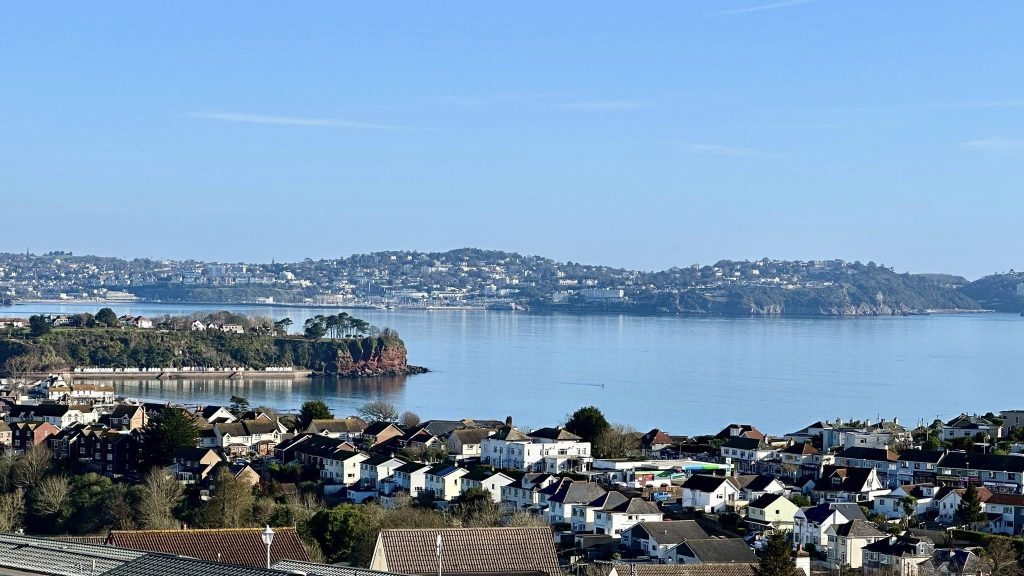
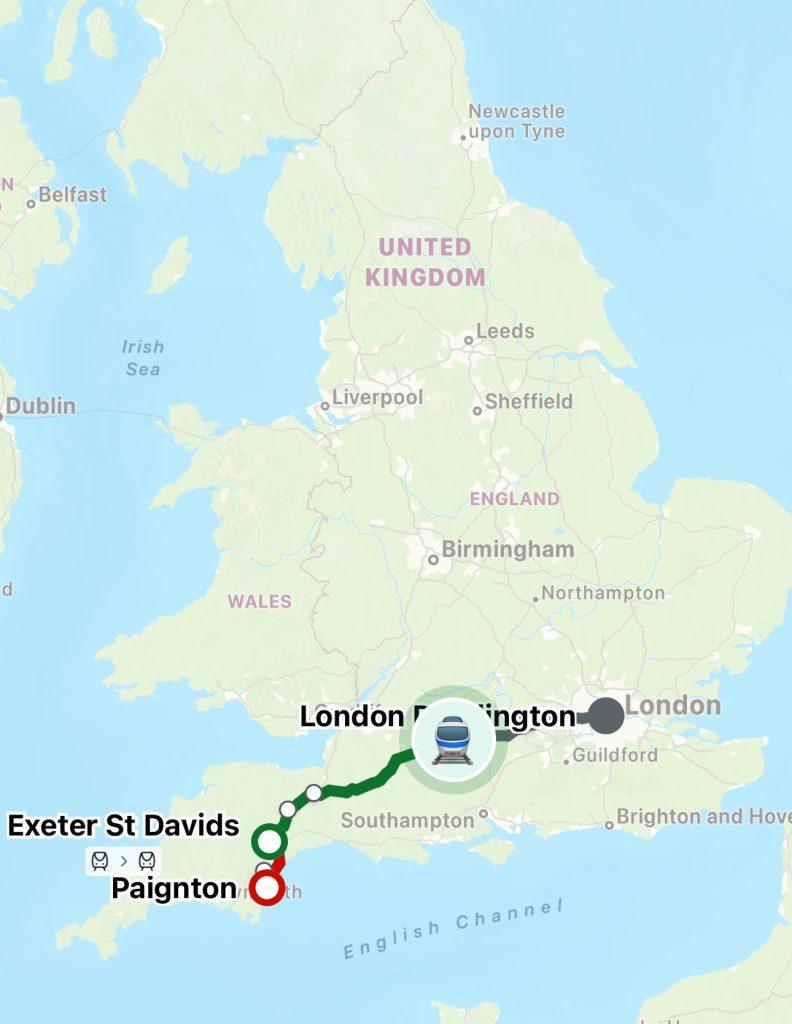
As I don’t drive, I rely on lifts and public transport for distant milongas. Fortunately, Einat (Balanceo Shoes) offered me a lift. She drives to every Feast and knows a lot about the UK tango scene. As we drove west and chatted tango, the light thinned and lifted, colours separating rather than smearing. Watching the landscape open toward the coast, I understood why painters are drawn there.

The journey stretched longer than planned, and I arrived with back-to-back tutoring sessions still ahead of me. My carefully imagined smooth arrival had evaporated.

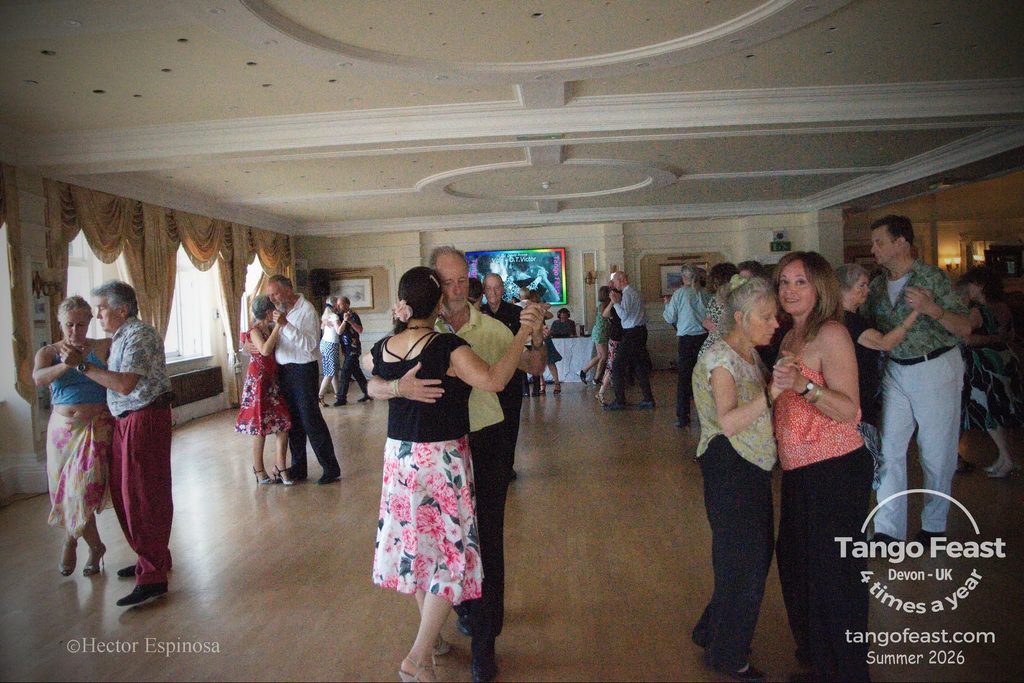
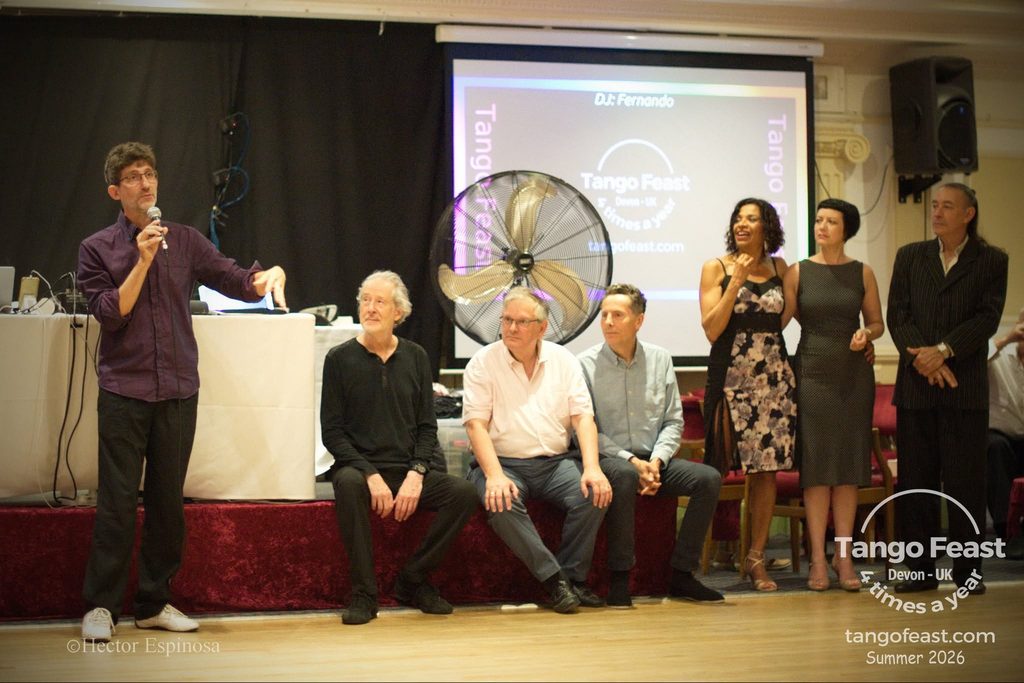
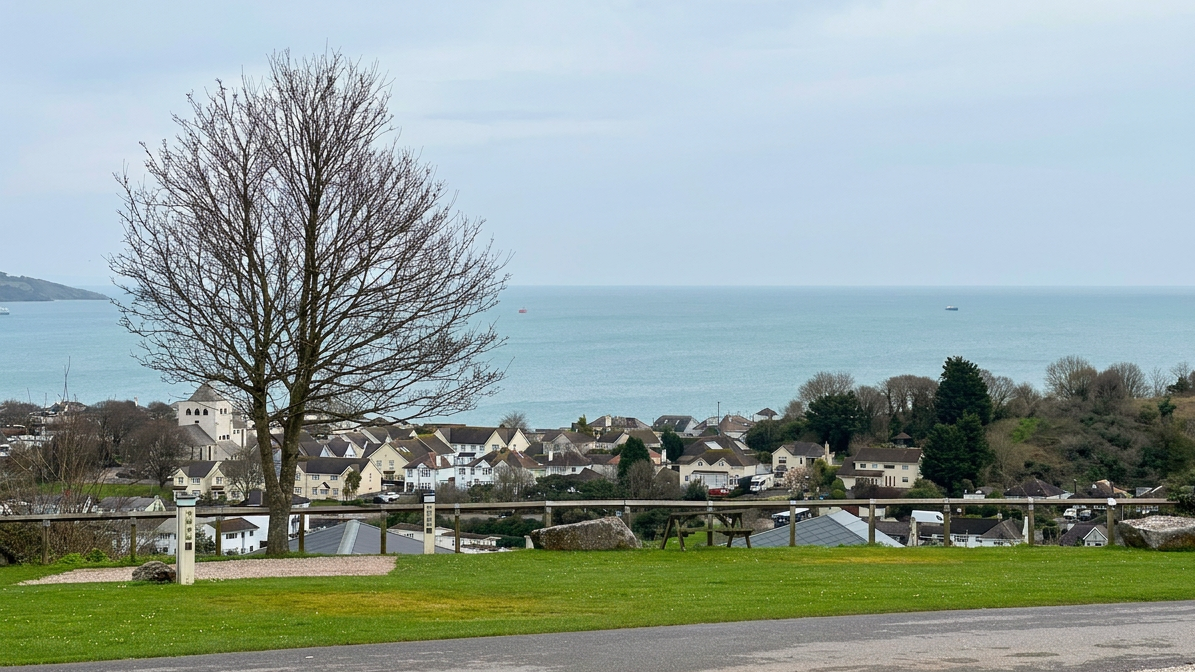
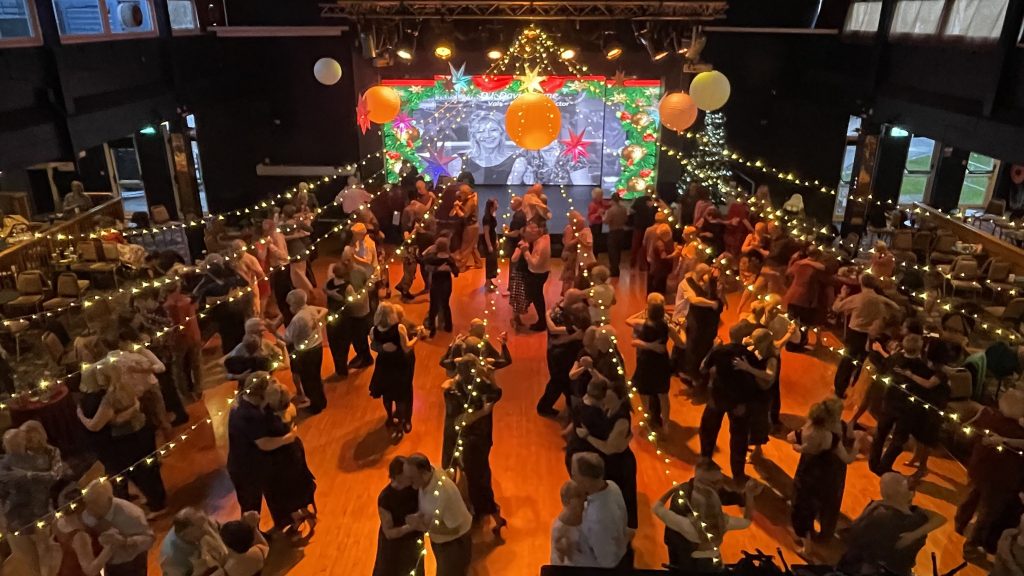
Beverley Park was a cheerful seaside resort made slightly surreal by December weather. The hall itself was impressive with Christmassy chandeliers overhead and a specially built wooden floor that was temporarily put in just for the Feast. I met Fernando, the Argentinian organiser, and Alan, my caravan mate for the weekend.

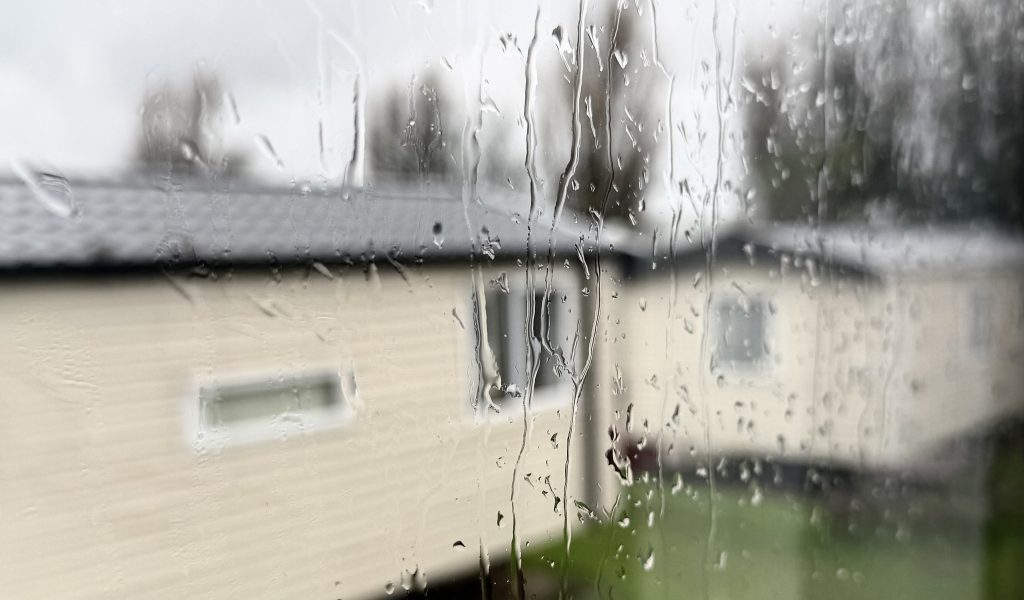
There was barely time to settle before food shopping and tutoring. My caravan bedroom felt like a submarine — narrow beds, overhead cupboards, rain hammering outside. I ended up working from the lounge instead. By the time I finished tutoring, I was drained. And yet the most demanding task of the day was still to come.

Buying a flat in London from a caravan

Earlier that day, my mortgage broker sent another set of forms for my first ever property purchase. Months earlier, my mortgage had collapsed over a lease extension issue. Just as I left for Devon, the process restarted. Rather than risk further delay, I recalculated everything from the caravan and submitted the application.

When I hit send, I was exhausted. The milonga hall, fifty metres away, felt miles away. My clothes were creased, the caravan bare of basics like a knife, but I cooked something simple, showered, dressed my best, and stepped into the rain, an hour late.

Thursday night

The first milonga – A well designed social dance space

The hall had been transformed. There was a single main dance floor, with seating arranged asymmetrically along its edges. One of long sides had a single row of chairs and tables by the floor itself. Beyond that was a smaller practice dance floor, raised above the main one, which remained mostly empty throughout the night.

Altogether, the space encouraged people to move between dancing and conversation without friction. One of the biggest differences I’ve noticed between milongas in Buenos Aires and elsewhere is that Buenos Aires milongas are designed first and foremost as social spaces. Multiple layers of tables, food and drinks (often with table service) are woven into the evening. The dance floor sits inside that social fabric, rather than replacing it. The milongas are timeless places as hours go by with chatter, drinks and some dancing.

By contrast, many milongas outside Argentina place chairs tightly around all four edges of the room. The result is functional but sterile. The unspoken goal becomes transactional, pay an entry fee, get as many dances as possible, then leave.

The Feast echoed the Buenos Aires social space design. There was even a discreet breakout area at the back for tea, coffee, and biscuits, just far enough away to feel like a pause from the floor. Later in the evening, Fernando and the team brought out extra nibbles near the dance floor so people could refuel without leaving the room. Small but well thought out touches. The design of socialising spaces is no doubt a big factor in the enduring success of The Feast.

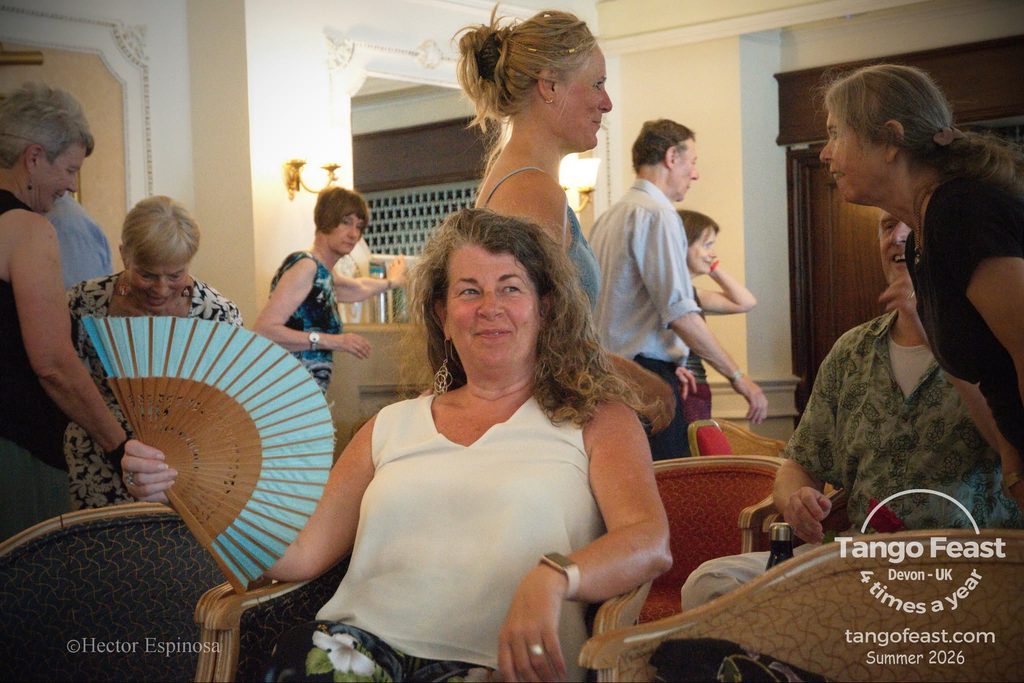
An older crowd at the first milonga

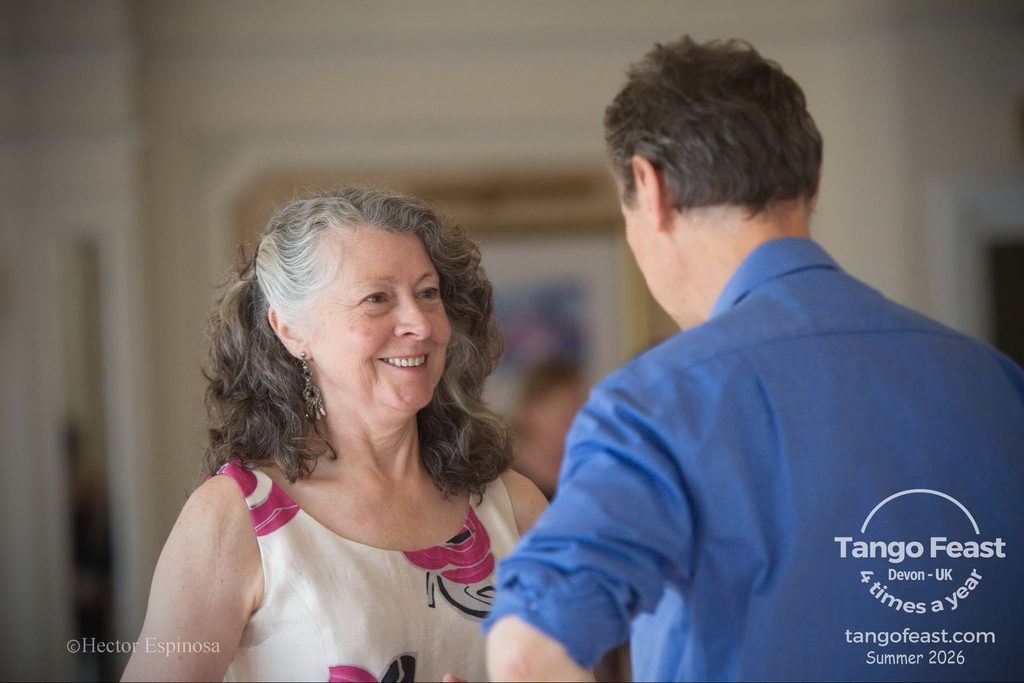
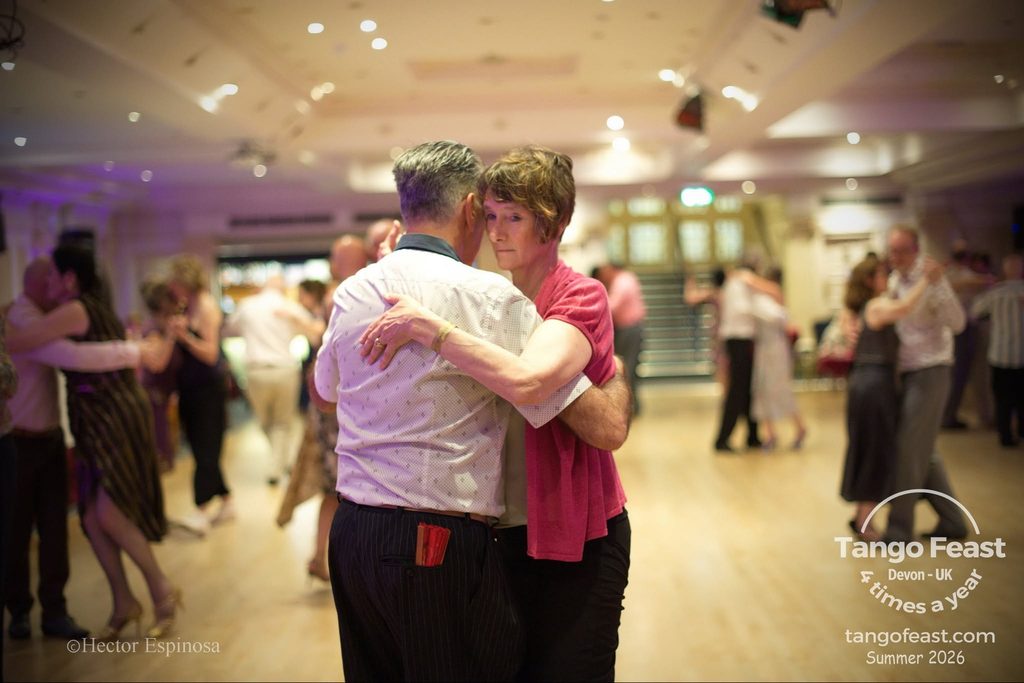
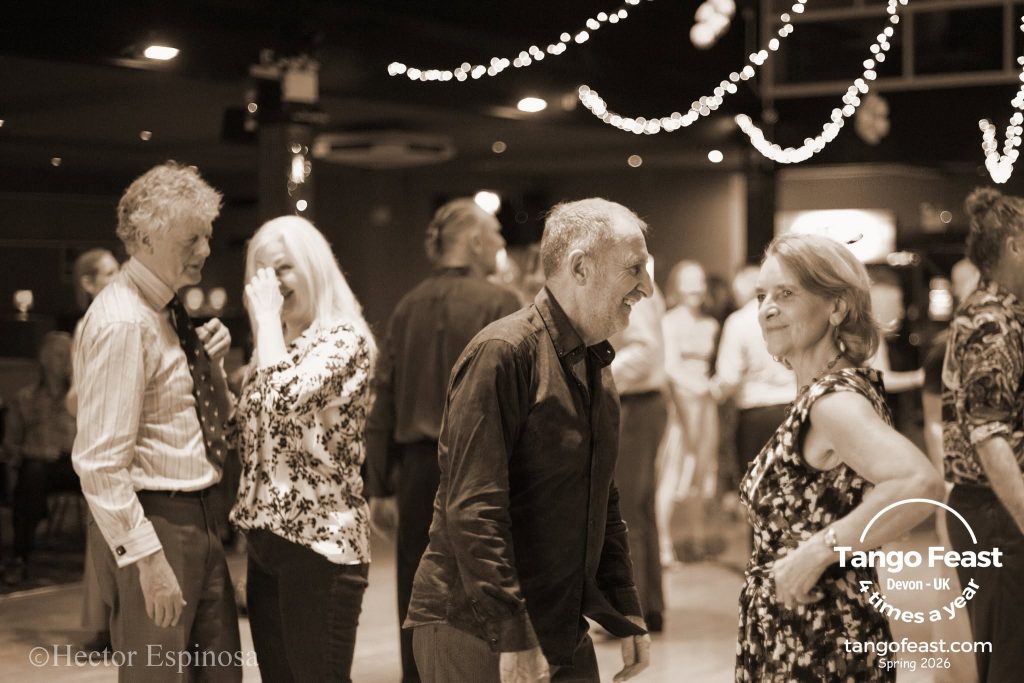
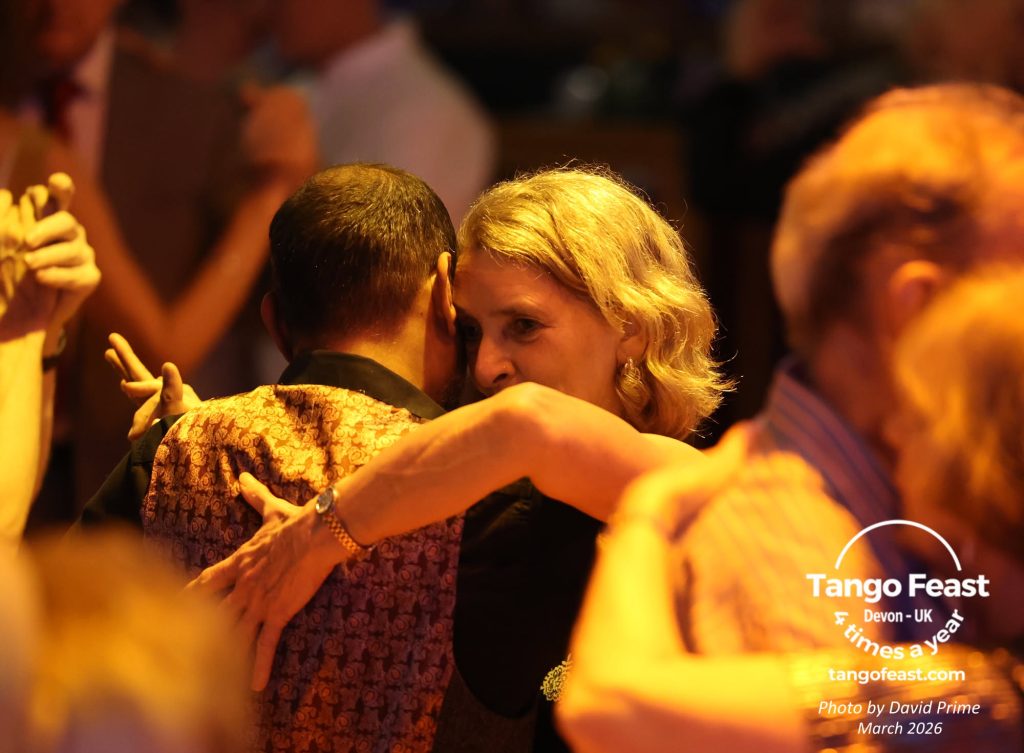
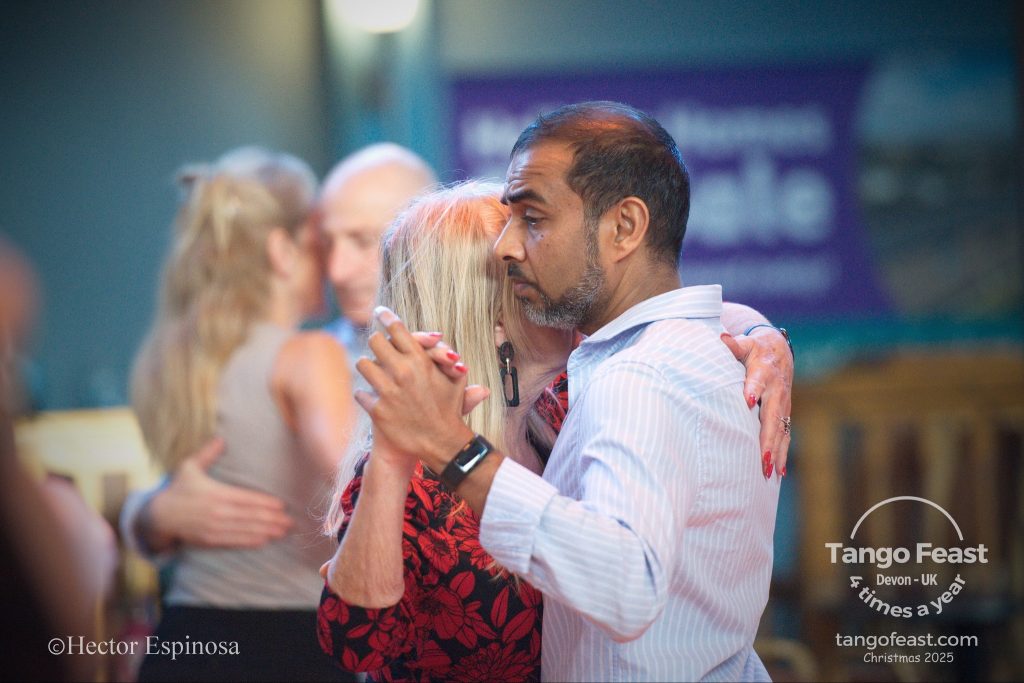
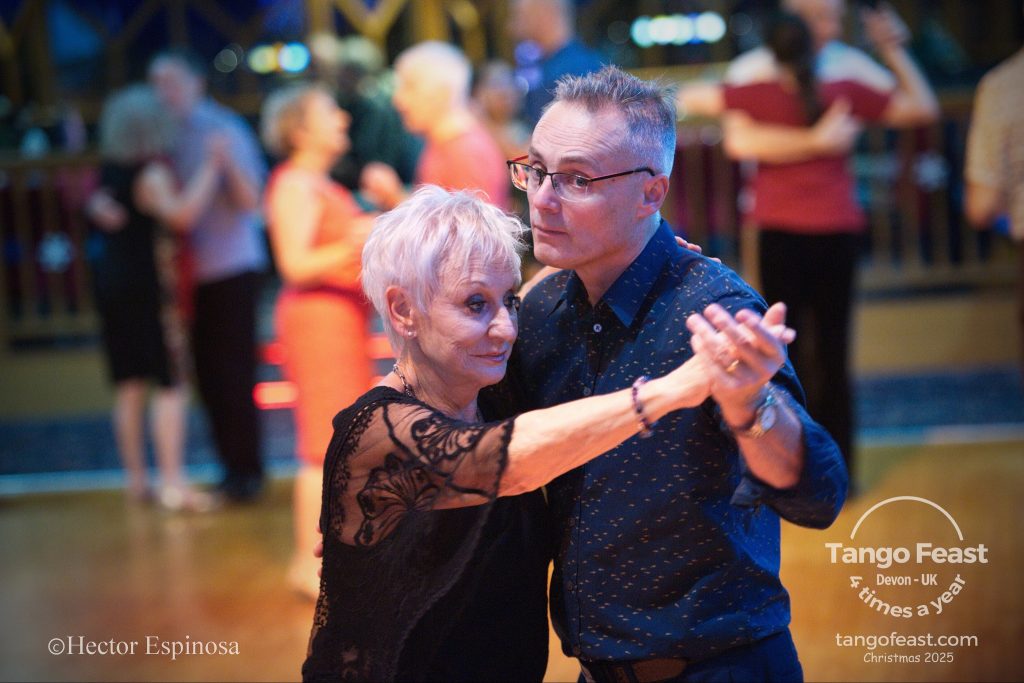
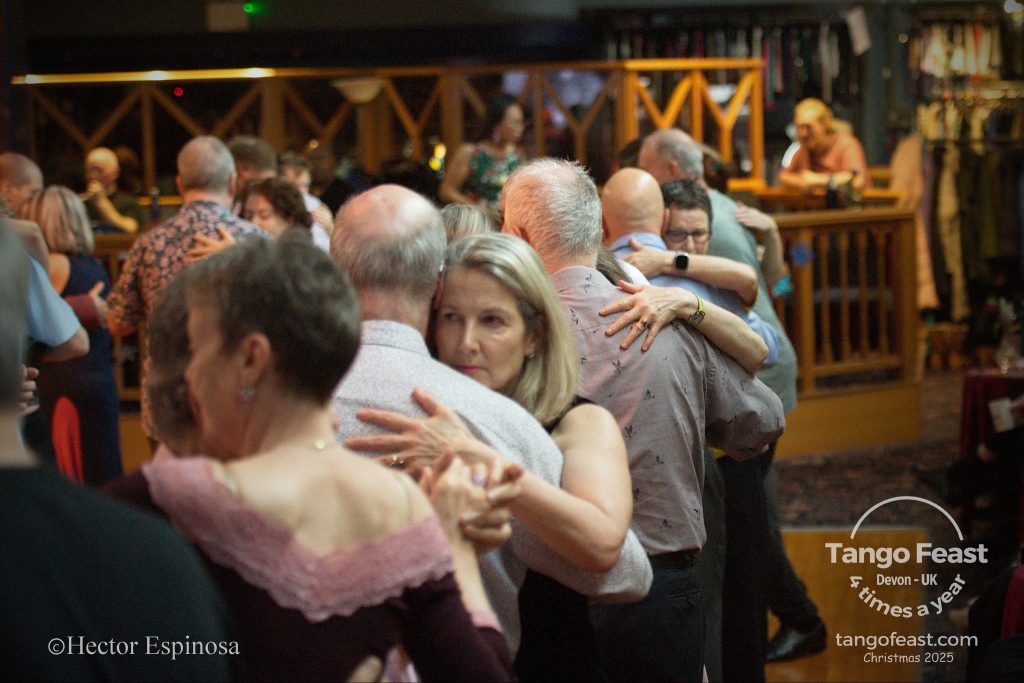
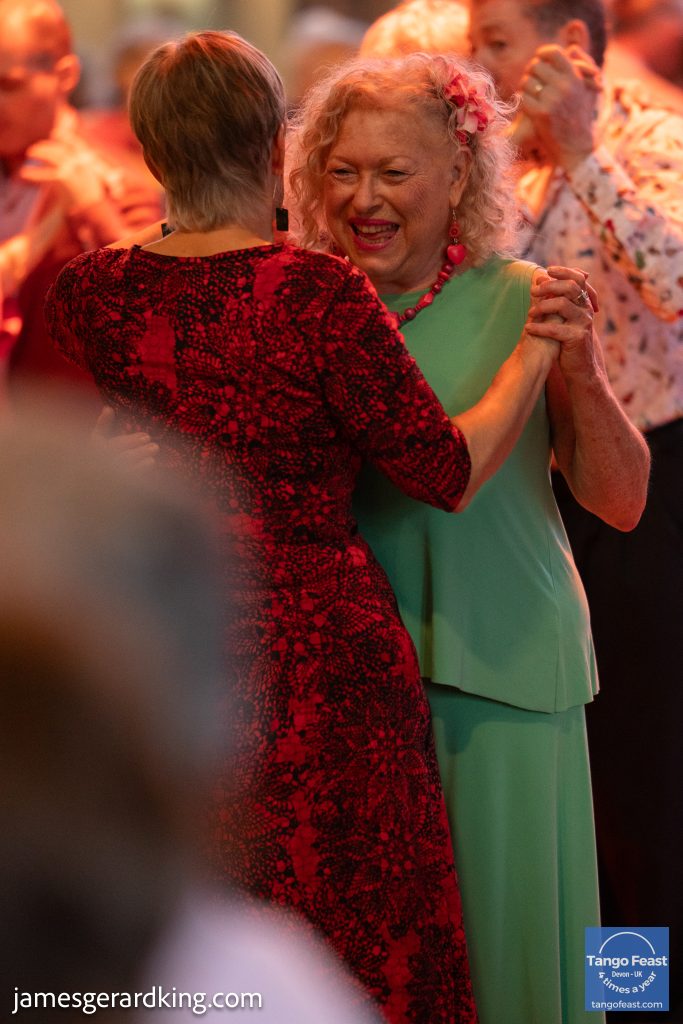
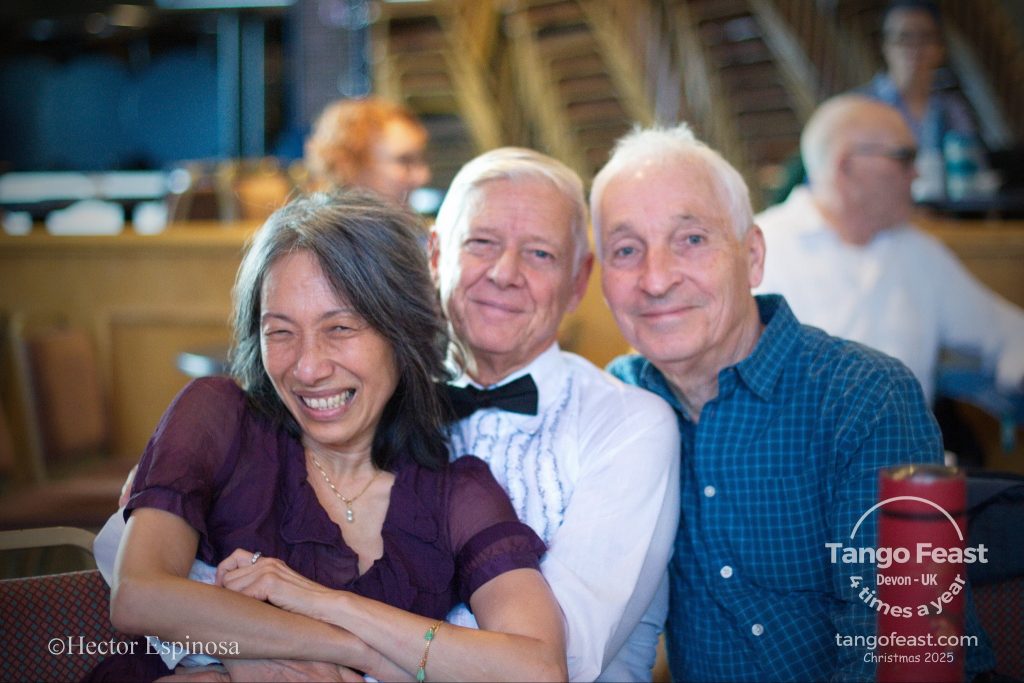
On the first night, I was a little surprised to see that the demographic skewed older, and briefly wondered whether this would be the case for the entire festival. I may well have been one of the youngest dancers there and I’m no spring chicken! Many of my dance partners on that first milonga were from my mother’s generation or older.

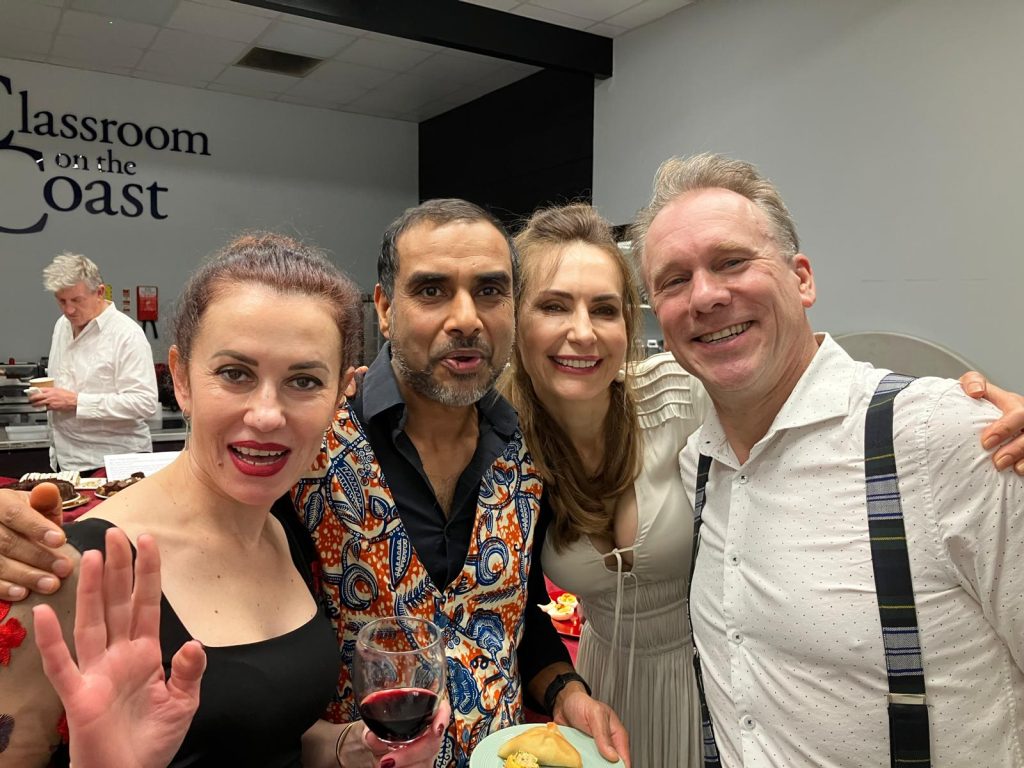
Photo by Ben Lovejoy

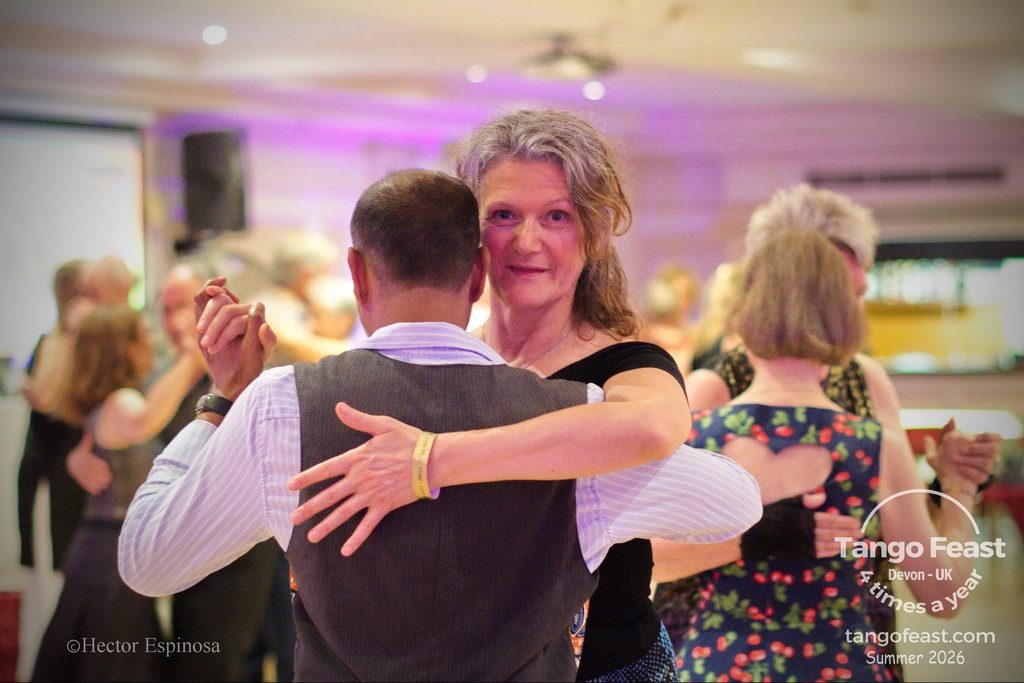
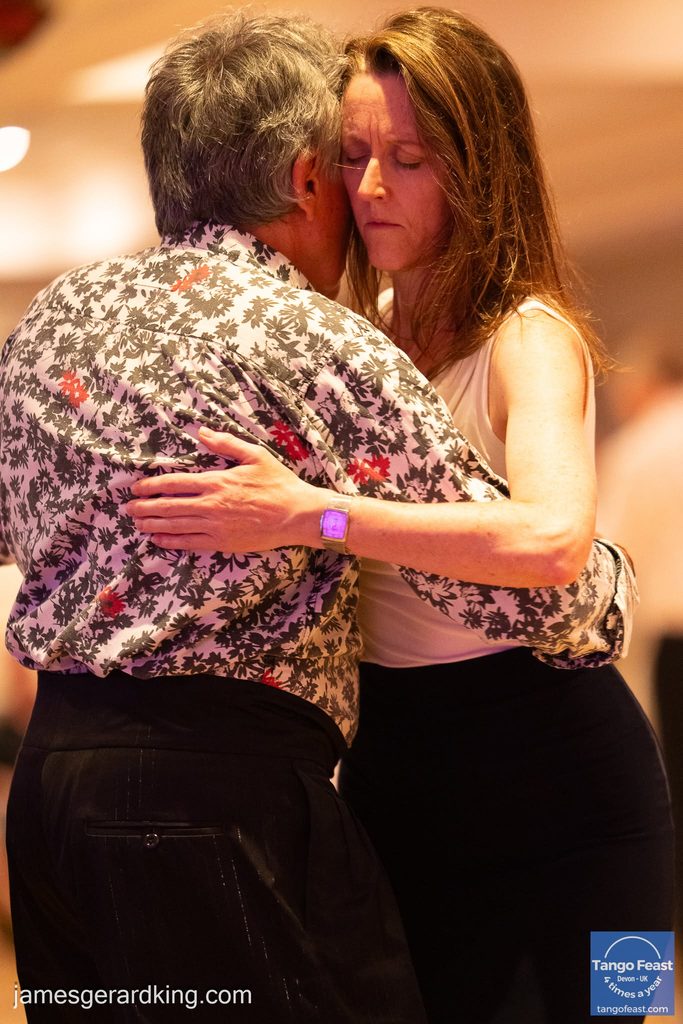
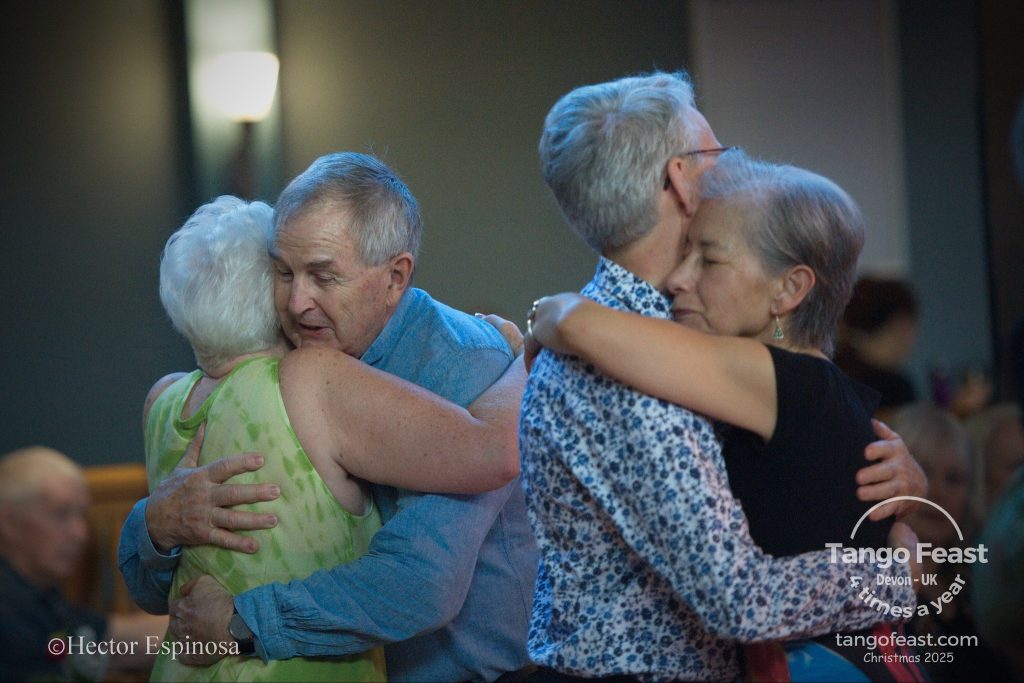
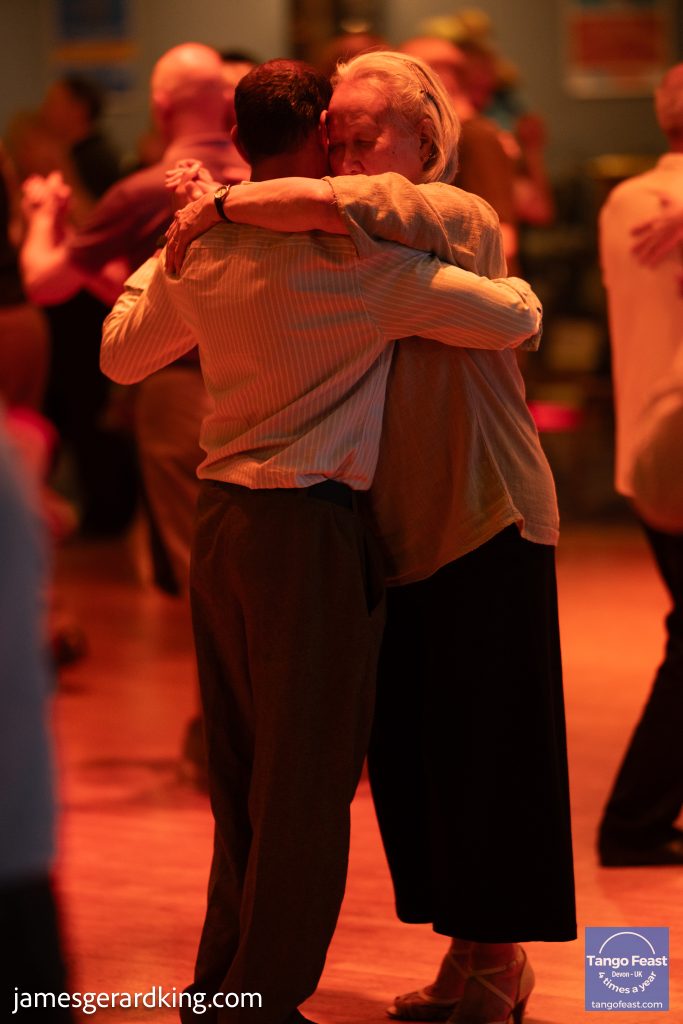
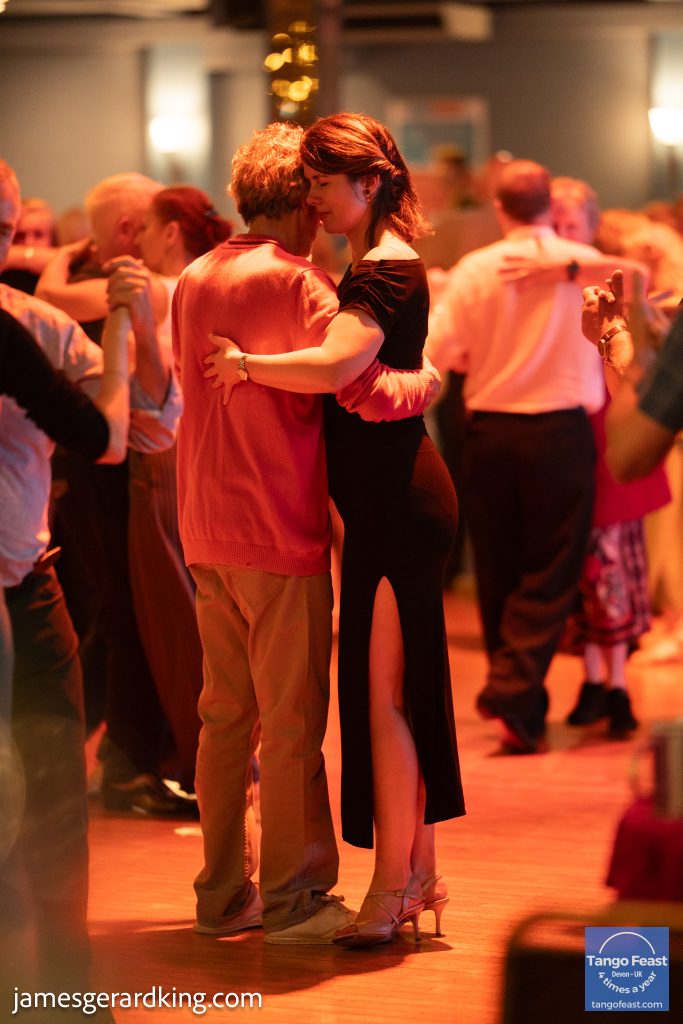
And yet, once we were in close embrace, none of that mattered. Age, status, and appearance dissolved, leaving only presence. You stop dancing from what you see and start dancing from what you feel. This is one of the reasons tango continues to move me so deeply: you never quite know who you will connect with.

I was told that Thursday nights tend to skew older simply because retired dancers can travel and stay out late mid-week, while younger dancers usually arrive from Friday evening onwards once work commitments ease. That made perfect sense. I was the exception only because I could work remotely.

From feast outsider to insider, one embrace at a time

As a first-time leader, I knew it was going to be tough getting dances at a festival where I recognised only one follower who I have danced regularly with — out of well over a hundred. And she wasn’t dancing that night due to injury. I arrived with low, realistic expectations about how much I would dance.

Fernando, the organiser, had anticipated this dynamic and addressed it directly in a thoughtful message to first-timers, acknowledging that many participants had known each other for years and that newcomers might initially feel like outsiders. It was reassuring and honest which I really liked. Ben has written about this same email in his own reflections on his very first Feast.

And true enough, there were many followers in couples or established groups, which made breaking through harder. I was clearly stepping into a well-formed social ecosystem. What worked in my favour early on, however, was the speed of the opening flow. Dances started quickly and the floor filled fast. I happened to be standing near the edge of the dance floor, and twice I was simply invited straight in. Both times it was by other first-timers, finding their feet just as I was. In one case quite literally, a dance with France where my shoelaces came undone without me realising at the time. She told me of that after the first dance and I smiled. All grounding reminders that none of this needed to be taken too seriously.

Those early dances were a small but crucial lifeline. I started recognising some other dancers I had seen on the odd occasion at Eton milongas which settled my nerves and restored confidence. I felt able to walk around, make eye contact, get into conversations and begin seeking dances more actively.

First Day — Floorcraft and First Connections

The floorcraft on the first night was, frankly, disappointing for a milonga outside London. The outer ronda was almost static, which made it hard to express myself fully or let the dance breathe. I was still easing myself in and deliberately kept my dancing simpler and more contained. There was an inner ronda that moved a little more freely, but I rarely dance there, so I stayed on the outer track and worked within its constraints. I’ll return to floorcraft later, as it became a recurring theme.

The Thursday night milonga ended at 12:00 (all the other nights ended at 01:00) and as the night wound down and I headed back toward my caravan, I fell into a long, easy conversation with Leon. I saw him as the tango poster child of the event, whose face I’d seen on flyers countless times before. His warmth and openness immediately softened the whole experience. I ended up talking with him at almost every milonga thereafter. People like Leon are a vital social glue of events like this by making newcomers feel welcome and that they belong.

Between Milongas — Rain, Sea Air, and Recovery

After Thursday night, the rest of The Feast began to blur. That first evening had been the hardest, physically and emotionally. Once into the flow of things life narrowed to a simple loop: milonga, food, sleep, recovery, back to dancing.

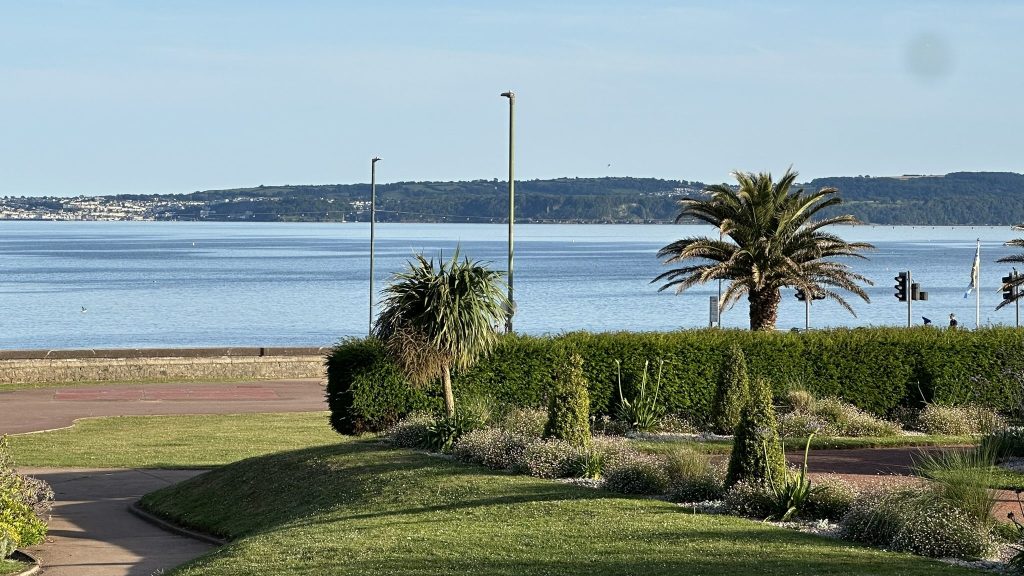
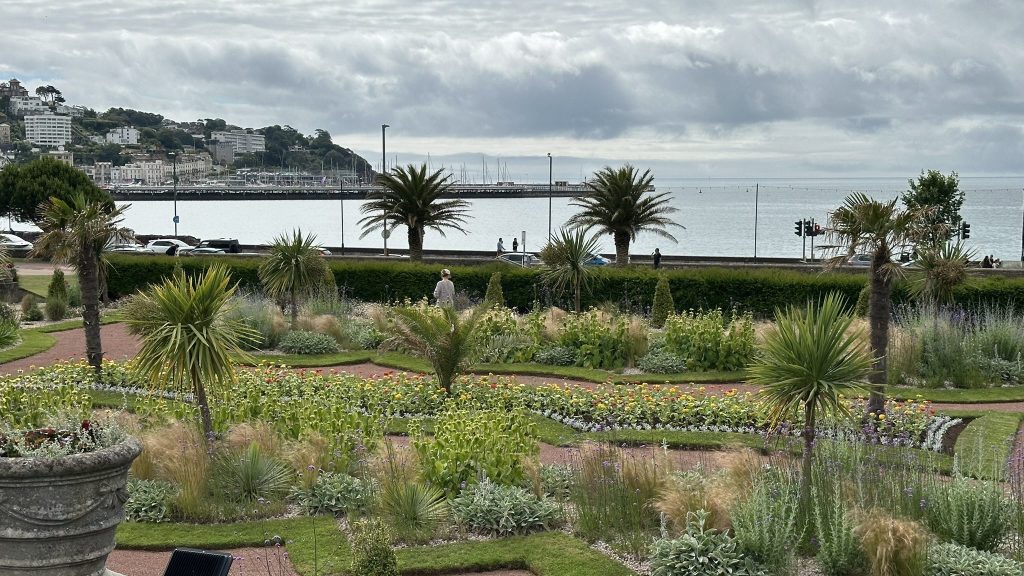
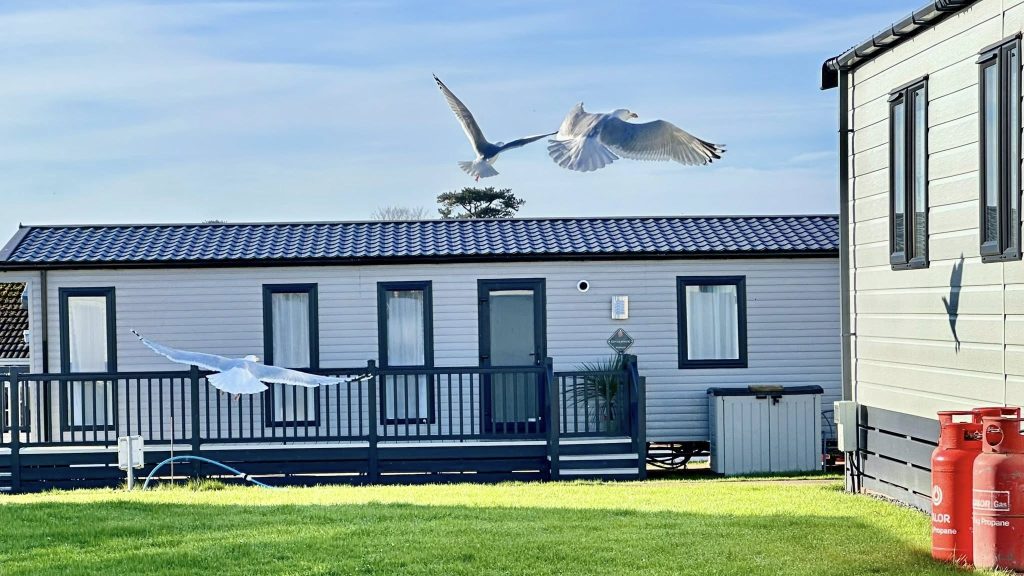
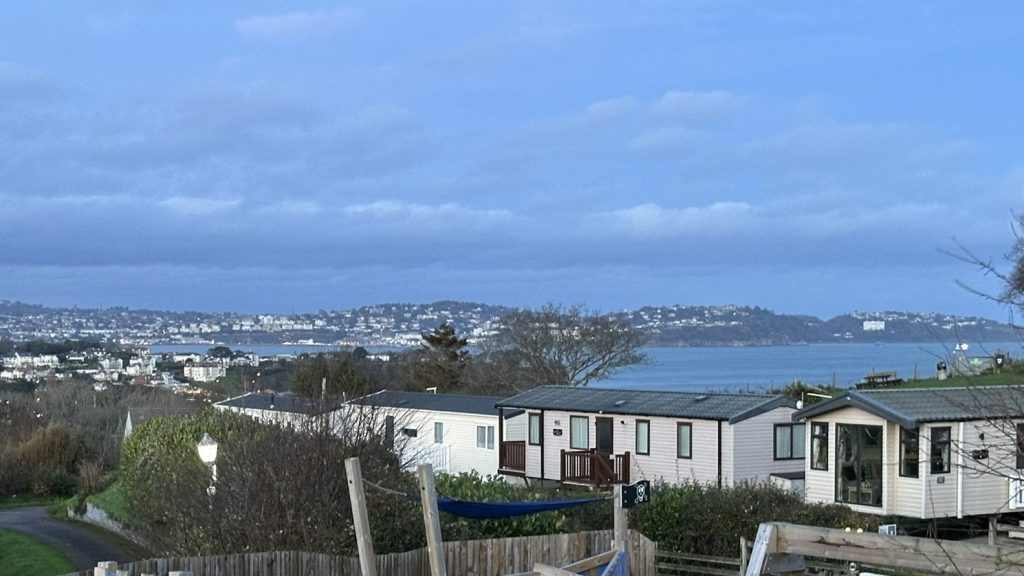
Staying in a caravan by the coast couldn’t have been more different from my usual life in London. White caravans, open skies, and sea air replaced concrete, traffic, and winter greyness. Even in December, the place felt bright and spacious in a way London rarely does. The fresh air and surprisingly good tap water seemed to put life back into my system.

It rained almost every day. After the stimulation of afternoon and evening dancing, the rainy mornings carried a strange surreal quiet. That contrast became part of the experience: intense connection on the dance floor, followed by long stretches of silence and stillness. I shared the caravan with Alan, which gave me an opportunity to discuss the event with another newcomer away from the dance floor.

Eat, sleep, watch rain, dance. Life as a tango blur at Beverly Park. Photo by Ben Lovejoy

Despite the temporary setup, I stayed disciplined with my routines of fully cooked meals (local venison steak included), outdoor meditation, and top-up naps. With so many hours of dancing, self-care wasn’t optional. I was glad I took it seriously, and for the most part I got it right. Having the caravan less than five minutes from the dance floor made an enormous difference. It allowed me to dip in and out of intensity without burning out, a stark contrast to the two-hour journeys I often make to milongas outside London.

Friday and Saturday

Peak Energy — The Weekend Floor

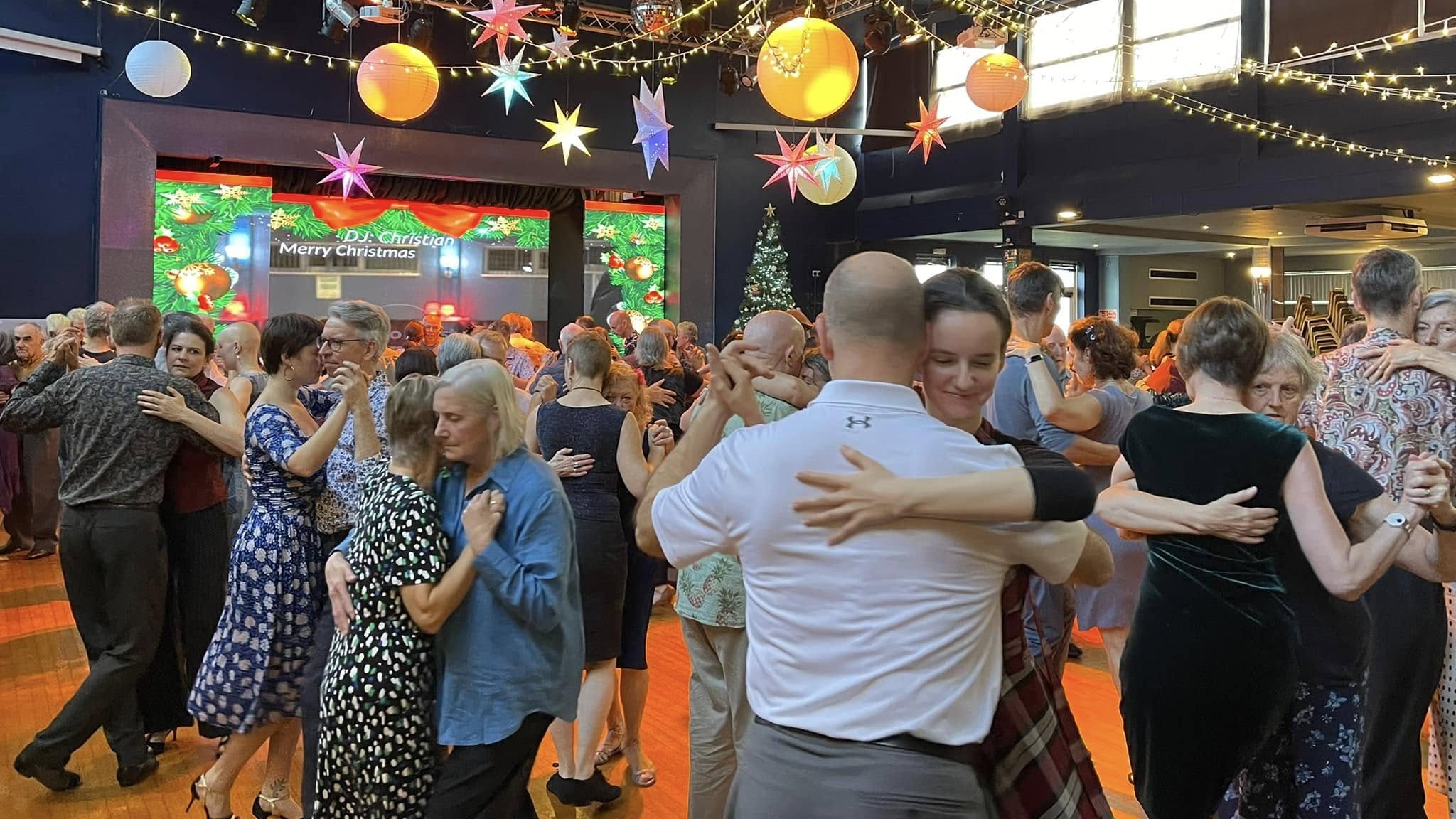
By Friday afternoon, and even more so on Saturday, the atmosphere at The Feast shifted. The core dancers had arrived, with others drifting in and out milonga by milonga. A small wave of younger dancers appeared, still very much a minority, but enough to change the tone of the floor. The milongas grew steadily busier, peaking on Saturday night when the outer ronda became even more static than before.
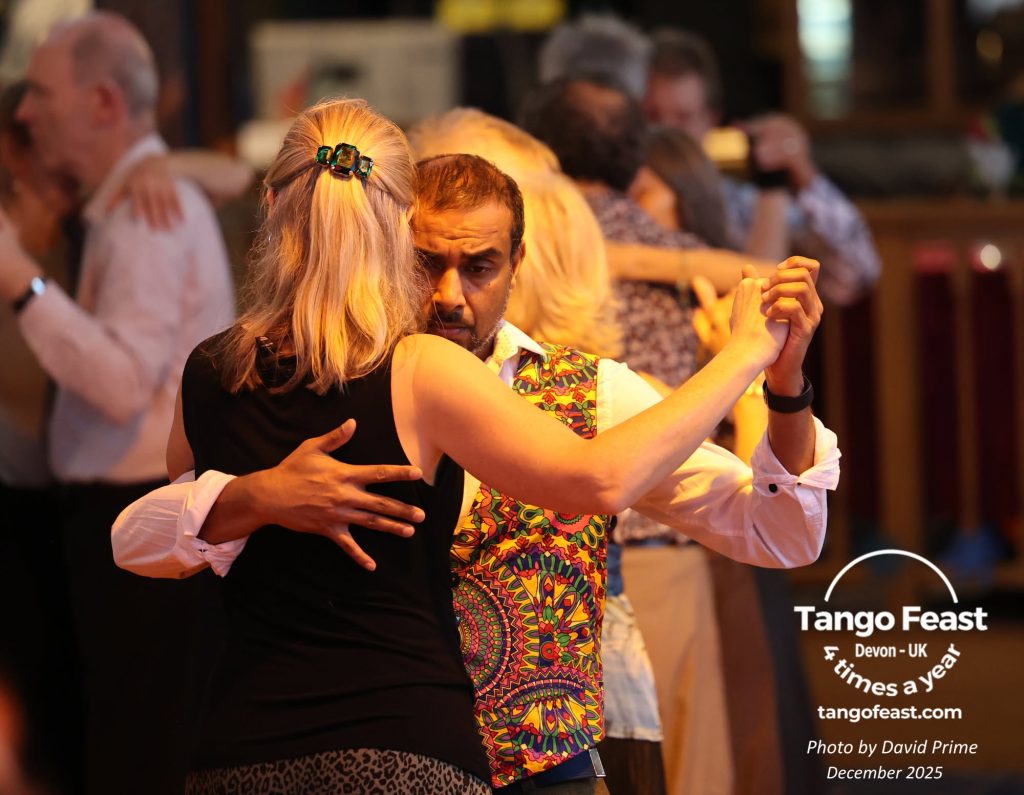
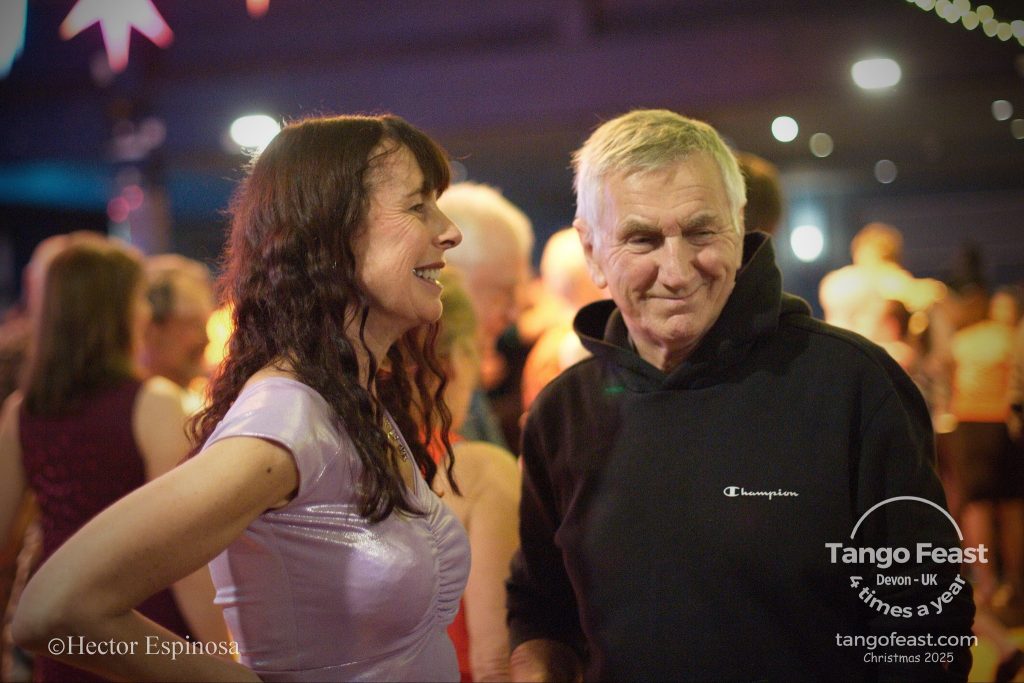
Getting dances became easier, though it was never a given. Many cabeceos were ignored or simply passed by, especially with new dancers arriving each evening who had no idea who I was. That’s to be expected. On the other hand, a few followers I had already danced with began seeking me out again, and Einat kindly recommended me to some of her friends. I was very grateful for her help.

Across those two nights, when the conditions and partner was right, I started to experience beautiful tandas of deep stillness with synchronised breath.

Again and again I noticed the same pattern: when I slowed down, softened my chest, and walked with clarity, the connection deepened on its own. Several followers commented on how grounded the walk felt, or how warm and secure they felt in the embrace. I wasn’t trying to create anything dramatic. I was simply staying present and letting the music travel through that structure.

It brought me back to something I learned in Buenos Aires from my tango maestra Noelia Coletti: tango lives in micro-movements, subtle changes of tone, weight, and intention that happen inside the body. When both dancers are truly present, those tiny adjustments become the dance itself.

That didn’t happen with every dance of course, those were just a few, the special ones are special only because authentic connection can never be universal. But when it happened, it became the emotional centre of the weekend. Even one tanda like that in a whole day made the Feast totally worth it for me.

Saturday night carried the peak energy of the festival. The floor was packed, the music more rhythmic, the rondas compressed almost to breaking point. By the end of Saturday, I had crossed a threshold in my dancing, including finally stepping fully into milonga tandas, which deserves its own section below.

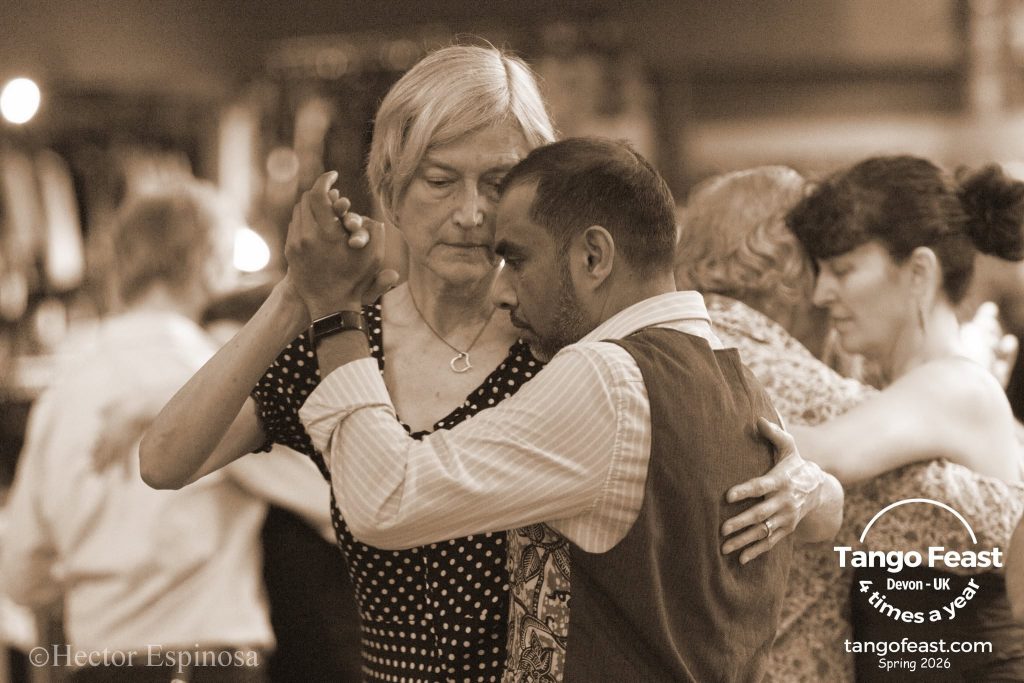
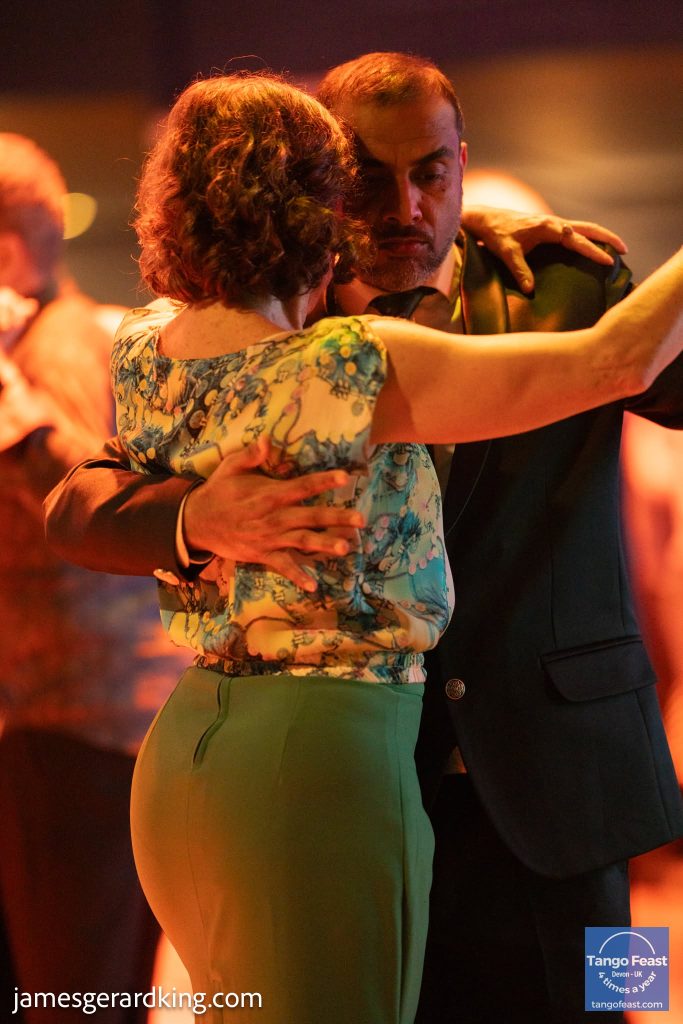
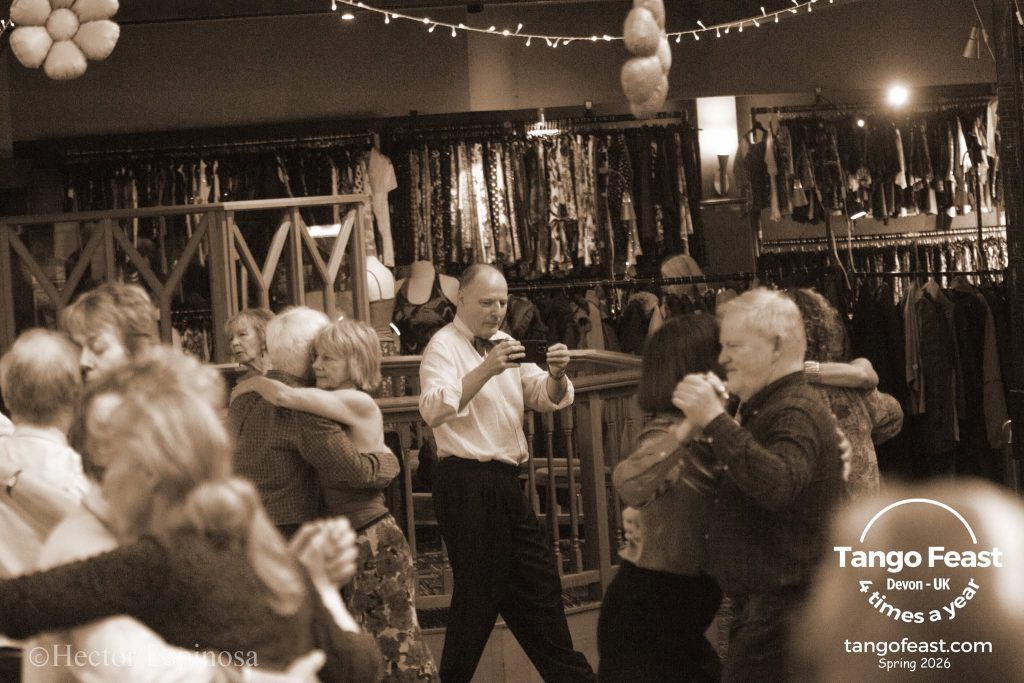
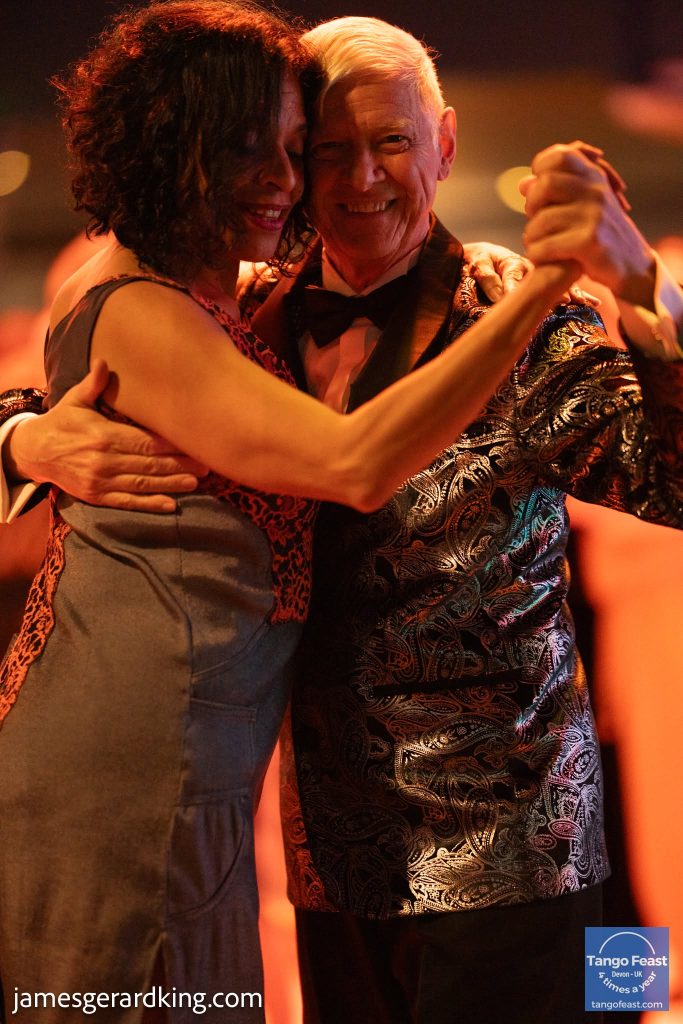
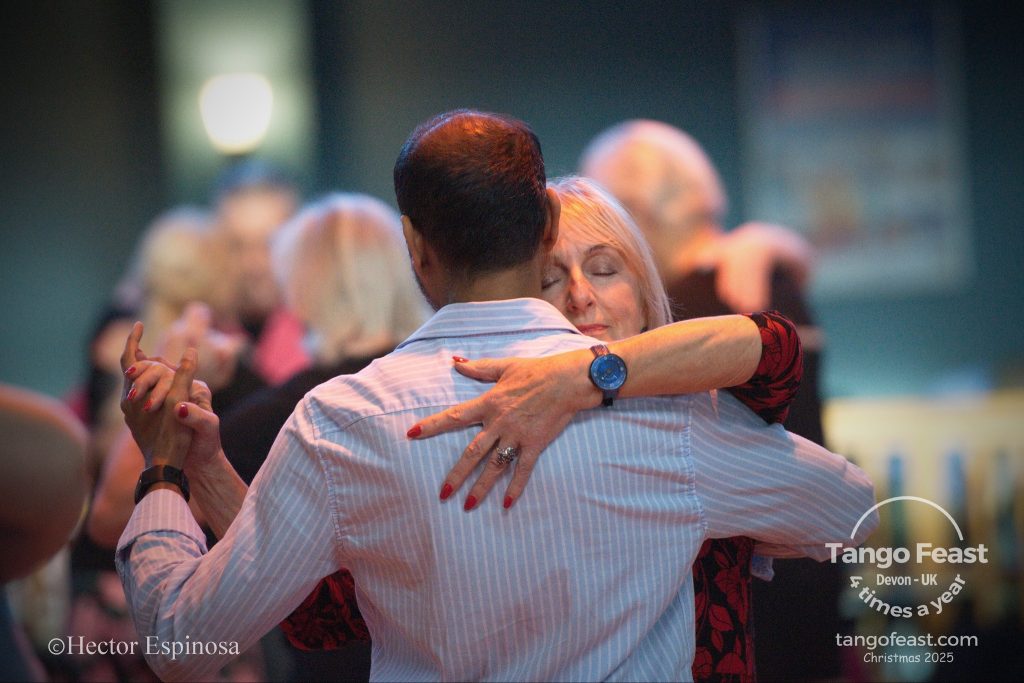
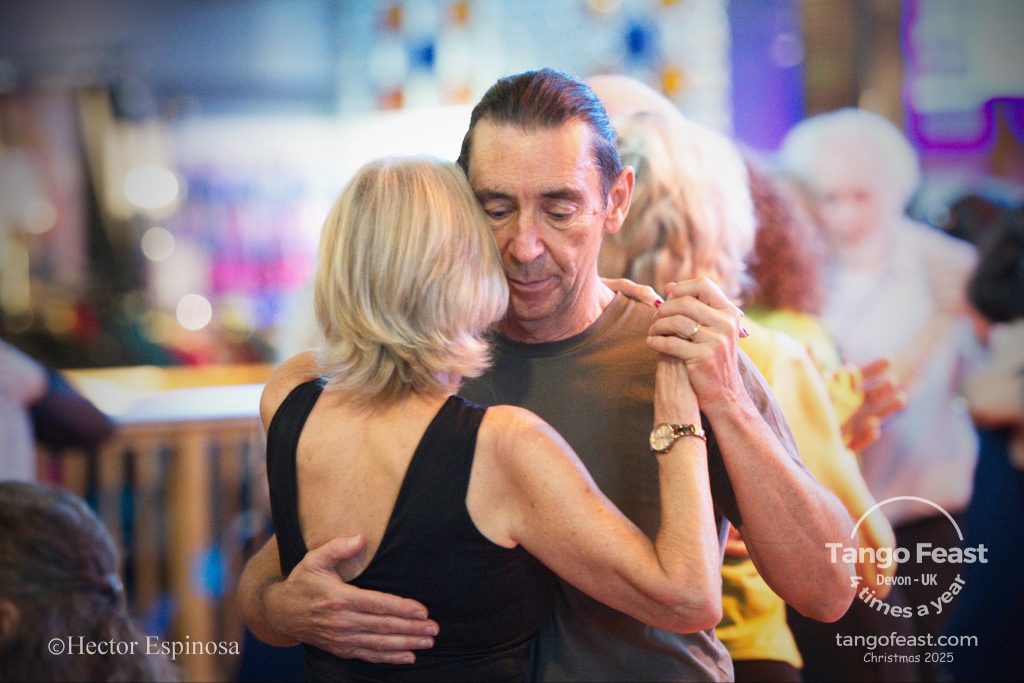
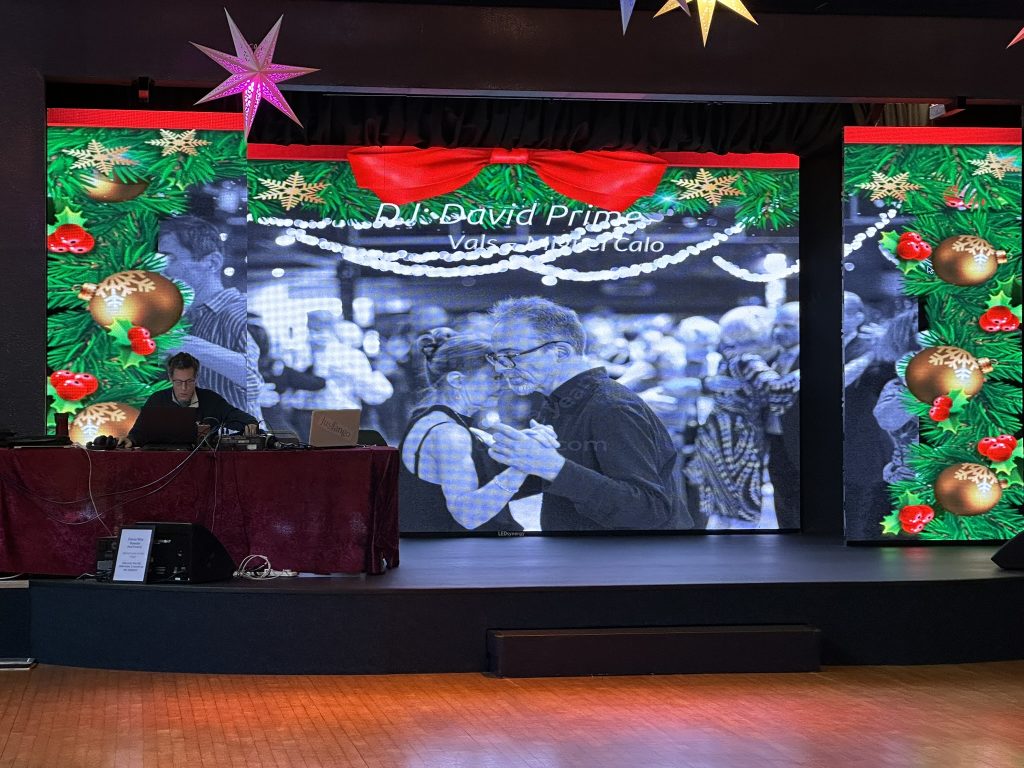
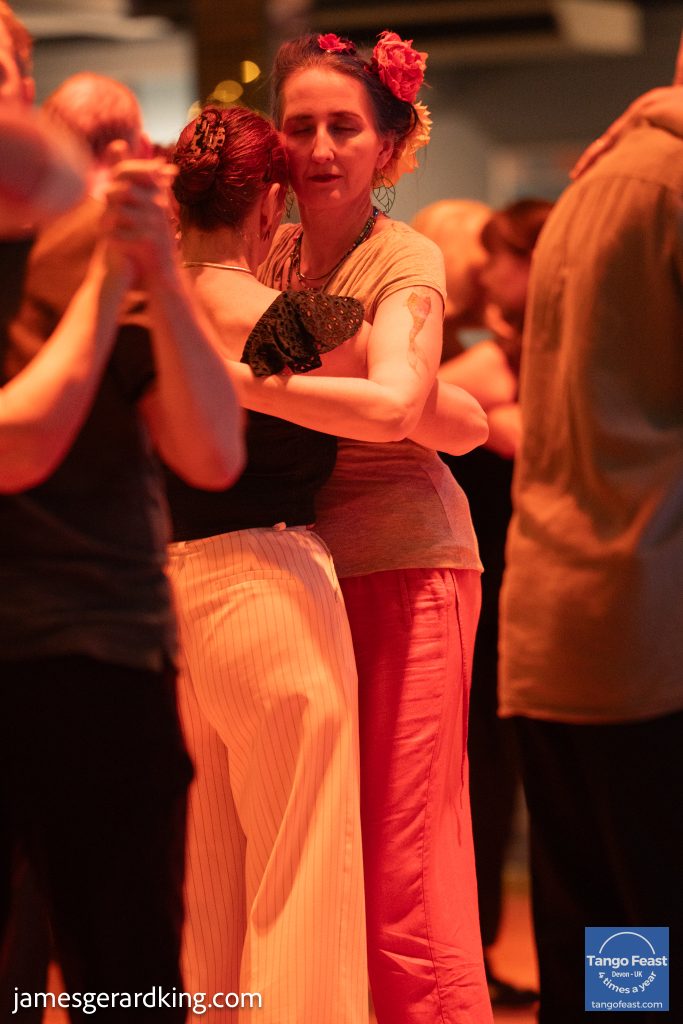
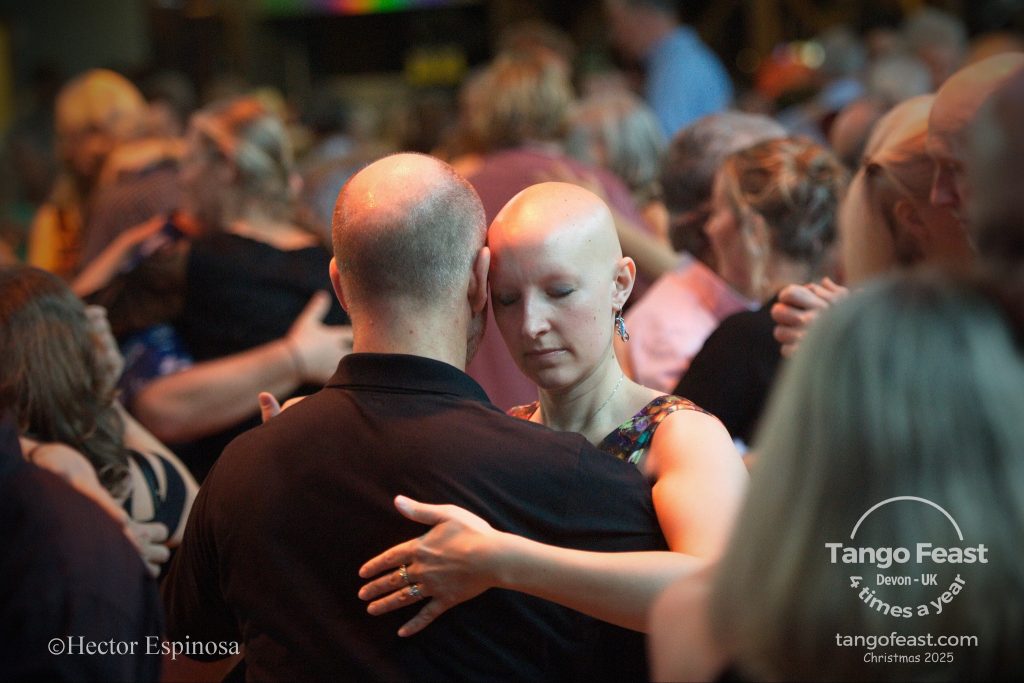
Beyond the dancing itself, the visual atmosphere of The Feast added enormously to the experience. A thoughtful touch at each milonga was the projection of photographs taken throughout the event — dancers in embrace, in laughter, in quiet conversation between songs. Tango photos usually blur together for me, all blissful faces and dramatic poses, but these were different. They were carefully observed and deeply human: hands resting on backs, small pauses between couples, smiles exchanged in the spaces between music. Each image told a story, and seeing them projected in real time made the whole gathering feel curated and communal, as if everyone present was part of a living montage.

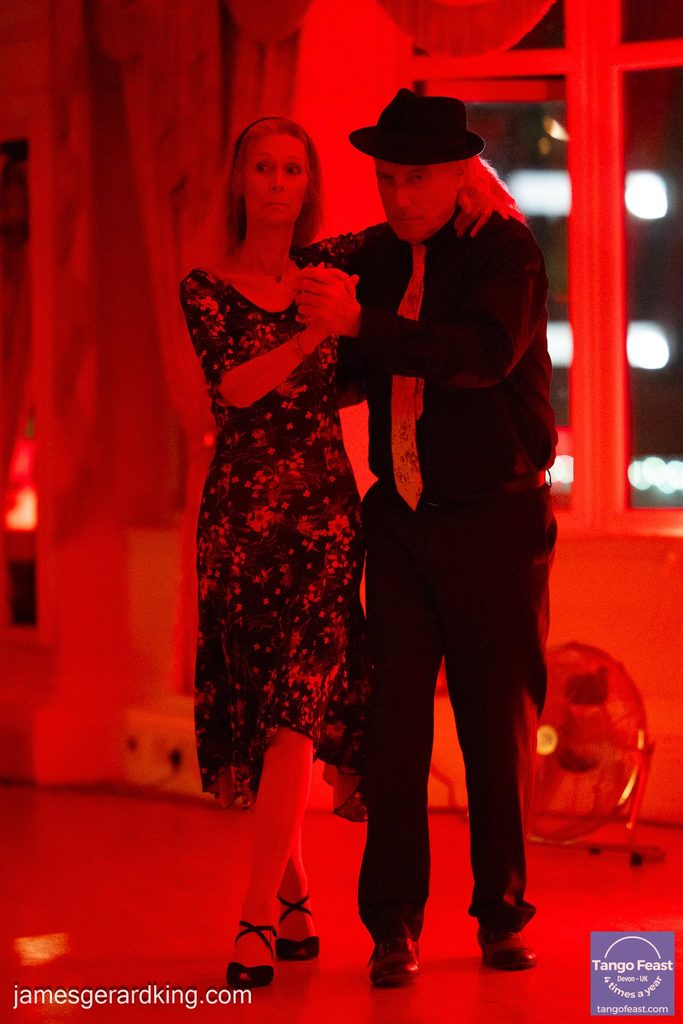
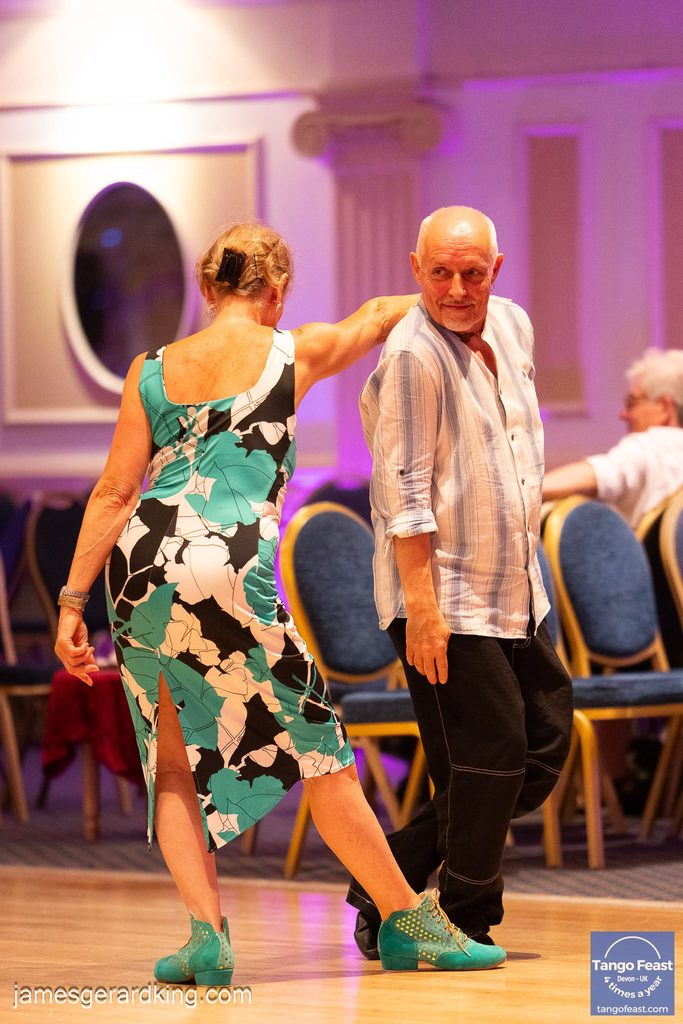
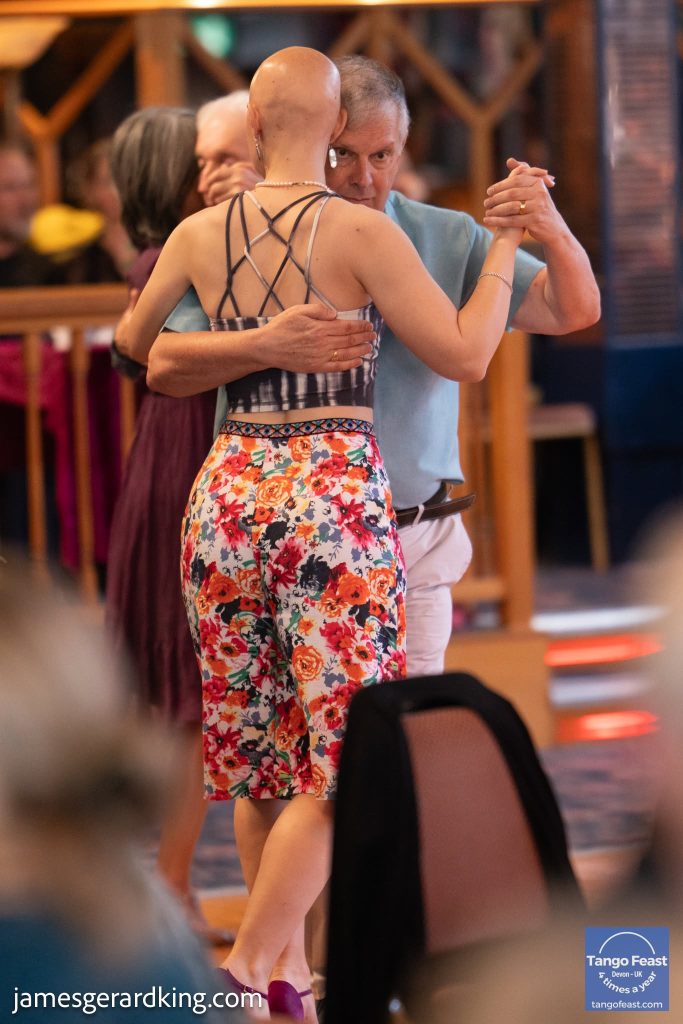
That same care showed up in how people presented themselves. The ladies, in particular, made a real effort, and it was a pleasure to watch outfits transform from afternoon to evening milongas on the same lady. Colours, textures, and silhouettes shifting from a daytime to evening style. There was attention to detail in shoes, dresses, and hair, and it lifted the energy of the room. The leaders, as always, spanned the full spectrum, from sharp three-piece suits to relaxed resort-style shirts, but overall there was a sense that people had come to mark the occasion.

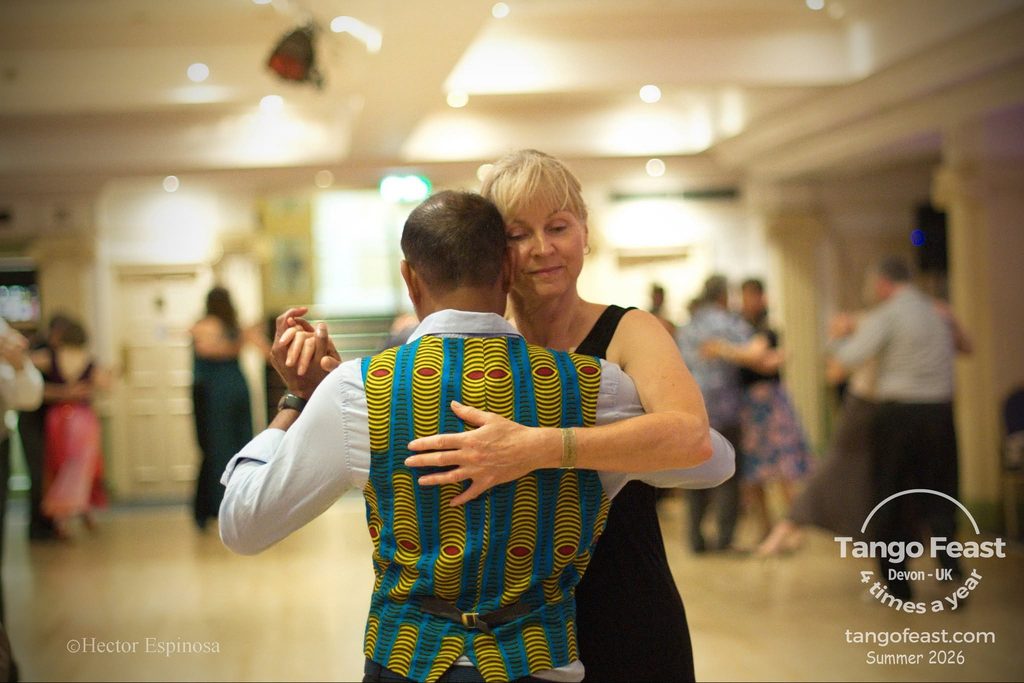
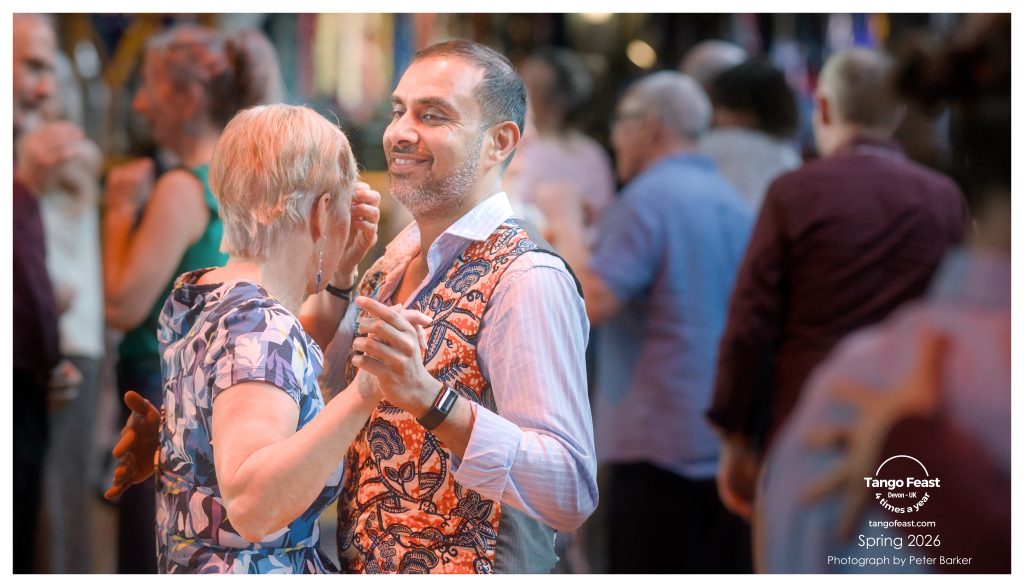
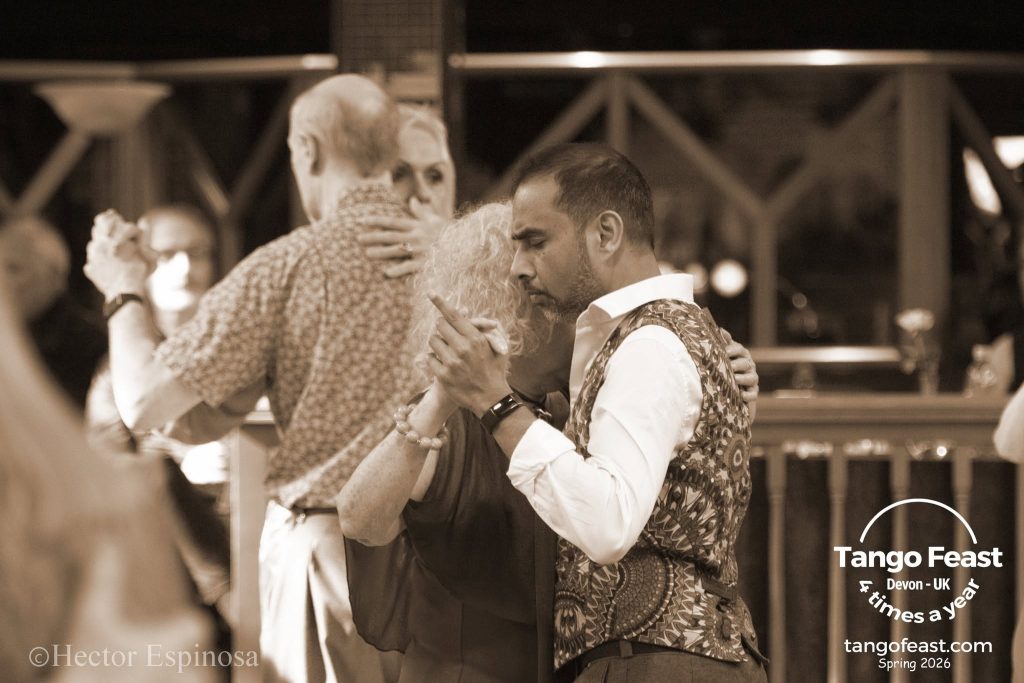
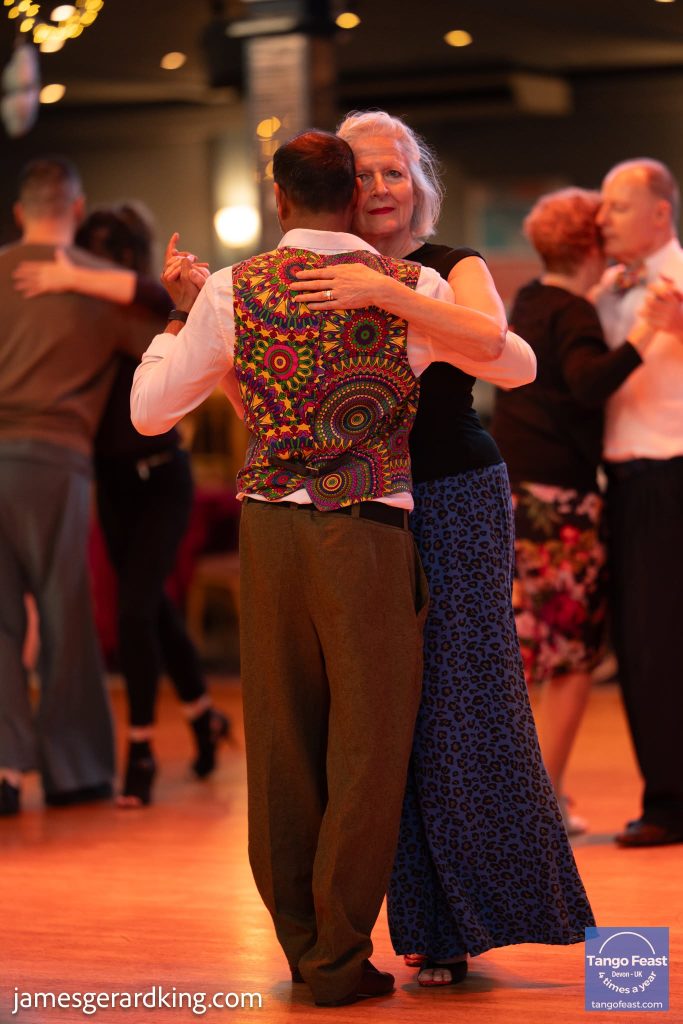
Presentation in tango isn’t vanity; it’s part of the ritual. Dressing well signals respect for the music, for your partner, and for the shared space. I enjoy bringing my own flourish (borrowed from my rock performing world) to that ritual through the colourful handmade waistcoats I wear — tasteful, but distinctive enough to feel like my signature on the floor.

Floorcraft Frustration

The dance floor at The Feast was generally civilised with relatively few collisions, and leaders entered the floor with a respectful cabaceo for the most of it. But for me the Feast floorcraft was still deeply frustrating. The main issue was the outer ronda: busy yet almost static, sometimes barely moving a quarter of the room for an entire tanda. That broke what I enjoy about tango the most. Tango is a walking dance, and when the ronda doesn’t travel, everything collapses into contained islands with couples parked in place and doing figures. It was rare to get enough of an opening to advance with a walk.

According to Ben’s blog review of the same event, floorcraft can be exemplary at the Feast. The reality is that in a ronda with 30 couples, it takes just one leader to stall and ruin the entire ronda.

I found I could only truly express myself deep in the epicentre, where there be dragons, because ironically that was the only area with any real movement. The inner ronda had more flow than the outer one, but its boundary with the centre wasn’t always respected, with some leaders zig-zagging unpredictably with the epicentre. Dancing there required awareness on both sides, pulling me back into vigilance to protect my follower rather than feeling immersed and present. After the first milonga on Thursday night, I stopped dancing in the outer ronda altogether, except briefly at the very start of milongas when the floor was still sparse.

There was also a smaller secondary floor with a lighter, more playful vibe and more space, which I enjoyed, but the sticky floor and dull lighting meant it never quite carried the energy of the main room. Clearly most people felt the same as this overfill floor was fairly empty even when the main one was packed.

Experiences like this only underline how rare genuinely walkable tango still is outside Buenos Aires. One notable exception remains Corrientes in London, a place that actually preserves forward movement and Buenos Aires–style ronda flow. I have been spoiled by that experience and compared to that, The Feast felt polite but fundamentally static.

Many Women Leading — A New Ecology

I haven’t previously attended a milonga with so many women leading, so it took a little adjustment. I would estimate that around 10–15% of the women were actively dancing in both roles throughout the event. There were a few men following too, but far less consistently. I fully support this direction, not least because it opens the possibility for me to follow socially in the future, something I already practise in private classes by learning every movement I lead.

Most of the optional workshops were devoted to women learning to lead, and they were clearly in demand. That energy carried straight onto the milonga floor. Many women understandably wanted to test their new skills in a real ronda, and in doing so encountered the same realities every developing leader faces: navigation under pressure is hard. Managing space, timing, musicality, traffic, and another body simultaneously is a significant cognitive load that only becomes apparent in live conditions. It was interesting to watch that learning curve unfold in real time, and to hear from newly leading followers about their anxieties stepping into such a challenging ronda.

Photo by Fernando

Socially, the increased fluidity of roles added another layer of complexity. It wasn’t always immediately clear who was primarily following, who was leading, or who might switch. Some women danced largely within closed groups where roles were understood internally but not obvious from the outside. On several occasions I found myself hesitating before a cabeceo, unsure whether the woman I was observing was leading that tanda or open to following.

What became clear to me only afterwards is that women leading may be part of a broader solution to longstanding role imbalances at tango events. Ben Lovejoy has written thoughtfully about role balance and the structural challenges of leader–follower ratios, and seeing this shift play out at The Feast gave me real world context.

As I travel and dance in different cities around the world, I’m increasingly aware of how local conditions and culture plays out to shaping the tango so differently. The Feast felt like one snapshot of that evolution in motion.

“Where Do You Dance?” — The London Problem

One question kept coming up in the between-songs tanda chatter: where do you usually dance? I found myself explaining that although I live in London, I rarely dance there now. On paper it looks like a tango paradise with events every day of the week — but quantity isn’t the issue. Culture is. London tango is strongly shaped by performative aesthetics and television, particularly Strictly Come Dancing. Many dancers arrive via salsa or ballroom backgrounds, and the result is a scene that often prioritises figures over flow. Long, showy sequences in open embrace in chaotic rondas. It isn’t tango in the Argentine sense and it isn’t tango in the ballroom sense either, Ben Lovejoy described it perfectly as TICD – Tango Inspired Contemporary Dance.

I love London, but stylistically its tango often sits far from the embrace and music led, walking dance I now value. Saying that aloud at The Feast felt vulnerable and liberating. What reassured me was discovering that this isn’t a universal UK pattern thankfully. London appears to be a tango bubble. The Feast gave me an opportunity to meet dancers from all over the UK and I really liked the presence, musicality and embraces of dancers from Cambridge and Bristol. Tango culture, I realised, is local. London is one ecosystem among many.

Milonga Tandas — A Long Avoidance Ends

The milonga tandas became the defining moment of the weekend for me. I had avoided milonga socially for nearly seven years, so consistently that it became part of my dancer identity. When milonga came on, I would sit out and take a break. At The Feast, that pattern broke. I was cabeceod onto the floor two or three times in quick succession, and eventually I stopped resisting.

What followed wasn’t a sudden miracle, but years of accumulated work finally landing in the body. Dancing with strong milonga followers gave me an embodied understanding of the rhythm and the closer connection the dance demands. I’m fairly sure I was partially back-led during the first two tandas, not in a way that overrode me, but in a way that confirmed to my body what my musician’s brain felt. By the third tanda everything clicked into place as I visualised our contained embrace as a guitar that I was playing to the flowing milonga music. I could enjoy an entire tanda with just rebounds, change of weight and walking. The floodgates had opened, I danced nearly every milonga tanda for the rest of the festival.

The shift didn’t disappear when I returned to London and I was now confidently able to lead milonga dancing. After seven years of avoidance, milonga is now part of my dance. And I love it! This breakthrough alone made attending The Feast worthwhile.

Sunday — Integration

The last milonga

By Sunday morning, I felt full and whatever dancing happened next would be a bonus.

I had originally planned to stay until Monday, but with tutoring commitments waiting in London and not knowing how depleted I might be, I chose to leave early Sunday evening instead. By Saturday night I was already packing, and Sunday morning put me firmly into departure mode: booking trains, arranging a taxi, mentally shifting gears. My headspace was no longer in the dance till you drop festival state.

Nonetheless, I danced for about an hour at the Sunday afternoon milonga.

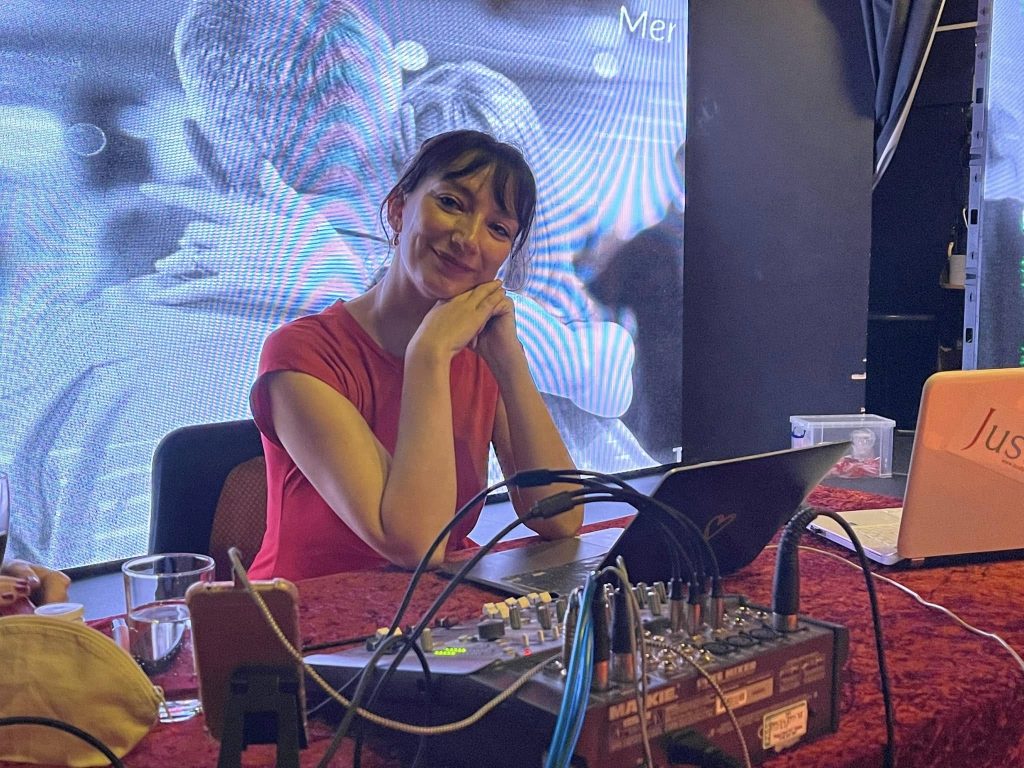
With fewer people on the floor and a gentler musical build from the DJ who was clearly aware that everyone was tired, the atmosphere was more chilled. There was more space, better floorcraft, and a slower pace. I enjoyed some calm, grounded walking dances, even in the outer ronda.

I also spent time in the practice ronda, where several women arrived fresh from the leading workshop and wanted to experiment. Since it was explicitly a practice space, I took the opportunity to ask experienced followers I respect for feedback on my lead. Everything I heard was useful : small adjustments, confirmations of things I am already good at, confidence to go for other movements more. It placed me in exactly the right headspace for what turned out to be the real closing moment of The Feast.

Mabel Rivero Class – Tango Begins in Your Own Body First

Mabel’s workshop was the perfect closing chapter as I switched down from dance mode to absorbing the whole festival experience in.

The class was not about steps or sequences, thank God. It was about something more fundamental: tango begins in your own body first. That was the title of the workshop, and it delivered exactly that.

Mabel emphasised ease, which is being at home in your own structure before attempting to meet someone else. Not overstretching the embrace, especially when your partner is a very different height or build. Not leaning forward in search of connection. Not asking your partner’s body to solve your own imbalance.

Her teaching drew from the Alexander Technique. We began seated, exploring gentle head–neck release, spinal roll-downs, and spirals through the torso. The focus was on reducing unnecessary tension rather than “doing” more. In Alexander terms, it was inhibition before action — allowing habitual tightening to soften so a more efficient coordination could emerge. When we stood, she demonstrated how shoulder tension is rarely a shoulder problem; it is usually a consequence of stacked tension in many other parts o the body. “A straight axis is meaningless,” she said, a reminder that the spine is not a rigid rod but a dynamic, responsive structure.

We worked on alignment with softened knees, finding balance while inclining forward without collapsing, even lifting one leg while maintaining connection in the embrace. The principle was clear: two bodies sharing space without either leaning, compressing or compensating for the other.

What struck me was how much of this already felt familiar. Standing on one leg while being gently stress-tested by a partner didn’t destabilise me. But it highlighted something essential as I changed partners: advanced followers don’t lean either. When both dancers are organised and self-supporting, the walk simplifies dramatically. The embrace becomes lighter, yet feels more contained.

When Mabel worked with me briefly one-on-one, she offered a small but decisive correction: bring the hips closer. That was the missing piece. Not the chest pressing forward, not the shoulders closing in — the hips. The true meeting point is lower, more central and closer to the centre of gravity of the body. As soon as she said it, I recognised it. Noelia had been guiding me toward the same thing all along but as Noelia had not seen me for many months, I had slipped into previous bad habits.

Mabel then watched me take a single step with her — just one — in a fully organised embrace. She smiled and said, “That’s it.”

And that really was it. The class ended and I rushed back to the milonga hall. I had hoped to dance more to test what I learned but I only had half an hour before my taxi was to pick me up. It took half an hour just to say those long tango goodbyes.

It was the ideal ending to the weekend. After the intensity of Friday and Saturday, after the breakthrough in milonga, the final lesson was not about doing more. It was about doing less, but doing it from a fully integrated body. And in that spirit of doing less, leaving the milonga without any more dancing felt apt.

That is where tango begins. Thank you to Fernando, the DJs, Mabel Rivero and the many volunteers whose work behind the scenes made the weekend possible.

Bringing It Home — Tango After The Feast

The real test began in the weeks after the Feast. I went to Christmas milongas at Corrientes and Tango Secrets, followed by four consecutive days at Etonathon. What surprised me was not that I danced well, but that the internal state from Devon held. I returned to the same anchors, a clear walk, contained embrace, stillness (pauses and otherwise), musical expression, simplicity — and they all seemed more refined now.

Milonga, in particular, had unlocked in a way that generalised. What had once been a weakness became something natural and even enjoyable. I now dance every milonga tanda without hesitation, and the feedback has been consistent: musical, grounded, connected. I can now start learning more movements on routines in my private milonga classes with Noelia.

Being able to dance milonga boosted my confidence to no end as I can now finally dance all the sub-genres of tango. At the same time, my taste has sharpened. I feel immediately when a room drifts toward performative, space-consuming dancing, not out of snobbery, but because it disrupts the kind of connection I now value. My dance has settled into something close to an encuentro or milonguero spirit ; minimal externally, rich internally — and more than one person has described it that way, even though I’ve never attended an encuentro.

But the most important change is not stylistic. The Feast gave me a concentrated immersion that allowed years of practice to settle into my body. I understand the social ecology of a milonga more clearly too ; when to enter, when to wait, when to leave.

The improvements were on every dimension of tango.

Would I Go Again?

Yes. I’ve already booked my Spring Feast ticket.

That probably says more than any review could. The weekend wasn’t perfect. The floorcraft frustrated me at times. The rondas were often static. But the core ingredients I value were there: close embrace, musical sensitivity, thoughtful organisation, and followers who I can connect with well. The Feast sits in a sweet spot for me, it is accessible, affordable, and strong enough in quality to justify immersion without the logistical and financial stretch of flying across Europe.

I’ve realised how much I value the UK milonga ecosystem as a whole. There is something grounding (and addictive even) about travelling up and down the country and seeing familiar faces reappear in different halls. The Feast functions as a hub within that network and makes the scene feel less fragmented.

Until now, I have never needed to learn to drive. My life has been built around cities and public transport. But tango is slowly changing that equation. If driving expands my radius and deepens my participation in this network, then it may be time. Especially as I prepare to move into my own place and shape the next chapter of my life more deliberately.

From coast to coast : At the Winter Solstice milonga in Hastings on 21 December 2025.

At the same time, I’m fortunate. My digital work allows me to explore tango beyond the UK, Argentina, Japan, Italy, India, wherever the next curiosity pulls me. That freedom forces a constant question: where should I tango regularly? A European festival can easily cost more than a focused trip to Buenos Aires but could be fun way of exploring European cities. Buenos Aires remains the reference point. But not every growth cycle requires transatlantic immersion. The Feast, for now, offers a meaningful middle ground.

Spring Feast is already in the calendar. Not as a gamble this time. Just the next step of that never ending tango walk.

My Mother Died at a Milonga

“Mum passed away”

Three words that split my life into a before and an after.

I heard them on a hot midsummer night, 23 January 2025, standing outside De Querusa Tango Hall in Buenos Aires with traffic roaring past me. I could barely hear my brother on the phone, but the meaning cut through everything. In that moment, a chasm opened, creating the biggest fracture in the story of my life.

I was 21 days into a planned four-month stay in Buenos Aires. This was my second trip, a continuation of the dream that had begun the year before. My mother had her health challenges with diabetes and weak kidneys. Her mobility had decreased after being hospitalised seven times in two years. I knew there was a risk of losing her, but I didn’t believe it would actually happen or happen so soon. In fact, I was more cautious on my first trip and planned to only go for 2 months. But this time I felt confident, even optimistic, that she was stable enough for me to be away for 4 months.

The first weeks were beautiful. I stayed in the same flat as last year, I was far more fluent in Spanish, and slipped back into Buenos Aires life with ease. Last year it took over a month to find Noelia as my teacher and Vicky as my regular practice partner. This time everything was set up already. I was so comfortable and resumed everything like if I had never left Buenos Aires.

Each evening before practice, just like last year, I would call my mother on WhatsApp video. She stayed with my sister, her carer. I’d be in the Buenos Aires sunshine; she’d be in London’s bitter winter. That contrast always made me feel a little guilty. But she was happy though, genuinely happy that I was doing what I loved. Those conversations were full of warmth, even tenderness, and always threaded with my worry about her health. She’d had close calls before. In February 2024 she was in hospital for over a week, and I remember crying alone in my room there feeling helpless. I was overjoyed to see her when I returned to London in April 2024.

I often talked to Vicky about my mother at practice, on how she was doing. And three days before she died, the tone of our practice chatter changed. My mother had picked up an infection. Infections were dangerous for her; antibiotics weakened her kidneys further irreversibly, but they were necessary to save her life. When my sister told me Mum wasn’t improving, I began to worry more seriously.

The day before she passed, my mother somehow gathered the strength to go to the GP to get antibiotics. It was the last time she would ever leave the flat alive. Her next exit would be her body, carried out by undertakers.


On the evening she died, I called as usual. But instead of sitting at the dining table with my sister, she was sitting on her bed. She was not lying down so she wasn’t seriously ill I thought. I asked why she couldn’t sit at the dining table, and my sister said she wasn’t well enough.

I reassured mum: she had antibiotics now, she just needed to rest, eat, drink water. She’d recovered from infections before. I said goodbye in a rush as I was late for my practice with Vicky but something in me felt a deeper sense of unease. I tried to push it away. Little did I know at the time that I had said my final ever goodbye to my mother. I still feel the tears coming when I write this.

I practiced with Vicky, told her I was worried about my mother, and then headed straight to Noelia’s milonga at De Querusa. I had booked a table for five, and others were joining me so I didn’t want to be late.

Inside the milonga, I let myself switch off from worry for a while. I danced. I ate the famous tortilla at De Querusa. For a brief window, I wasn’t thinking about anything serious at all.

Then, at around 10:30pm, I saw my brother calling me. My stomach dropped. My brother lives away from my mother, so why was he calling me instead of my sister?

My sister was the one who would call if things were bad. She had done exactly that the year before, when I’d advised her to take Mother to the hospital, something that may have saved her life then. But this time my brother was calling. And he called my Buenos Aires number, a number only my friends in Buenos Aires had and my family kept it for emergencies. So clearly this was an emergency. But exactly what?

I rushed outside to call him back. His voice was quiet and shaken:

“Mum passed away.”

She had a fatal heart attack. I let out a short, strangled scream on the pavement, not loud, but enough to release something. I wanted to cry there and then but there were so many people around me, I coudn’t. I held it together and talked about the logisitics of what had happened with my brother and sister. And what would happen next, the investigations from the coroner and then the understakers due to take my mother’s cold body away in the coming hours.

I felt so terribly guilty. For not being there, for being in Argentina and enjoying myself while my mother had passed away in the bitter London cold. Guilt I still cannot fully name.

My brother told me to stay at the milonga for now; nothing could be done from across the world and he felt I was better off in the company of people rather than to go home and cry on my own for hours. So I went back in.

Irina asked what was wrong when I returned to the table. I told her it was a family issue. I even danced a tanda with her right after as she wanted to dance.

The next ninety minutes were surreal. My mind couldn’t absorb the reality yet. Acceptance was impossible. How could my mother have crossed that threshold while I was dancing here? What did it even mean to die? I had just spoken with her a while ago. This could not be happening.

Noelia, bright and warm as always, asked me to film a small video for her talking about her milonga as I had done before. I tried, but the recording didn’t work this week. It had worked every week but this time my energy was off. I was off.

People began leaving. The milonga quietened. I danced some tandas but I was moving through them like a man dancing on borrowed breath, the steps happened but I wasn’t inside them. It was a dead man dancing.

Then Pugliese came on.

And then Noelia came to dance with me.

The song was Adiós corazón, a song I must have heard hundreds of times, but in that moment the soft, sorrowful violins cut straight through the numbness. Noelia closed her eyes, as she always does when dancing with me in that soft, deep connection. And without knowing it, she gave me the embrace I needed most. My mother’s death had not yet become real until I told another human being. Until then, it felt like it hadn’t fully happened. Although I had not yet told her that in words, I told her through my embrace and through that dance, to the quiet farewell of Adiós corazón.

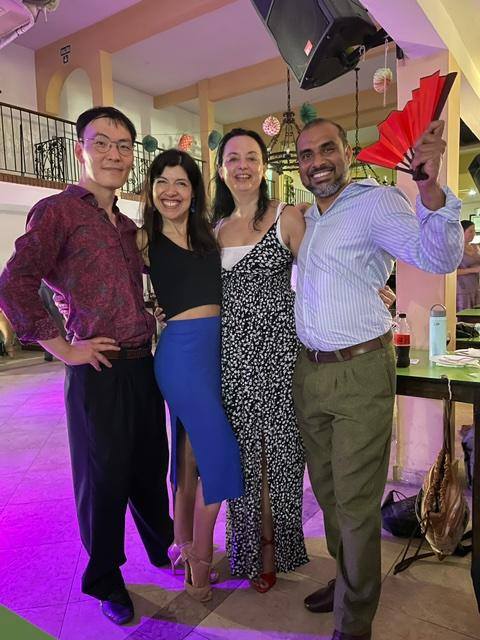
By the end of the night the hall was almost empty. Irina insisted on a group photo which I tried to avoid. Somehow I managed to smile and pose with her fan in my hand. A photo of a man whose mother had died an hour earlier. You’d never know from the image.

Photo taken an hour after I found that my mother had passed away.

I wanted to tell Noelia, but she was busy speaking to people as one of the organisers. When things finally quietened down, I asked if I could walk with her to her car. I needed to talk. She thought something bad had happened to me in the milonga.

And then I told her. I immediately started crying. She held my hand and gave me a long, deep hug with a still, steady presence. It was my first real release. It also made my mother’s death real as the death only existed in my head until that point. I had now told someone about it.

In that moment, she shifted from teacher to something far rarer, a human presence that could absorb my grief without flinching.

I explained to her what had happened back in London. My brother and sister were waiting for the coroner to send the undertakers in after evidence and photos were taken. My siblings weren’t allowed to see her body yet which I found extremely bizzare and we all felt under scrutiny by the system, which is awful but it is standard procedure for a death at home. My siblings had gone to my brother’s flat in South Woodford and were no longer at the death scene. I felt desperately far away.

Noelia drove me to my flat but sensed I wasn’t ready to be alone. She walked with me through the warm Buenos Aires night and we sat at a bar near my apartment, each with a gin and tonic. She saw the future more clearly than I could in that moment. She said we should celebrate my mother’s life and mine and try to say goodbye from a place of warmth rather than despair. She said my mother had given birth to a wonderful son and that her life was something to be celebrated.

We talked outside my apartment stairs for nearly two hours. I had known Noelia for a year, but I had never spoken with her at that depth. Grief reveals people and her presence revealed the depth of her real character and empathy.

She told me to call her anytime, even in the middle of the night.

I went upstairs but didn’t sleep at all. I had calls to make to London, to India and had to speak to my brother and sister again.

That night the second umbilical cord to my mother was severed. Almost five decades of motherhood ended there and then.

At a milonga in Buenos Aires.

Newbie Perspective on Buenos Aires

You’re no good for me, I don’t need nobody
Don’t need no one, that’s no good for me

The Prodigy – No Good (Start the Dance)

From the moment I began learning tango, it was clear that Buenos Aires is central to this dance in a way that no other city is to any other dance I’ve encountered. In salsa, there are various styles – New York, Cuban, Colombian, and Rueda – but there’s little focus on its history or any one place that represents its essence. Tango, however, is different. Buenos Aires is the symbol, source and even pilgrimage to tango as I found out on my second tango class.

Buenos Aires was often mentioned by my instructors, with a kind of reverence and nostalgia of their time there. It was the place where tango’s rhythms and movements were born, where the dance grew up and evolved.

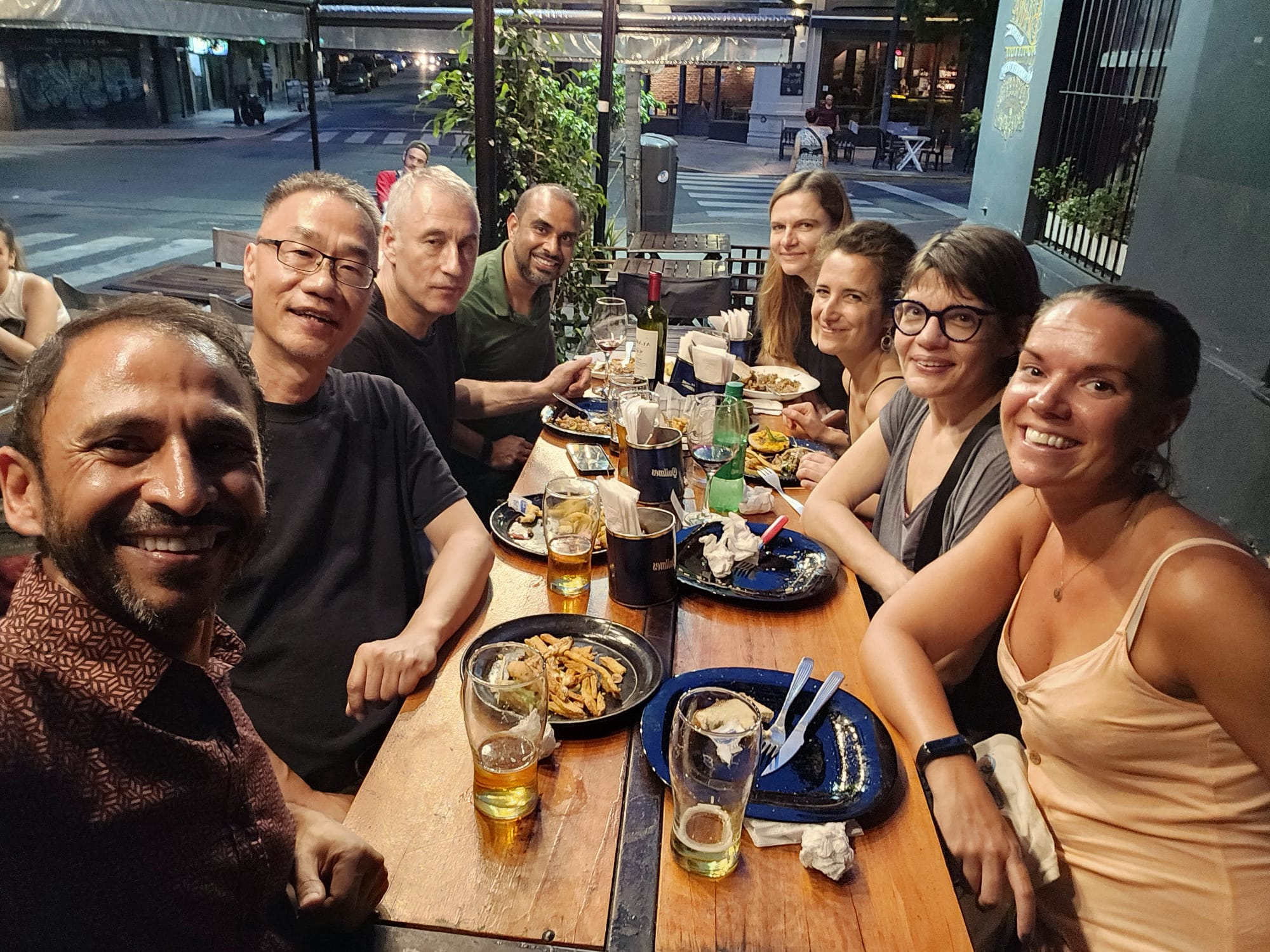
Never say never. In Buenos Aires with tango friends from the Tango Lounge in January 2024.

This connection to the city felt even more authentic thanks to David, my instructor from Argentina. His approach to teaching felt like an authentic transfer of knowledge directly from the source, like I wasn’t just learning steps but a tradition handed down through generations.

As I continued to learn in those early days, Buenos Aires tango travellers told me their own tales, where you could find the heart of tango itself and buy great dance shoes too.

I had no interest in going to Buenos Aires however, as I wasn’t into tango in that much depth then. Tango classes were serving as a hobby, skill and socialising activity.

It takes two, fizzy drink and the movies

“I can dim the lights and sing you songs full of sad things
we can do the tango just for two”

Queen – Good Old Fashioned Lover Boy

It takes two to tango – phrase made famous by a song

In those early days of learning I explored what I already knew about tango from popular culture. Freddie Mercury’s playful line of ‘just for two’ perfectly captures the the romance of the dance. Tango is danced to songs about sad things (sometimes) and between two people (always).

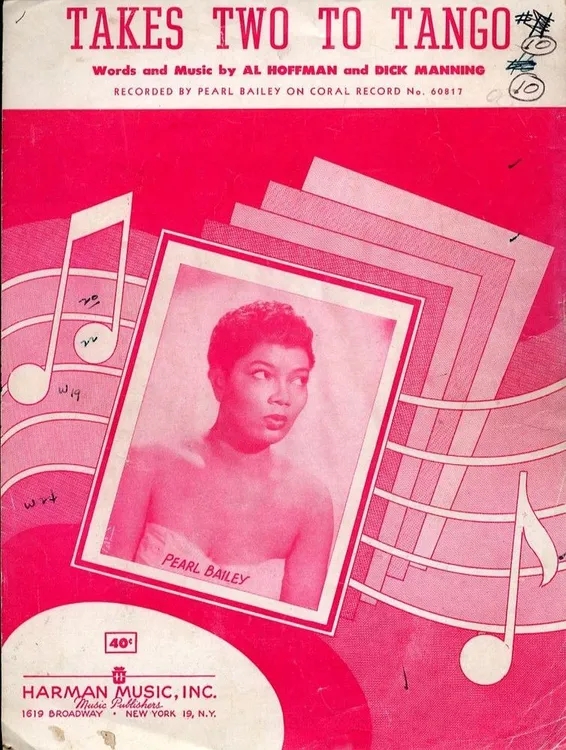
The phrase “it takes two to tango” entered popular culture in 1952 thanks to the song by Al Hoffman and Dick Manning, performed by Pearl Bailey. Since then, it’s been used to describe any activity including the active participation of two people. A phrase similar to the saying “it takes two hands to clap”.

Tango the drink – I’ve been tango’d big time

The 1990s kids amongst us will remember the “You know when you’ve been tango’d” TV ads. Tango is a fizzy, soft drink in the UK and refers to its tangy flavour. I have definitely been tango’d big time by the dance, given how much time, energy and money I spend on it!

Scent of a woman, True Lies and Mr. and Mrs. Smith

No mistakes in the tango, darling, not like life. It’s simple. That’s what makes the tango so great. If you make a mistake, get all tangled up, just tango on.

Al Pacino (as Lieutenant Colonel Frank Slade) – Scent of a woman

I remember watching this famous film where a blind Al Pacino dances the tango with a shy, attractive Gabrielle Anwar. I didn’t fully appreciate the scene’s deeper meaning at the time, but once I started dancing, the beauty of the dance and the life lessons of that scene started to make more sense. My tango teacher Kim wrote this memorable commentary on that scene too.

I also then thought of other films, like True Lies and Mr. and Mrs. Smith, those showing the fiery and passionate nature of the dance.

In True Lies, the rose-in-mouth imagery did seem over the top, which even then I realised was Hollywood dramatisation and some sort of exhibitionist style of dance, rather than real tango.

Mr. and Mrs. Smith features a tango full of tension and intensity, matching the dynamic between the two lead characters. Angelina Jolie looked stunning in it with a classy outfit.

Ballroom Tango Vs Argentine Tango – What’s the difference?

When I first started learning tango, friends would ask if I was dancing with a rose between my teeth. A common enough assumption, thanks to the Hollywood portrayal of Ballroom tango, far more theatrical and exaggerated than Argentine tango, the style I’ve been learning.

Ballroom tango focuses on performance, with bold postures and grand movements. The dancers’ heads are often held back dramatically, giving it that “showy” flair. Argentine tango, on the other hand, is more subtle, intimate, and social. It is about connection rather than spectacle, with a closer embrace and simpler movements.

That is in theory though, as a lot of Argentine tango, especially in London is driven by spectacle and is hardly social. But that is a blog post for another time.

The show must go on – I guess I am learning

I guess I’m learning
I must be warmer now
I’ll soon be turning, round the corner now

Queen – The Show Must Go On

The tango of the films looked like a million miles from what I was doing in class, I didn’t even have a rose in my mouth! The tango of pop culture was still inspirational and in some ways motivated me to keep learning. I had learnt to play guitar and learnt many other things before, and tango was looking like my next big project to take on.

Learning dance navigation, a leader’s burden

It’s murder on the dancefloor
but you better not kill the groove, hey-hey, hey-hey
It’s murder on the dancefloor
but you better not steal the moves

Sophie Ellis-Bextor – Murder on the dance floor

The line of dance is sacrosanct in tango and navigating the dance floor is the leader’s responsibility. Maintaining this line of dance was another skill I had to learn alongside the actual dancing itself, placing even more cognitive load on my very limited working memory in the early learning stages.

Note : Cognitive Load Theory [John Sweller, 1988] is completely unknown in tango teaching. It is well known in mainstream classroom teaching and has profound implications in teaching and learning. I will define and clarify its connection to tango learning in a later blog post.

Line of dance – couples in an orbit inside the room

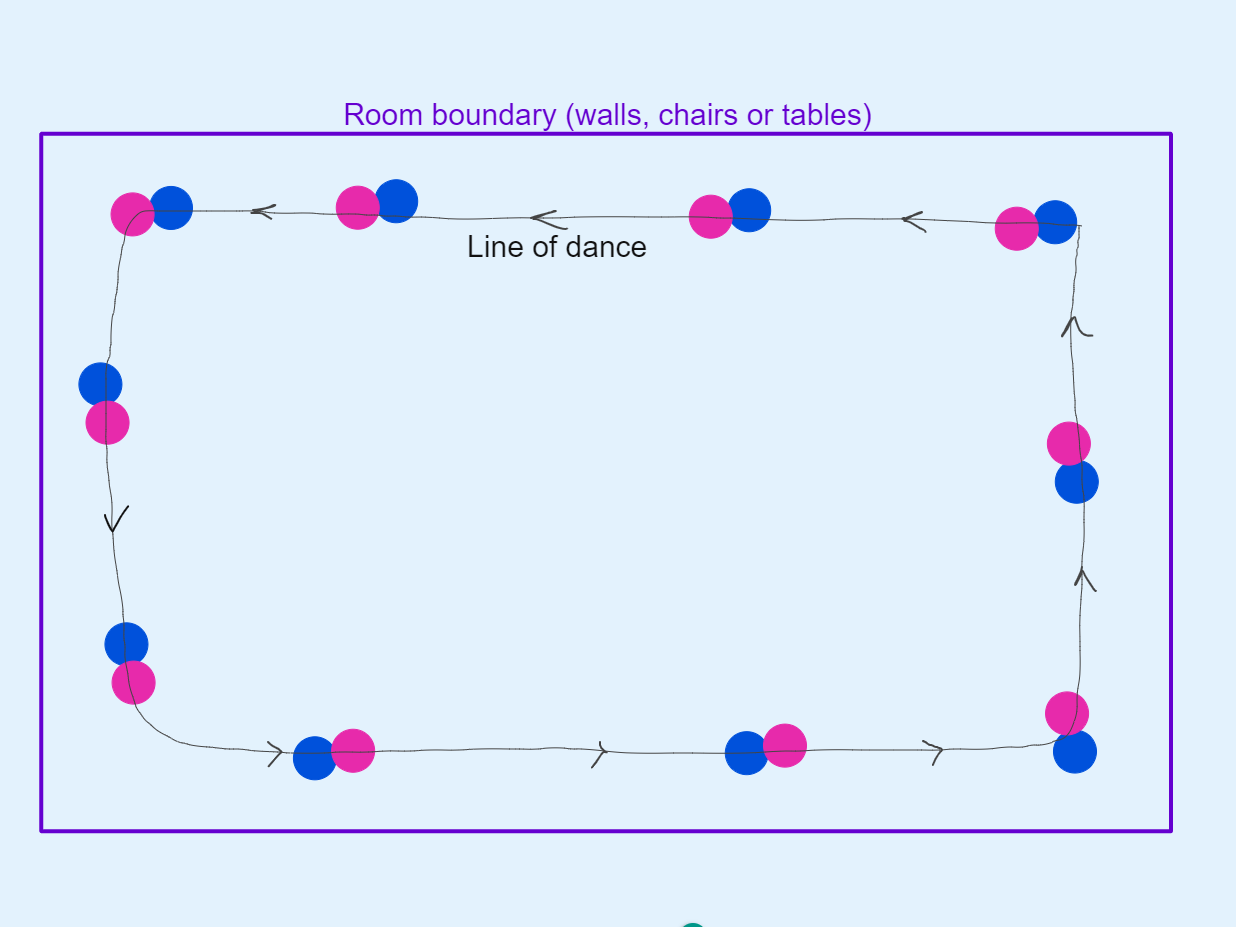
In tango, couples don’t dance on one spot, instead they follow an anticlockwise ‘line of dance’ around the room. This line, or more accurately, a closed loop, expands to fill up the perimeter of the room. Most rooms are rectangular, so there are 4 actual lines (or line segments if we are going to get into Euclidean geometry) and 4 corners. The overall ‘line’ can be circular or oval as well, which typically happens on a bandstand. At a milonga there is often a concentric inner line of dance along with the outer line of dance. Some dancers go into the centre where there is no line of dance at all. It is the Wild West in there.

Tango line of dance in a rectangular classroom. Good students don’t dance in the centre, ever.

In David and Kim’s classes we were told that drifting into the centre is what bad dancers do. And no one wanted that label! David was militant about students maintaining the line of dance from day 1 and corrected me every time I accidentally drifted into the centre. May God have mercy on those who end up there, (Spitalfields outdoor milongas especially). I ended up in the centre many times at milongas, but please don’t tell David.

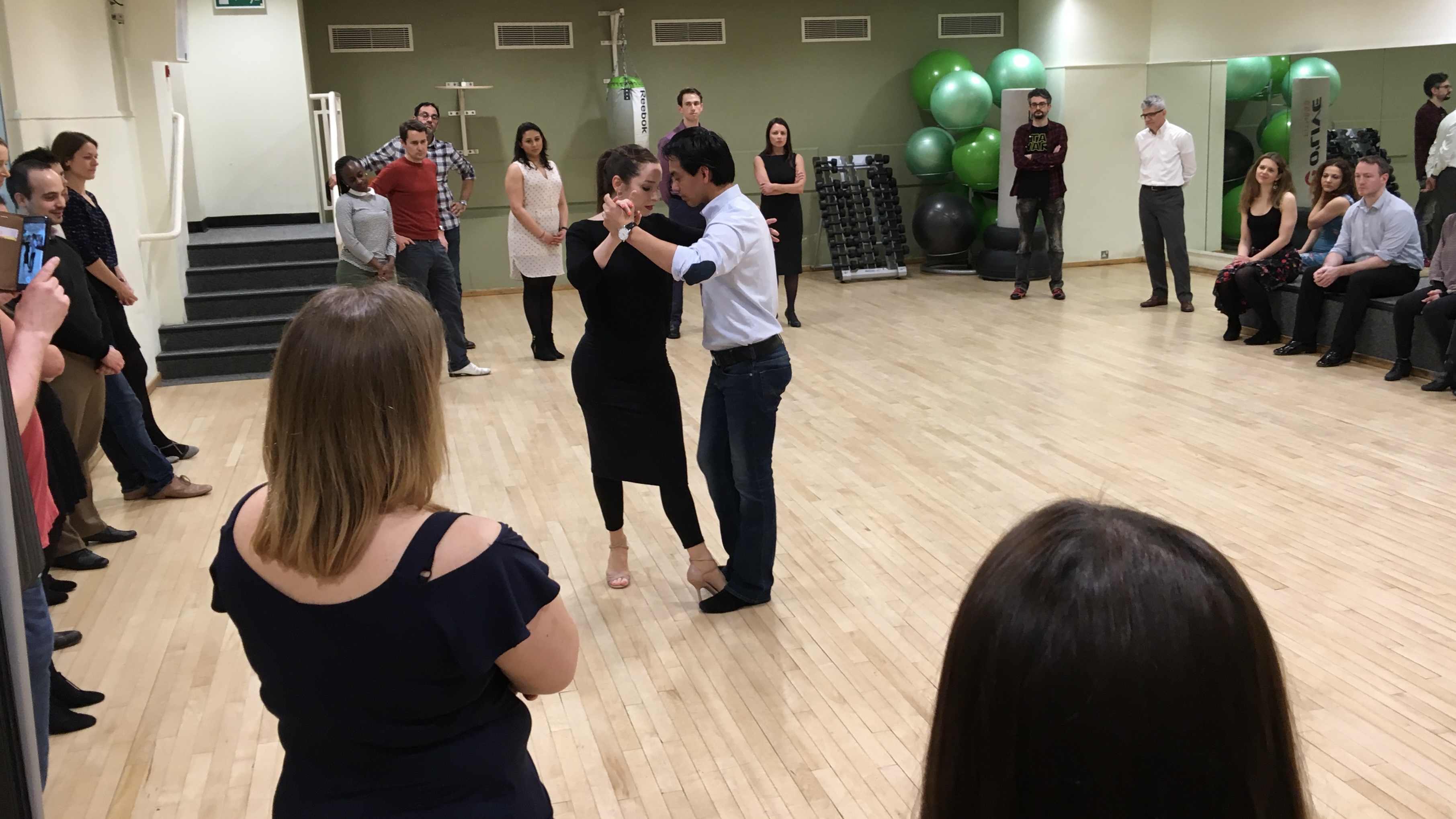
To keep us all in line in class, there was a great training drill where beginners walked solo around this line of dance, maintaining sufficient clearance to avoid bumping into each other. Much like cars on a motorway. This was great practice for when we would be partnered up.

Navigation – tango is a dance on the move

There is no navigation as such in salsa social dancing, couples stay on their islands of the dance floor and stake their claim to that space. There is some navigation in New York style salsa as it is more linear, but salsa dancers generally move freely within their island. Both salsa leader and follower are equally responsible in keeping the clearance safe and peaceful between neighbouring couples. Salsa dance floors get more crowded than tango ones, yet collisions are less frequent, possibly because both dancers are responsible for safety and couples dance in one spot mostly.

In tango I couldn’t stay dancing in one spot with my follower. I had to either stop the dance and relocate further ahead (awkward and not musical) or integrate the relocation within the mechanics of the dance itself (hard!). I also had to be aware of the entire line of dance in the room.

Responsibility for the follower’s safety is a huge mental burden

The structure of the line of dance was supposed to make life easier. But that was most definitely not the case in the early days as leader. The burden and cognitive demand was really significant, for three connected reasons:

  • The safety of my partner. Followers are encouraged to keep their eyes closed, even from day 1 of the class, therefore they have to put a lot of trust in the leader. 90% of my mental energy was taken up in making sure my partner did not bump into anyone else, or the wall or nearby furniture. The responsibility for someone’s safety is a huge one and I took that seriously. Followers do have some responsibility of their own safety I feel, particularly when a line of dance is chaotic but that’s a topic for another time.
  • I didn’t know how to ‘dance away’ to a new location. Sometimes by luck or fluke, I could twist the routine spatially to keep the overall movement going in something vaguely resembling the line of dance.
  • If I didn’t move with my partner into a new space, I would singlehandedly be responsible for holding the entire line of dance. Not my partner, just me. That’s an insane amount of pressure, just one leader can cause a traffic jam for the entire line of dance.

A few sessions in since starting tango I had underestimated even its simplest rudiments. Murder on the dance floor? Well, it certainly felt like it when the line of dance collapsed.

As much as the stress of navigation troubled me, I did like the almost army like marching structure of the line of dance. This gave order to the whole class and a community sense of everyone dancing as a collective.

Second lesson and milonga in one evening

“Friday night and the lights are low,
looking out for a place to go”

ABBA – Dancing Queen

March 15th 2019

It was a Friday night, and I certainly wasn’t a dancing queen. Frustrated and exhilarated in equal measure I was leaving the tango social dance (milonga). Not dancing was the plan, but still, I felt an emptiness walking toward the exit.

My second outing introduced me to the emotional highs and lows of tango.

Woody Allen and 80%

Two weeks after my first class I was excited to go again. My friend wasn’t joining me this week as he attended a higher level class. The plan was to meet him later at Carablanca milonga.

“80% of success is turning up” as Woody Allen once said. As a musician I live by this quote. Having met many dabbling musicians only a few actually turned up to rehearsals regularly. Those who did, went on to perform at gigs where all sorts of serendipitous things would happen and opportunities would open.

In tango I wasn’t exactly sure what success would be (still not sure of it now), but I knew that consistency of showing up would be key, as it is in so many other facets of life. At the very least, I’d be learning something new, and that alone felt worthwhile.

Clarity gained by blogging but no journal notes for 6 lessons

Committing my thoughts to public is requiring me to clarify, organise and structure ideas, bringing fuzzy thoughts to the forefront. This allows me to critically examine and refine them, which in turns helps my own understanding. This is a process I have done on my professional tutoring blog for several years.

Blogging and journaling was not my plan at first. And my first journal entry wouldn’t be until May 3rd 2019, missing my first six lessons. In any case, “You don’t know what you don’t know,” phrase comes to mind. What would I have written about, anyway?

But I do remember the feelings: the awkwardness of losing my own balance, let alone being able to absorb and handle my partner’s wobbliness while she was in heels, the thrill of partnering with someone whose energy clicked with mine, and those small but significant breakthroughs. That became the main purpose of my journal and is still mostly true today: a way to process and document my emotions throughout the learning experience.

Skipping the most important 15 minutes of class

Back to the class, I was running late so I skipped the 15-minute trial session before the main class. This session had group solo drills led by both instructors. This trial allowed newcomers to decide if they wanted to stay on for the whole class, and there was a brief pause for an optional chat with Kim for those wishing to leave. I assumed this ‘starter’ wasn’t essential and skipping it was ok.

I got that one so wrong!

The main class felt like I’d walked into a movie halfway through, completely missing the setup at the start. My partners had to fill me in on the basics, and I spent the rest of the class playing catch-up. I quickly realised that those first 15 minutes weren’t just an optional warm-up; they were the foundation for the entire lesson.

Change of weight – surprisingly difficult

After warm up and more solo drills we were paired up to practice leading a change of weight with various partners. My job was to shift my partner’s entire weight to rest on one leg while doing the same with mine. Then, I had to reverse it all. It seemed simple, but my brain was burning from cognitive overload and social pressure. I had to manage my own weight, hers, and maintain the movement in a smooth and connected way—all while dealing with the fear of not feeling like a fool in front of my partner. In salsa, this weight change was never lead, as each one of us changed weight ourselves on cue. Tango seemed like a different beast already.

Things felt even harder when my partner seemed tense, or maybe it was me being too polite in my lead, lacking clear intent. Each partner was different so the lead had to be personalised and tweaked to suit. I paired up with a woman much taller than me. David, the instructor, asked the ladies to close their eyes to focus on the feeling of being led. This helped me as well. I relaxed when she relaxed.

After some failed attempts, she gave me feedback: I needed to apply more force in a smooth rather than abrupt way. But she also questioned herself if she needed to be more sensitive to my lead. It felt unnatural to be forceful, but when I got it right, it was really satisfying. The height difference soon didn’t matter as we tuned into each other. I really appreciated the tutoring I was getting from her. Leading, despite its pressures, felt great!

Bottling the class practica and escaping to milonga

The class ended with David and Kim coming on to centre stage for a dance together. Some students started filming and I was still a little confused if I was supposed to film. I wondered if they were filming to capture a memorable performance or if there were any bits of the lesson within the dance they may learn from later. If the first fifteen minutes were the ‘starter’ then this was the ‘ender’ of the lesson. Their dance was very nice to watch and along with the melancholic music it made for a relaxing experience, especially after the stress of leading.

David and Kim (Tango Movement) end of class demo in March 2019.

After the demo Kim made some announcements and then the short freestyle practice started while people also paid for the class. I hesitated to ask anyone to practice again. Most women were either packing to go home or were on the dance floor with someone else already. I had missed my chance. Just as well, even after two weeks I wasn’t sure what I was going to practice anyway.

On the whole this class was less stressful than the first and I was starting to settle in. I left the class to meet my friend at the milonga.

An even more magical milonga

After grabbing a quick bite, I entered Carablanca and asked to be let in for free as a non-dancer. I entered the magical kingdom of a milonga. Tonight was even busier and more vibrant.

I joined my friend’s table, surrounded by students who warmly reminisced about their own beginner days. An enthusiastic Argentinean struck up a conversation. “You’re already at a milonga after just one lesson?” he asked, impressed. It was then that I learned a social tango event is called a “milonga.” Later, I’d discover how few Argentinians in London actually learn tango; I’ve only met four in total.

The dance floor looked busy and colourful tonight with beautifully dressed dancers. I got myself a Tom Collins cocktail again and sat at the table, chatting with dancers as they took breaks between their dance rounds. Someone had to entertain these dancers during their breaks and I was happy to take that job on. Though I did feel a strong urge to dance, I was no stranger to salsa clubs and felt I could go out there too.

Invitations I Wanted To, But Couldn’t Accept

There was a lovely woman with long dark hair and a warm smile who I was chatting to. She invited me to try out the dance floor by walking on it together. My heart leaped at the idea, but fear kept me frozen in my chair and I sadly declined. She was on the dance floor with someone else soon enough and I was relieved.

Another woman was bubbly with a somewhat wild and carefree energy, she invited me to dance but again, I felt the fear. People on the table came and went from their dance rounds while I was there for a good 2 or 3 hours. The wild lady was back, probably after 1 or 2 cocktails herself, and asked me to just have fun and be relaxed about hitting the dance floor. I almost joined her this time as she was so convincing and enthusiastic. She then suggested I join her as a follower instead but I had no idea how to follow either. I later saw her leading and was impressed she could do both roles so well. By now I was getting stressed at constantly saying no to dances with dancers I did want do dance with.

“Well, I will be dancing plenty when I am in Buenos Aires for a few months” I overhead the wild lady say to her friend. I thought she was either out of her mind or a professional dancer to go so far just for some dancing.

As the night wore on, I realised coming to a milonga without intending to dance was a mistake. It was frustrating to receive invitations and be unable to accept them. I felt determined to learn this dance well enough to hit the dance floor in the future.

I put on my smart jacket on and walked briskly to the door. I noticed women glancing as I left, perhaps at the drifting opportunity of a dance with me, which made me hurry even more. It was a surreal experience and I knew I had to return one day. It would be weeks before I found the courage to return to another milonga.

And as for the wild lady who was going to Buenos Aires. Well, nearly five years on from that night I was sitting on a plane to Buenos Aires for that exact same reason. Just for some dancing.

First ever lesson and milonga in one evening

“Let’s dance, put on your red shoes and dance the blues.”

David Bowie – Let’s Dance

Gazing out from my Patagonian cabin on a warm February day I saw a crystal blue lake, an expanse of water making calm white noise as the wind gushed past gently. I realised then that it was the tango that had brought me to this remote corner of the world—a journey of self-discovery and travels. What had begun as a weekly hobby in London five years ago had turned into an obsession, consuming most of my free time.

From the very beginning tango was an emotional rollercoaster like no other. After every group class and milonga (tango social dance event), I would jot down my thoughts on the tube ride home. I intended to publish some of these reflections on a little corner of my personal blog but never followed through—until now. Inspired by Ben Lovejoy’s Tango learning blog and a recent tango immersion in Buenos Aires, I am finally committing to sharing my story.

2019 New Year’s Resolution – The Salsa plan and Tango switch

On Facebook and Instagram, I joked that my new year’s resolution was eating more cake. The real resolution was to start dancing again.

By serendipity—or more like people’s love of sugar—the two resolutions combined when I started eating cake with my tango buddies. But I’m getting ahead, more of this story will come up in the future.

2019 certainly got me started in tango! Photo by tango movement.

I last danced regularly in 2009, salsa, and a lot had changed since. I had gradually moved to tutoring online from tutoring in-person, and by 2017 I was fully online. This transition was fantastic, offering a full-time income, better lifestyle and more flexibility. However, it also led to weight gain, back problems, and a lack of real-life socialising.

My body missed the movement and endorphin high of dance so going back to salsa was a natural choice. But I disliked salsa teaching in London and felt that classes were random, inconsistent and taught mostly by part timers. It wasn’t the way I wanted or liked learning.

I met up with my old salsa friend and over drinks he explained that he had stopped salsa and had started tango instead. He suggested I give tango a go as well.

1st March 2019 – My first ever tango class

“We better rush off to the class” my friend said as I nervously finished off my pint at a pub before heading to a basement studio of a large gym complex near Russell Square in London.

We bumped into an elegantly dressed lady at the reception. Her black dress matched her dark hair in an Audrey Hepburn style. My friend introduced me to her and mentioned I was there for my first lesson. Her friendly smile calmed my nerves somewhat. But internally I was a little mad at my friend for not telling me about the dress code. I was in jeans and a t-shirt, while the lady, who I presumed was a student was dressed the part as a professional dancer. My friend was in a work shirt so he was looking smart and I felt I’d be well out of place.

She turned to be one of the two teachers of a tango teaching (and real-life) couple, the Argentinean David and the English Kim. The rest of the class were dressed from smart to casual much to my relief. I was wearing my every day shoes which I found out later were not suitable tango shoes but were ok in the short run. I didn’t really know what qualities would be needed for tango shoes since salsa was ok in normal everyday shoes.

We did some steps on our own for the first part of the class. I remember doing some side steps and also walking back and forward. The rest of the individual technique stuff I don’t remember. It looked similar enough for salsa and I picked it up reasonably well.

We were then paired up as partners. Again, I do not remember much or what routine was involved or even if we were doing a routine. It was a complete beginner’s class and I was just trying to get used to socialising with each round of new partner and figuring out what I actually had to do. It was what I now know as open embrace and a practice embrace.

The music came on and the atmosphere changed, it was flowy and sad sounding. Not the happy, bouncy salsa stuff I was used to. There was something deeper in the music but party music for a Friday night it most certainly was not!

Suddenly the class dispersed without any notice and the instructors did a little a dance together. Some people were filming it but I wasn’t sure if I was supposed to film it or not. I don’t remember salsa teaching being filmed but that was pre-mobile phone camera era. This dance ended the class and there was a bit of partnered practice time while people also queued up and paid for the class in cash.

I felt like I should practice as well but was too shy to ask anyone to dance. So I just watched my friend and other people practice. Everyone seemed to be practicing something different so I couldn’t tell which bit of the class lesson they were practicing. So I was mighty relieved I didn’t have to practice something I didn’t even know with someone I didn’t know.

“I doubt if I even understood 5% of what was covered in that class” I told my friend as we both walked towards the milonga (tango social event). My brain was burning but it was a good type of burn. The type of burn when the brain is processing new and valuable input into it.

A ten minutes walk took us to Conway Hall in Holborn. My friend asked for me to be let in for free as I was just there to watch and not dance, which they kindly did. And so I entered my first ever milonga.

A magical milonga – spellbound by social dancing

The Carablanca night. I entered a romantic and nostalgic atmosphere. A hall with soft lighting, subtle mix of perfumes, colognes and a faint smell of wood . It immediately warmed up a cold March evening. Tables and chairs were arranged around the wooden dance floor with murmurs of conversation and laughter. People were also observing dancers, waiting for their own turn to dance.

My friend took me to a table with his fellow tango dancers and introduced me to them. After a bit of chatter I went over to the makeshift bar and got a Tom Collins cocktail. I sat back and soaked more of the ambience in.

I was completely in awe, like being on a colourful Ted Baker TV ad or a film. This dance floor was nothing like a salsa dance floor, it was far classier and refined. Women wore stylish dresses with intricate designs and high heels, while men generally dressed smart, with many in suits, dress shirts and trousers.

Evocative, hauntingly beautiful sounds of orchestral tango filled the air. Unlike the class earlier there was a much wider variety of music; sad, passionate, nostalgic, melancholic and some bouncy, happy tunes.

The dancing itself took centre stage. Men with almost puffed up chests with ladies in their arms. Many of the ladies had their eyes closed in complete bliss while the men had stern but sort of relaxed faces (I know this sounds like a paradox but tango is tango). While the dancers did execute some moves, overall they didn’t look busy ‘dancing’. Mostly gliding on the dance floor smoothly like swans or tai-chi masters.

There was a sense of anticipation as the tango music stopped and a new dance round started. People chose their next partner somehow. I was told it was through a subtle eye contact ritual called the ‘cabaceo’, which I wasn’t able to spot.

Or was I? Diagonally opposite and on completely the other side of the dance floor my eyes crossed with a blonde lady in an elegant white dress. They crossed maybe twice again during the evening but I wasn’t sure if they really did or I was just dreaming this up. The Tom Collins cocktail had kicked in after all.

Things were active on my friend’s table anyway, a couple of generous ladies asked if I wanted to join them on the dance floor and do the tango walk together. A wave of nervousness passed through my body, I was just a plain old non-tango civilian! I would have disappointed both my partner and the many onlookers. A part of me wanted to be bold and go for it but the shy part won. I was grateful that the ladies would even consider me. In any case I had missed my chance and they were soon dancing with skilled dancers. I breathed a sigh of relief as they had escaped my non-existent tango dancing skills.

There was a mixed age crowd there, including dancers easily in their 60s and 70s. I liked the idea that I could keep dancing the tango for some decades. There was a young crowd too but it was clear that the median age in tango was higher than that of salsa.

As it approached midnight I decided to catch the tube (London underground) home. Tonight had convinced me to come back again which was a result. I had tried a Ceroc class with social dancing years ago and had never returned to it. For the next class I would miss a week as I had a maths pre-conference social the Friday after. My next tango outing would be in two weeks time.